Myth vs. Reality: Do Air Source Heat Pumps Work in Winter?
When considering a major investment in renewable heating, such as an air-source heat pump, one of the most critical questions homeowners and business owners ask is: Do Air Source Heat Pumps Work in Winter?
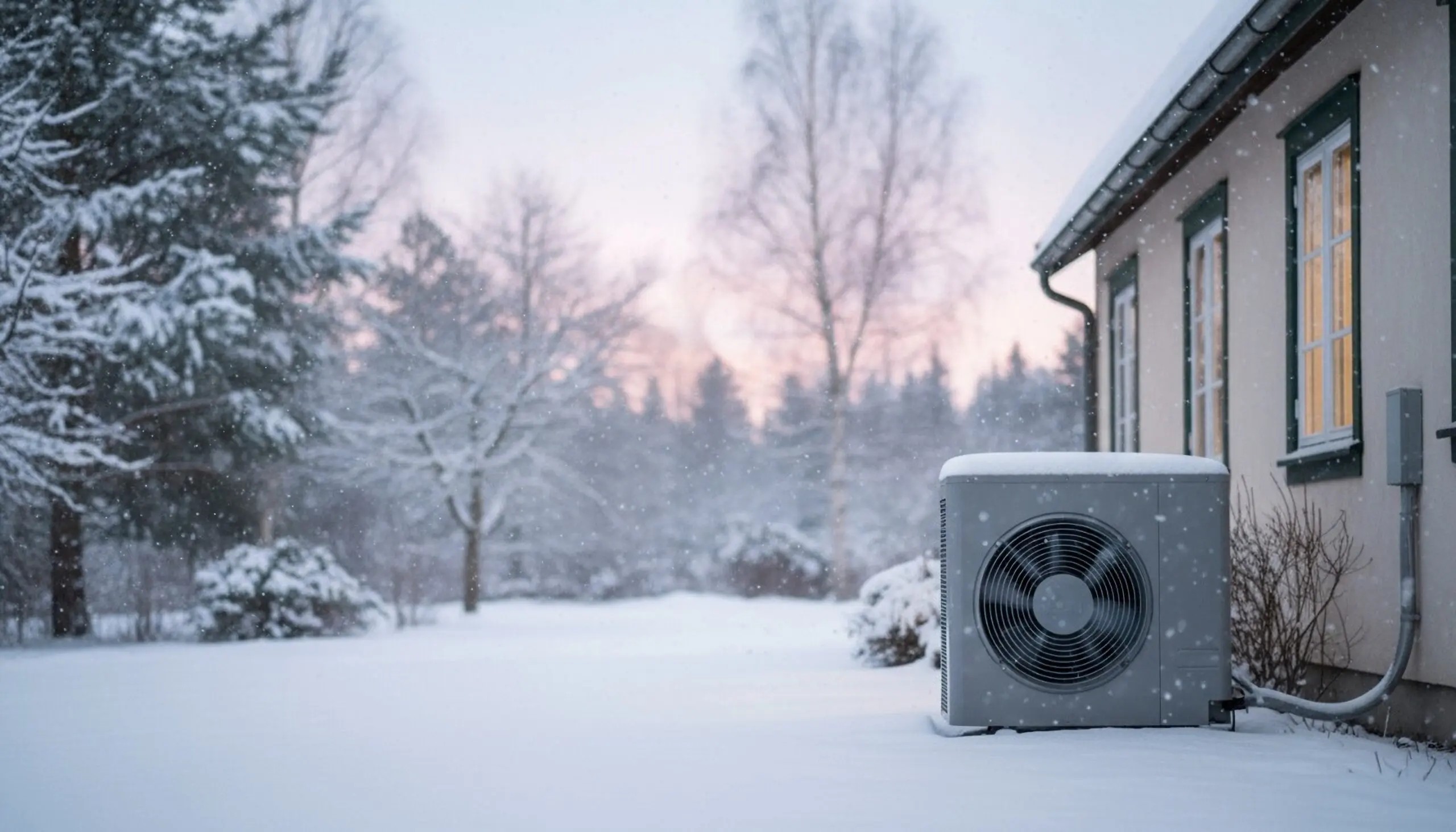
It’s a completely fair question. The technology sounds paradoxical: how can a unit that pulls heat from the outside air possibly warm your building when the temperature outside is hovering near freezing, or even dipping below zero?
At Geo Green Power, we have seen firsthand how well modern air-source heat pumps perform across the UK’s diverse climate. The short answer is an unequivocal yes. Not only do they work, but they are highly efficient, reliable, and capable of providing all the heating and hot water your property needs, even on the coldest days.
Here is our comprehensive guide debunking the myth and explaining the science behind why these systems are the perfect fit for a cold British winter.
The Science of Cold: Heat Pumps Don’t Generate Heat; They Move It
The key to understanding this topic is to shed the traditional boiler mindset. A boiler creates heat by burning fuel; a heat pump simply moves existing heat.
The fundamental scientific principle at play is that heat exists even in very cold air. In fact, air must reach absolute zero (0K) for all heat energy to be absent.
The Refrigerant Cycle
A modern air source heat pump operates much like a refrigerator, but in reverse:
- Extraction: The unit draws in outside air and passes it over a heat exchanger containing a refrigerant fluid. This refrigerant has a very low boiling point, lower than the outside temperature.
- Absorption: Even when the outside air is -5 degrees, it is still warmer than the refrigerant, causing the refrigerant to absorb the heat and turn it into a warm gas.
- Compression: The gas then passes through a compressor, which uses a small amount of electricity to increase the pressure and, critically, raise the temperature dramatically (often to over 90 degrees).
- Transfer: This high-temperature, high-pressure gas is pumped through a condenser coil and into your home’s heating system (radiators or underfloor heating), transferring the thermal energy.
- Expansion: The refrigerant cools, reverts to a liquid, and the cycle repeats.
Because the system is extracting existing thermal energy and only using electricity to power the fan, compressor, and pump, it generates significantly more heat energy than the electrical energy it consumes. This ratio is known as the Coefficient of Performance (CoP), which typically ranges between 3:1 and 4:1, meaning for every 1kW of electricity used, the air source heat pump provides 3kW to 4kW of heat.
Debunking Winter Performance Myths
Concerns about air source heat pumps struggling in cold weather are often based on outdated technology or misunderstandings of the UK climate.
Myth 1: They Stop Working Below Freezing
Reality: Quality, modern air-source heat pumps are guaranteed to perform efficiently down to temperatures as low as -15 degrees or even lower. The UK rarely experiences prolonged periods at these extreme temperatures. The system is designed to handle typical winter conditions comfortably and effectively.
Myth 2: They are Expensive to Run in Winter
Reality: While a heat pump’s efficiency (CoP) will slightly decrease as the outdoor temperature drops, it remains far more efficient than a traditional electric heating system. If the unit is properly sized for your property, a crucial component of Geo Green Power’s service, the energy savings over a year will still be substantial compared to fossil fuel alternatives.
Myth 3: They Can’t Heat a Whole House
Reality: Properly sized and installed air-source heat pumps are fully capable of meeting the entire heating and hot water demand of a typical home or commercial building. Crucially, the system must be installed correctly, often requiring larger radiators or, ideally, underfloor heating, to distribute the heat effectively, as heat pumps operate at a lower flow temperature than traditional boilers.
The Role of Air Source Heat Pump Installation
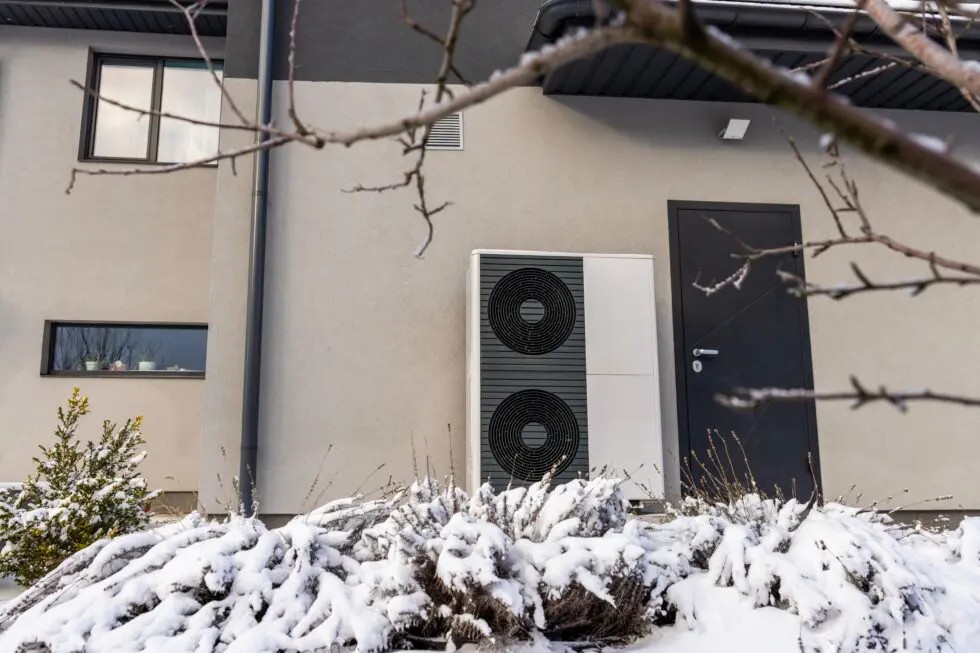
The true key to answering whether air source heat pumps work in Winter is not the unit itself, but the quality of the air source heat pump installation and design.
At Geo Green Power, our comprehensive approach ensures your system performs optimally, even on the coldest day:
- Accurate Heat Loss Calculation: We begin with a detailed survey and heat loss calculation of your property. This determines precisely how much heat your building loses and, therefore, the exact size (kW output) the air source heat pump needs to be. Under-sizing a unit is the most common reason for poor winter performance.
- Optimised Distribution: We assess your existing emitters (radiators) and recommend upgrades where necessary to ensure the lower-flow temperature heat is adequately distributed throughout the property.
- Buffer Tank Integration: For properties with high hot water demand or systems with multiple heating zones, we may include a buffer tank. This stores heated water, preventing the unit from cycling on and off too frequently, which maintains efficiency and reduces wear and tear.
A professional, custom-designed air source heat pump installation ensures your system is perfectly matched to your building’s specific heating profile, guaranteeing reliable warmth all winter long.
The Defrost Cycle: A Normal Winter Function
When outside air temperatures drop near freezing, you will notice ice or frost forming on the outdoor coil of your air source heat pump. This is completely normal and a sign that the unit is successfully extracting heat from the cold air.
When the system detects too much frost accumulation, it automatically initiates a brief defrost cycle. During this time (which usually lasts less than 15 minutes), the unit reverses its operation, pulling a small amount of heat from the inside of the system to melt the ice on the coil. You might hear the fans temporarily stop or see steam rising from the unit; this is the water melting off and is a standard part of the winter operation. Once defrosted, the system immediately returns to normal heating mode.
The Verdict: Reliability and Efficiency in the Cold
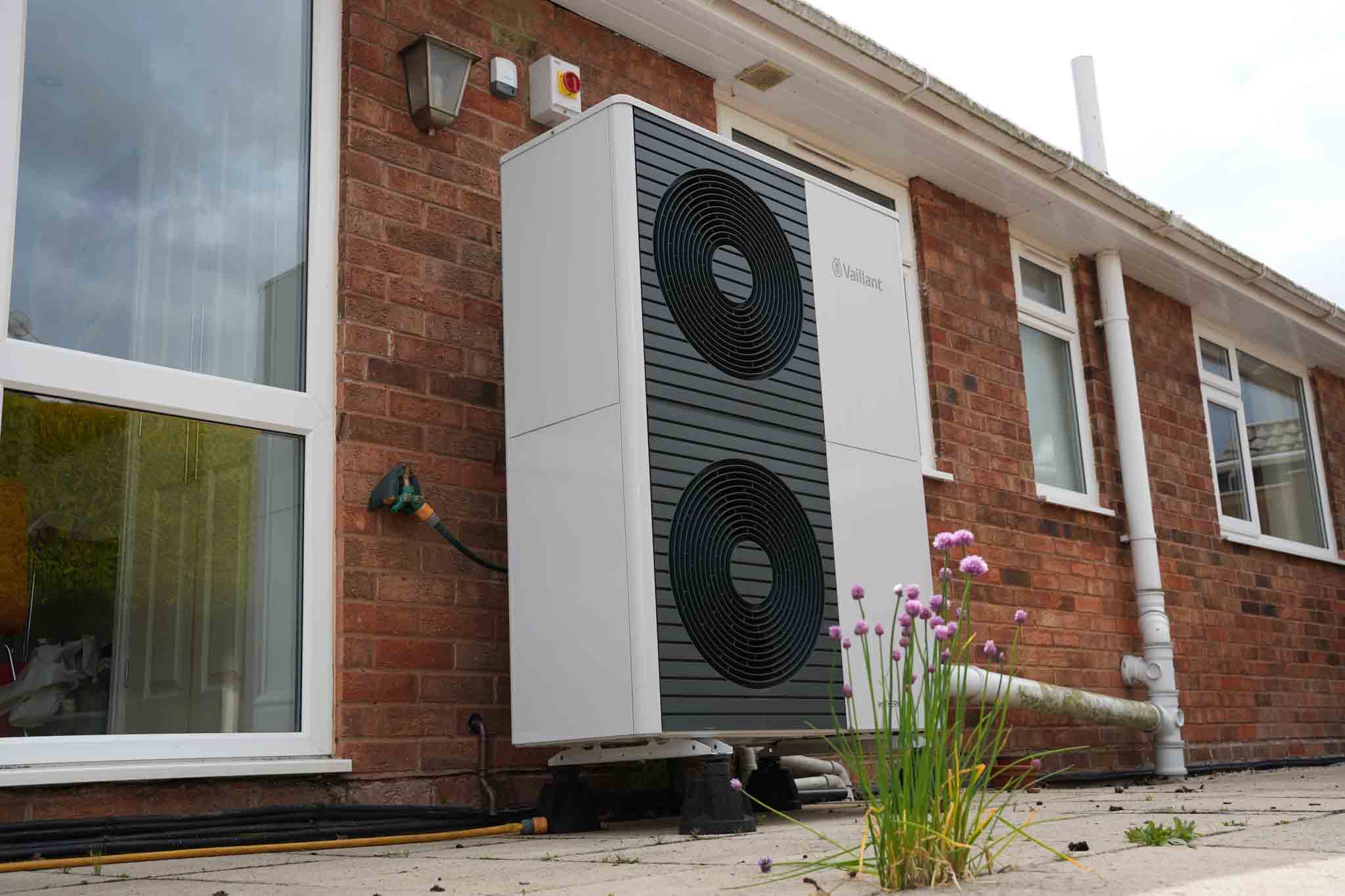
The fact is, modern air-source heat pumps are the standard heating solution in countries with far harsher winters than the UK, including Sweden, Norway, and Canada. Their reliability is proven.
For UK property owners, an air source heat pump offers:
- Consistent Comfort: Reliable heating, even when temperatures drop significantly.
- Reduced Bills: Lower running costs compared to oil, LPG, and direct electric heating.
- Sustainability: A major reduction in your carbon footprint compared to gas boilers.
Stop worrying about air source heat pumps in Winter. Partner with Geo Green Power to ensure you have a perfectly designed and professionally installed system that will keep you warm and save you money for decades to come.
Winter-Proof Your Home Today
Ready to benefit from reliable, efficient heating this winter and beyond?
- Request a Free Consultation: Let our experts calculate your heat loss and design the perfect air source heat pump installation for your property.
- Call Geo Green Power today to start your journey to a warmer, greener home.