How Much Electricity Does an Air-Source Heat Pump Use? A Geo Green Power Analysis
The question, “How Much Electricity Does an Air-Source Heat Pump Use?” is central to any homeowner or business considering a transition away from fossil fuels.
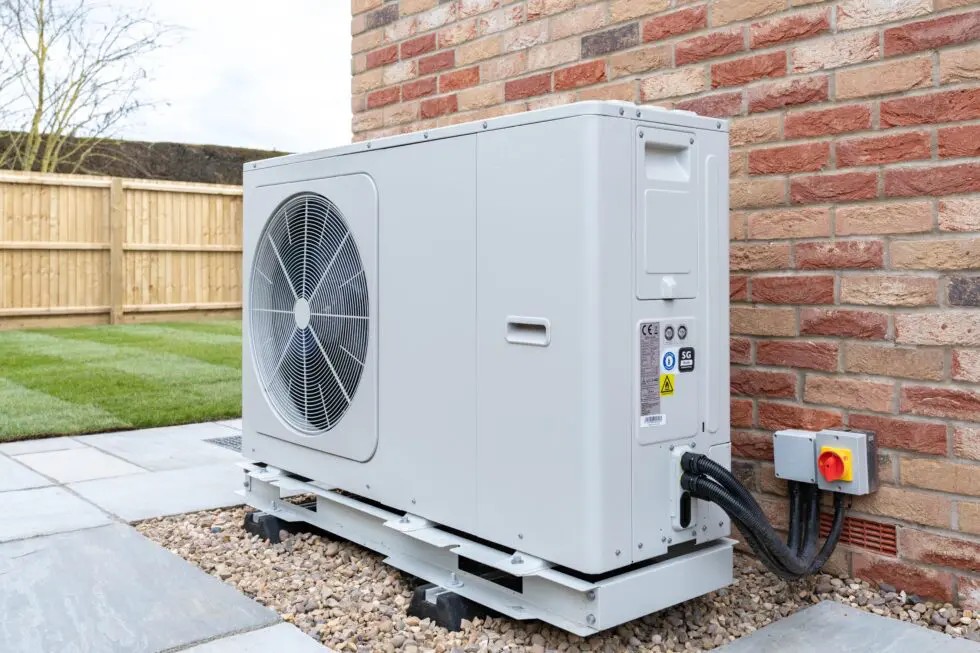
As a leading renewable energy company, Geo Green Power provides a clear, data-driven answer: while an Air-Source Heat Pump (ASHP) is powered by electricity, its operation is fundamentally different from a direct electric heater, making it a far more efficient heating solution.
The actual air-source heat pump electricity consumption is defined by its efficiency, the property’s characteristics, and how intelligently the system is controlled. We break down the key factors and provide real-world figures to give you a transparent view of the operational costs and air-source heat pump electrical requirements.
The Power of Efficiency: Understanding CoP
Unlike a traditional gas or oil boiler, which generates heat by burning fuel (reaching approximately 90% efficiency), an ASHP transfers heat from the surrounding air. This process is quantified by the Coefficient of Performance (CoP), which is the ratio of heat energy output to electrical energy input.
Average CoP: A modern, well-installed ASHP typically achieves a Seasonal CoP (SCOP) of 3.0 to 4.0 over the course of the year.
The Calculation: This means that for every 1kWh of electricity the heat pump consumes to run its compressor and fan, it produces 3kWh to 4kWh of useful heat energy for your home.
The Difference: This means that the total amount of heat required for a home (e.g., 12,000kWh per year) is produced using only a fraction of the electrical input that a direct electric heater would use.

| Property type | Typical Annual Heat Demand (kWh Thermal) | ASHP Electrical Input (at CoP 3.5) |
|---|---|---|
| Small Flat/Terrace | 8,000kWh | approx 2,300kWh |
| Standard 3–Bed Semi | 12,000kWh | approx 3,430kWh |
| Large 4–Bed Detached | 17,000kWh | approx 4,860kWh |
Note: These figures represent the electricity consumed by the heat pump itself. By comparison, an old G-rated gas boiler might consume over 14,000kWh of gas to meet the 12,000kWh demand for a 3-bed semi.
Even though electricity is more expensive per unit than gas, the massive efficiency gain achieved by the heat pump often leads to a lower overall running cost than older, inefficient systems.
Key Factors Influencing Air-Source Heat Pump Electricity Usage
Geo Green Power identifies four primary factors that directly affect how much electricity an air-source heat pump uses:
1. Property Insulation and Heat Loss
The single biggest determinant of consumption is how well your home retains heat. If the property is well-insulated (loft, walls, windows), the ASHP can run at low temperatures for long periods, maintaining comfort with minimal energy.
A poorly insulated home forces the heat pump to cycle on and off more frequently and use higher, less efficient flow temperatures, dramatically increasing air-source heat pump electricity consumption.
2. System Design and Installation
Correct sizing is critical. An undersized heat pump will struggle to meet demand, leading to the frequent use of the supplementary electric immersion heater (which runs at CoP 1.0, consuming significant electricity). An expertly installed system is precisely matched to the calculated heat loss of the building, ensuring peak efficiency.
3. Outside Temperature
The CoP of an ASHP decreases as the outside temperature drops because the compressor has to work harder to extract heat. However, modern systems are highly sophisticated and remain efficient even in cold weather. For example, a CoP of 4.0 at 10 degrees might drop to 2.5 at – 5 degrees, but the system is still significantly more efficient than direct electric heating.
4. User Control and Set-up
Running your heat pump at a low, consistent temperature (e.g., 19 degrees all day) is far more efficient than allowing the temperature to drop significantly and then demanding a rapid heat-up. Consistent, low-grade heating minimises peak loads and keeps the system in its most efficient operating zone.
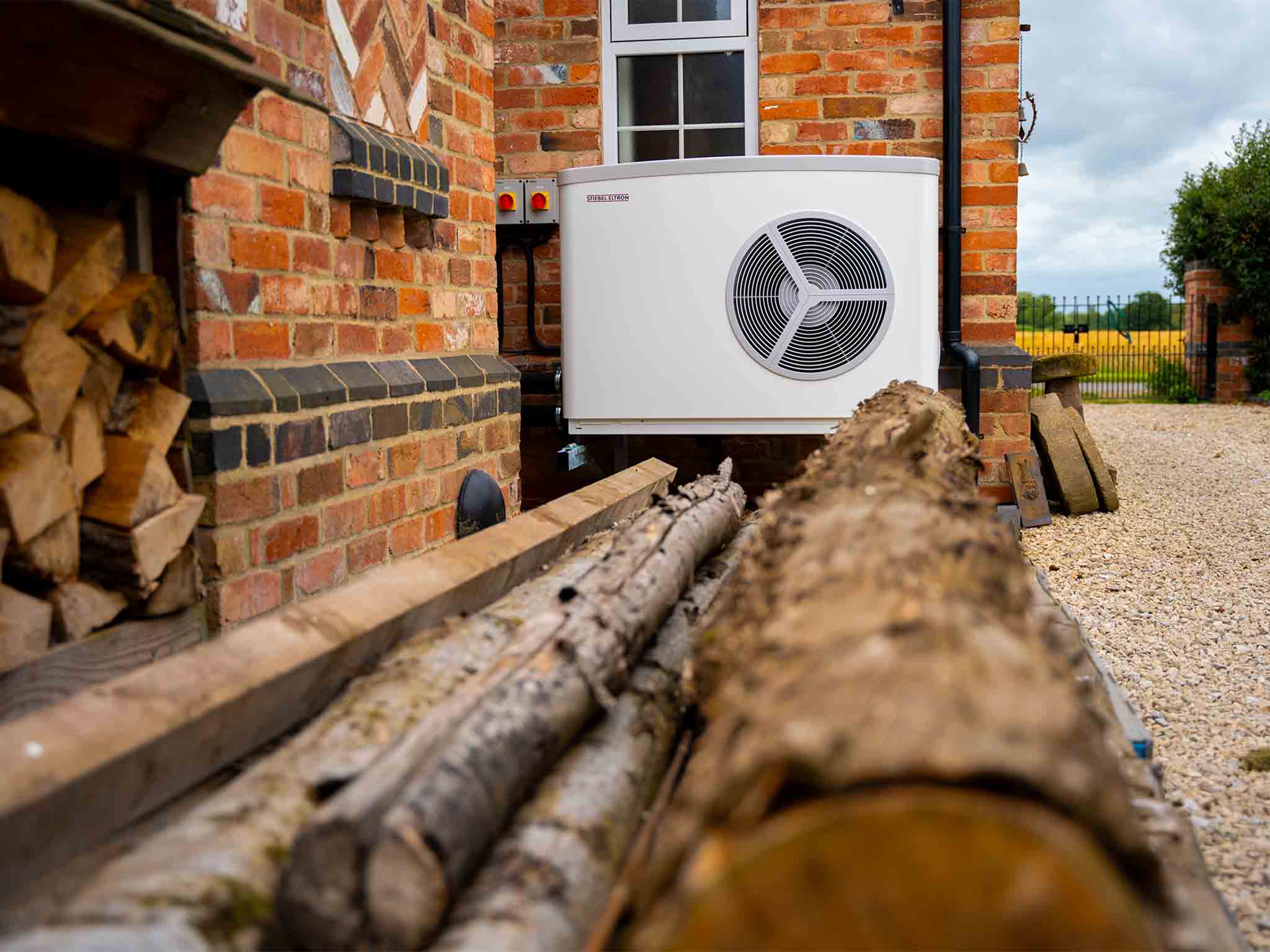
Key Factors Influencing Air-Source Heat Pump Electricity Usage
Since an ASHP requires electricity, choosing the right energy plan is essential for controlling running costs. The electricity consumed must be priced competitively to make the system financially superior to a gas boiler. Geo Green Power recommends exploring specialist heat pump tariffs and smart tariffs.
Time-of-Use Tariffs
The best air-source heat pump electricity tariff is often a time-of-use tariff (also known as a smart tariff). These tariffs offer a significantly cheaper rate for a set number of ‘off-peak’ hours (often overnight and sometimes in the middle of the day) in exchange for a higher ‘peak’ rate.
Optimisation: By using a smart programmer, you can schedule your heat pump to run its longest cycle and primarily heat your hot water tank during the cheaper, off-peak hours.
Example Tariffs: Major energy suppliers, including Octopus Energy, E.ON Next, and ScottishPower, offer specialised electricity tariffs designed to lower the running costs for heat pump owners. These plans typically provide discounted “off-peak” windows throughout the day, allowing you to heat your home or water at a significantly reduced rate.
By leveraging the high efficiency (CoP) of an air-source heat pump during these cheaper periods, the effective cost of heating can become highly competitive with, or even cheaper than, traditional gas systems. Because the timing of these windows and the rates for peak usage vary between providers, it is well worth exploring the different options currently on the market to find a plan that aligns with your household’s daily heating habits.
Pairing with Solar PV and Battery Storage
For the ultimate cost control, Geo Green Power advocates integrating your ASHP with a Solar PV system and a home battery. Solar panels generate free electricity during the day, directly offsetting the air-source heat pump’s electricity consumption.
A battery stores this excess solar power, or cheap off-peak power, to run the heat pump or domestic appliances when grid electricity is expensive, maximising savings and reducing reliance on the grid.
Air-Source Heat Pump Electrical Requirements (Technical)
To ensure your home is ready for the transition, the expert should assess the air-source heat pump electrical requirements during the initial survey.
Dedicated Circuit: An ASHP requires a dedicated electrical circuit.
Breaker Size: The required circuit breaker size typically ranges from 16A to 32A, depending on the size and output of the unit (e.g., a common domestic unit might require a 32A breaker).
Supply Check: Before installation, check the property’s main fuse/cut-out. Older properties may have a 60A main fuse, which could require upgrading to 100A to accommodate the ASHP and other high-demand appliances (like an EV charger).
By comprehensively addressing these technical and operational aspects, you ensure that your transition to an ASHP system is not only environmentally sound but also delivers maximum energy savings by accurately controlling how much electricity your air-source heat pump uses.
Disclaimer: Geo Green Power does not offer installation services, but our service, repairs, and maintenance team is on hand to support your system.
Contact our Heat Pump Servicing & Maintenance team today for further guidance.