The Best Orientation for Solar Panels: Maximising Sunlight, Maximising Savings
When embarking on a solar energy installation, homeowners and businesses often focus heavily on the quality and wattage of the panels themselves.
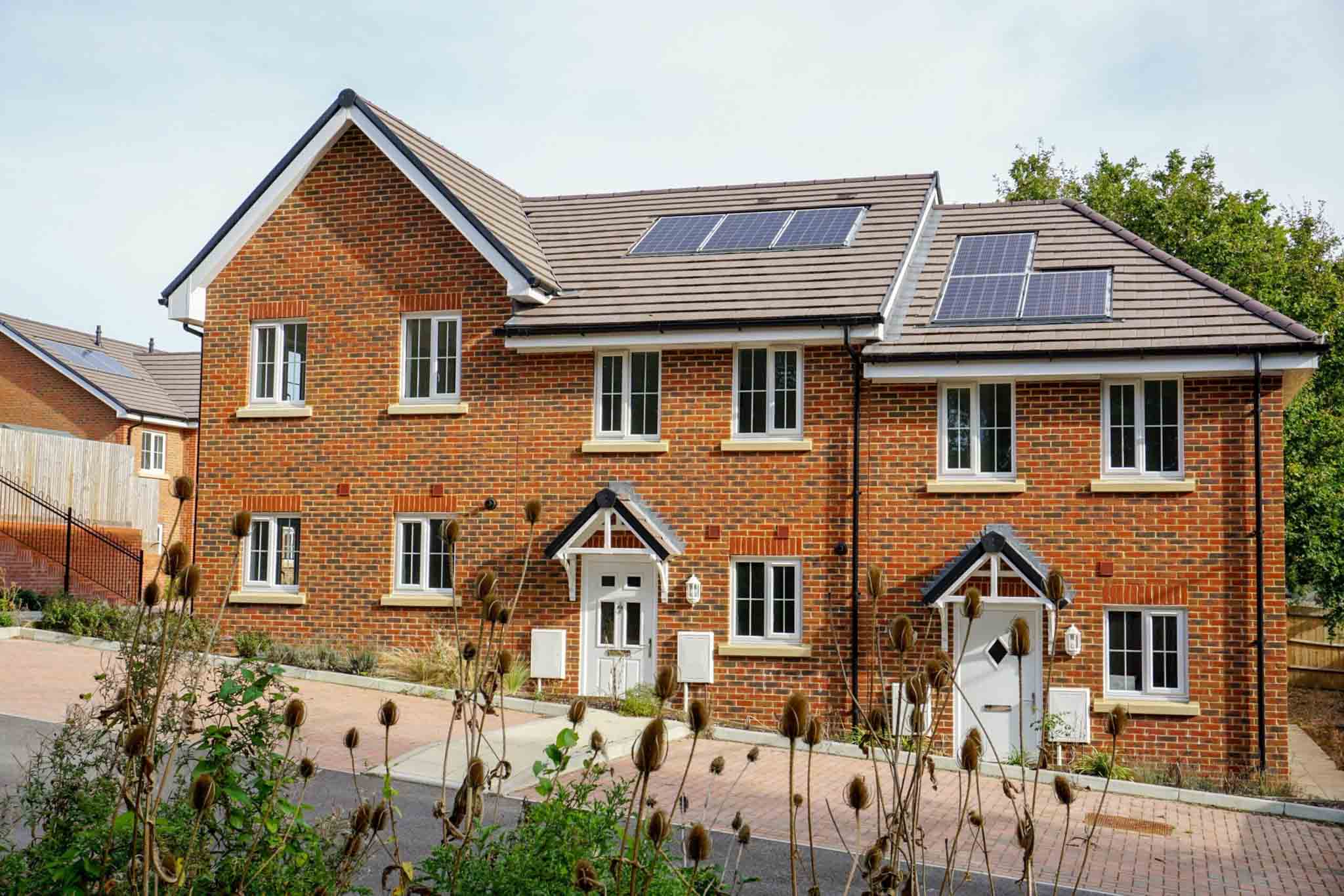
While panel efficiency is vital, the factor that determines how much free electricity your system generates day in and day out is the solar panel orientation, the direction and angle at which the panels are mounted.
Getting the best orientation for solar panels ensures that they receive the maximum amount of direct sunlight throughout the year.
In the UK, which sits in the Northern Hemisphere, this optimal setup is dictated by the sun’s path across the sky. The sun’s path in the Northern Hemisphere is always offset to the south, meaning a south-facing panel receives the most direct sunlight for the longest duration throughout the day and across the seasons (This is also true in the Southern Hemisphere with north-facing).
At Geo Green Power, our expert design process involves a detailed analysis of your property’s roof structure, shading, and local climate to pinpoint the most effective setup. This guide breaks down what constitutes the best roof orientation for solar panels and explores modern approaches that offer excellent results even when perfect conditions aren’t met.
The Ideal: True South
Historically, and statistically, the most direct and consistent power generation across the UK calendar year comes from a system facing True South.
Why South is Best
Direct Sunlight: In the Northern Hemisphere, the sun travels along the Southern portion of the sky. A South-facing array receives the most direct, intense sunlight for the longest duration of the day, particularly around noon (12 pm to 2 pm).
Peak Energy Capture: This orientation generally provides the highest overall annual energy yield, making it the benchmark for calculating returns on investment.
The Ideal Angle (Pitch)
The ideal pitch for maximising annual yield in the UK is generally between 30 and 40 degrees. This angle is often naturally achieved by the standard pitched roofs of UK houses, which is one reason why the best roof orientation for solar panels often requires the simplest solar panel mounting.
Excellent Alternatives: East-West Systems
While True South provides the highest total annual output, modern electricity consumption patterns often make East-West facing systems a highly effective and strategically smart alternative.
The East-West Advantage
Facing panels, East and West, divide the generation curve:
East-Facing: Captures the early morning sun, generating power right when many modern homes start their day, powering kettles, toasters, and charging devices before people leave for work.
West-Facing: Captures the afternoon and evening sun, generating power during the crucial ‘peak-time’ hours (4 pm to 7 pm) when families return home and start cooking or running appliances.
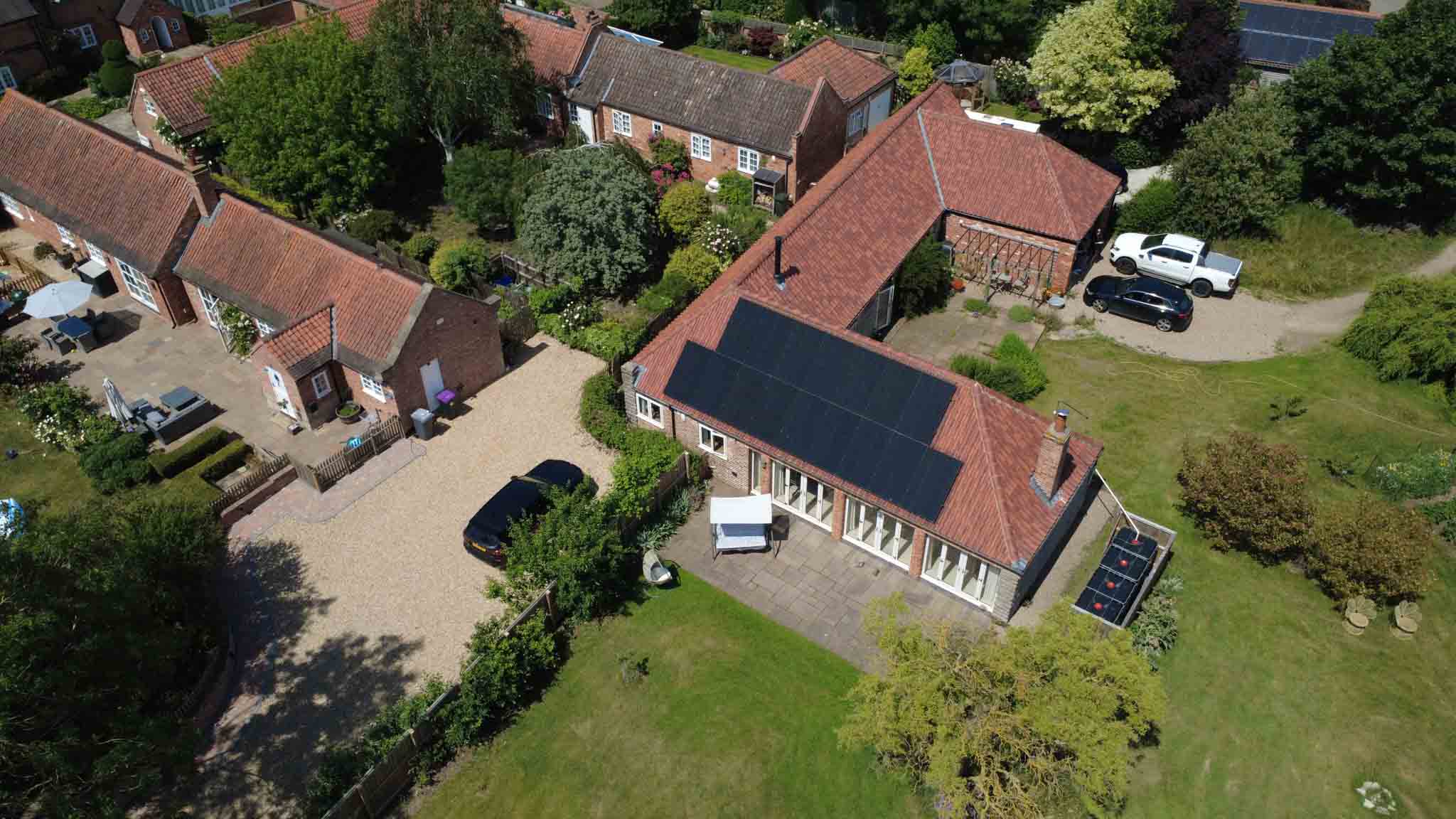
Strategic Consumption Matching
For homes that use most of their electricity in the morning and late afternoon/evening, an East-West array offers a better self-consumption rate (using the free electricity as it’s generated, rather than exporting it).
The resulting generation curve is lower at midday but much flatter and broader, better matching a typical residential consumption profile. Because of this, East-West systems are often considered the best choice for maximising immediate savings, even if the total annual generation is 10-20% lower than a South-facing system.
The Viability of Other Orientations
What if your roof faces North-East or North-West? While True North is universally poor for solar generation in the UK, other off-South orientations are often still highly viable.
South-East and South-West
These orientations are excellent. They still receive significant direct sunlight but bias the generation curve slightly:
- South-East: Favours morning generation.
- South-West: Favours afternoon generation.
A good installer will model the expected yield for South-East or South-West facing arrays, and the annual difference compared to True South is often minimal (usually less than 5-10%), making them perfectly acceptable and highly efficient.
North-East and North-West
These are the least effective orientations that are still sometimes considered. While performance is significantly lower than South-facing, an installation can still be worthwhile if:
High Energy Consumption: The household has extremely high energy needs (e.g., running a heat pump or electric vehicles), where any additional generation is valuable.
Space Constraints: There is no other available roof space, and the system is paired with a battery to maximise the use of all generated electricity.
In all cases, a detailed site survey and yield projection will provide the definitive answer regarding the viability of these less-than-ideal orientations.
Flat Roofs and Ground-Mounted Solutions
For flat roofs or ground-mounted systems, the installer has total control over the solar panel orientation and tilt, which offers the highest possible level of customisation.
Flat Roofs: Panels are mounted using frames and ballast weights, allowing the installer to angle the array for the best orientation for solar panels (True South) and the optimal tilt (often around 10 to 15 degrees for stability). To maximise space and avoid the arrays shading each other, the tilt angle is often shallower than on a pitched roof.
Ground-Mounted: Like flat roofs, ground-mounted solar panels are fixed to frames that can be engineered to face the optimal direction and angle for maximum yield.
Technology and the Future of Solar Panel Orientation
Modern solar technology is continuously mitigating the impact of non-ideal orientation:
Optimisers and Microinverters: These devices are installed behind each panel and allow them to operate independently. If one panel’s performance is suffering due to slight shading or sub-optimal orientation, it doesn’t drag down the performance of the entire string, as it would in traditional setups.
Bi-facial Panels: These panels can absorb sunlight from both the front and the back (from reflected light), offering enhanced performance, particularly in ground-mounted arrays where light can reflect off the ground surface.
The bottom line is that while True South remains the statistical benchmark for the best orientation for solar panels, an increasing number of homes are achieving excellent financial returns and superb self-consumption rates with East-West and even South-East/South-West facing roof orientation for solar panels.