Is Your Home Suitable for an Air-Source Heat Pump?
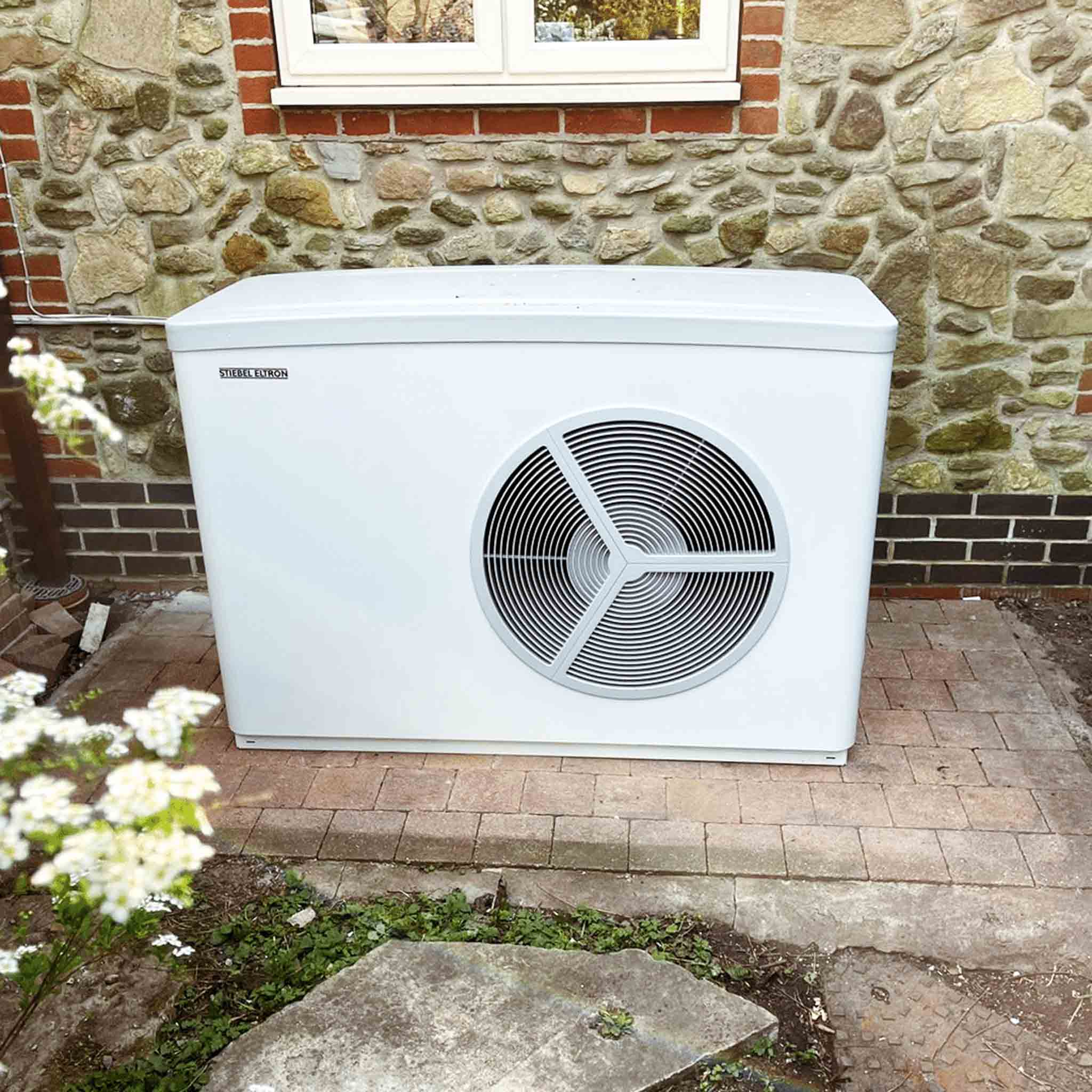
The UK is rapidly moving towards a greener future, and central to this shift is the push for low-carbon heating solutions. Among the most popular and viable options is the domestic air-source heat pump (ASHP). These highly efficient systems extract ambient heat from the outside air, even in cold temperatures, and use it to heat your home and provide hot water.
But is your home ready for one?
At Geo Green Power, we understand that making the switch is a big decision, and whilst most homes are suitable, especially newer builds, not every property is perfectly suited right out of the box. While modern ASHPs can be installed in a wide variety of homes, an honest assessment of your property is the first and most crucial step. This article will guide you through the key factors to consider when determining the suitability of your home for an air-source heat pump installation.
The Crucial Factor: Your Home’s Insulation
The single most important factor for an efficient and comfortable heat pump system is your home’s ability to retain heat.
Air source heat pumps operate most effectively by distributing heat at a lower flow temperature (around 35 degrees to 55 degrees) over a long period, compared to a traditional boiler’s higher temperatures (60 degrees to 70 degrees).
If your home is poorly insulated, the lower-temperature heat will escape quickly, forcing the heat pump to work harder, which reduces efficiency and increases running costs.
Key Insulation Checks:
- Loft Insulation: It is recommended to have at least 270mm of good-quality loft insulation. This is often the easiest and most cost-effective upgrade.
- Wall Insulation: Do you have cavity wall insulation or high-performance external or internal wall insulation? Older properties, especially solid wall homes (pre-1930s), may require upgrading wall insulation to maximise heat pump efficiency.
- Windows and Doors: Ensure your home has efficient double or triple glazing and effective draught-proofing around all openings.
The Takeaway: A well-insulated home minimises heat loss, allowing the ASHP to run at its optimal, most efficient temperature. If your insulation is lacking, we highly recommend factoring upgrades into your overall project plan.
Heating System Compatibility: Radiators and Emitters
Next, you need to consider how the heat is distributed within your home. The low-flow temperature of an ASHP means your existing radiators may not have a large enough surface area to heat the room effectively. But heat pump installation engineers can assess this and advise accordingly.
Underfloor Heating (UFH)
UFH is the ideal partner for a domestic air source heat pump. It runs at very low temperatures and provides a large, consistent area for heat emission, leading to exceptional efficiency and comfort.
Radiators
If you have traditional radiators, a survey will be needed to check their suitability. In some cases, they may need to be replaced with oversized or double-panel, double-convector (Type K2) radiators. These units have a greater surface area, enabling them to emit the required heat output at the lower operating temperature of the heat pump.
Pipework: The size of your existing pipework also matters. While some older microbore (10mm or smaller) pipework can work, larger pipe diameters (15mm or more) are generally preferred for optimal water flow and efficiency with a heat pump system.
Hot Water and Indoor Space Requirements
Unlike combi-boilers, most air source heat pump systems are air-to-water and require a hot water storage cylinder. This cylinder stores the heated water until it’s needed for taps, baths, and showers.
- Indoor Space: You will need a designated indoor space, such as an airing cupboard, utility room, or garage, to house the new hot water cylinder and potentially an indoor hydro-box unit, which manages the heating controls.
- System Sizing: The cylinder must be appropriately sized for your household’s hot water demand. If you’re replacing a combi-boiler, this will be a change, but it provides a reliable store of clean-generated hot water.
Outdoor Space and Noise Considerations
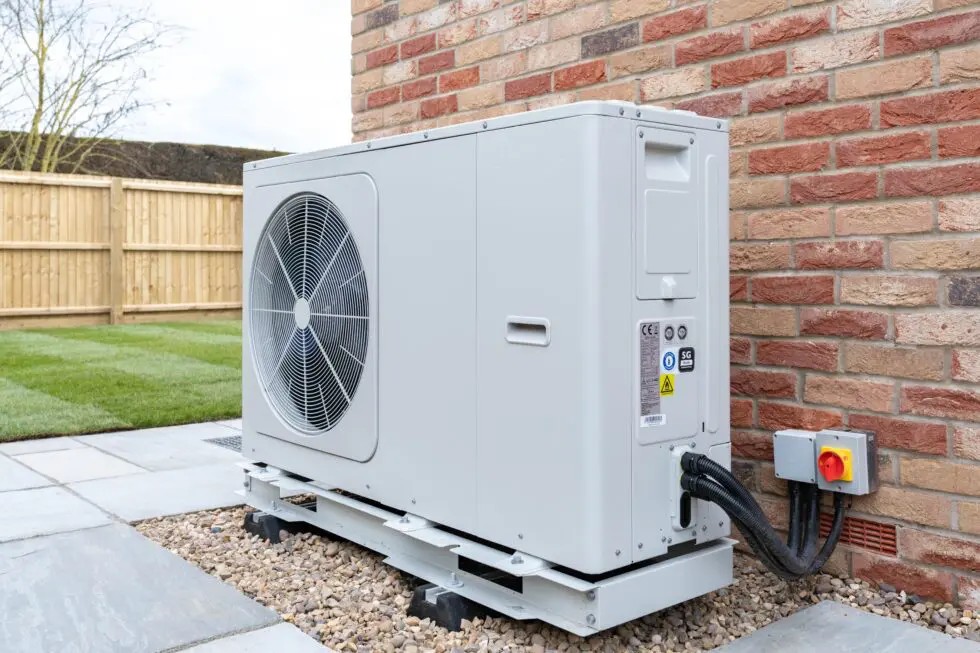
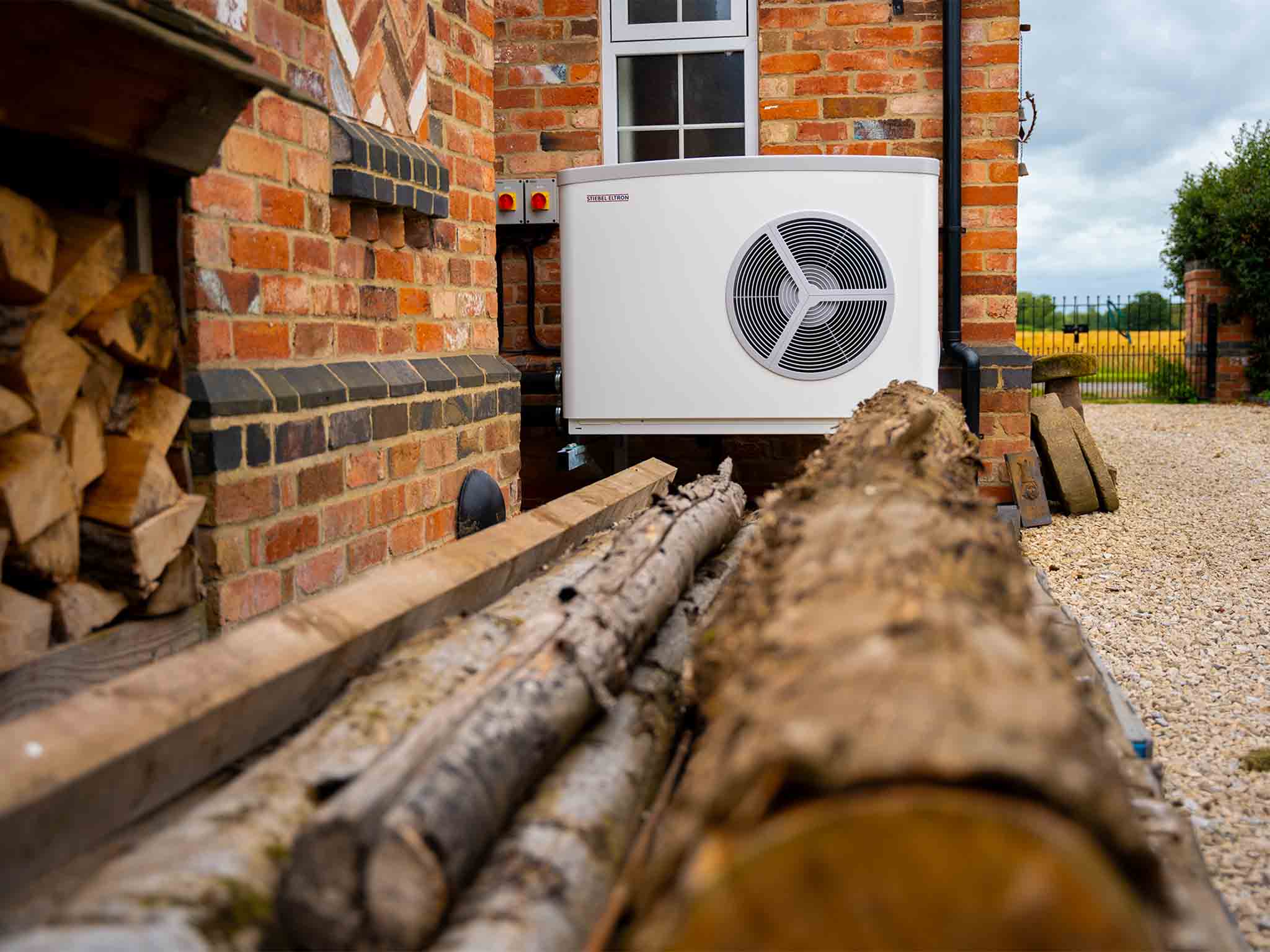
The external unit is where the magic happens; it draws in the air and extracts the heat. The unit looks similar to an air conditioning condenser and requires specific placement for efficient operation and to comply with regulations.
Siting the Unit
- Adequate Space and Airflow: The unit must be placed on a solid, level base and needs sufficient clearance (typically around 1 metre) on all sides to allow for unrestricted airflow and access for maintenance.
- Noise: Modern ASHPs are quiet, generating noise levels comparable to a fridge (around 40-50 decibels). However, for a smooth air source heat pump installation, you must consider the proximity to windows (yours and your neighbours’) and property boundaries to minimise any potential noise nuisance. This is often covered by Permitted Development rights, but is a key design consideration.
Electrical Supply
A domestic air source heat pump requires a dedicated electrical circuit. Most standard domestic electrical supplies are sufficient, but your installer will need to assess to ensure your current electrical capacity (often 100 amps) is adequate to handle the additional load. In rare cases, a service upgrade from your Distribution Network Operator (DNO) might be necessary.
Planning Permission
In most cases, a single air source heat pump installation on a dwelling house in England and Wales falls under Permitted Development rights, meaning you won’t need full planning permission. However, there are conditions, such as:
- The unit must be installed on the ground or a wall.
- The maximum unit size is restricted.
- The unit must be placed at least one metre from the property boundary.
- The unit must meet specific noise level limits.
Your chosen MCS-certified installer, like Geo Green Power, will manage this process, ensuring your project complies with all local and national regulations.
Our Recommendation: The Professional Heat Loss Survey
It’s clear that while a heat pump can be installed in most homes, its efficiency and effectiveness depend on the property’s thermal performance and the quality of the installation.
The only way to definitively confirm your home’s suitability, determine the optimal system size, and finalise the exact scope of the air source heat pump installation is through a comprehensive, room-by-room heat loss calculation (or survey) performed by an MCS-certified professional.
This survey considers all the factors mentioned above, insulation, glazing, radiator size, and hot water demand, to precisely calculate the heat load your property requires. This prevents the installation of an undersized system (which would struggle to heat your home) or an oversized system (which is more expensive and less efficient).
Ready to Find Out More?
If you are looking to reduce your carbon footprint, cut long-term energy bills, and make the leap to renewable heating, the first step is to get expert advice.
Contact the team at Geo Green Power today to schedule your professional home survey and take the first step towards a greener, warmer future.