How Do Solar Panels Work: A Beginner’s Guide
The sun is the most powerful energy source in our solar system, yet for centuries, harnessing it to power our homes and businesses seemed like a futuristic dream. Today, that dream is a reality.
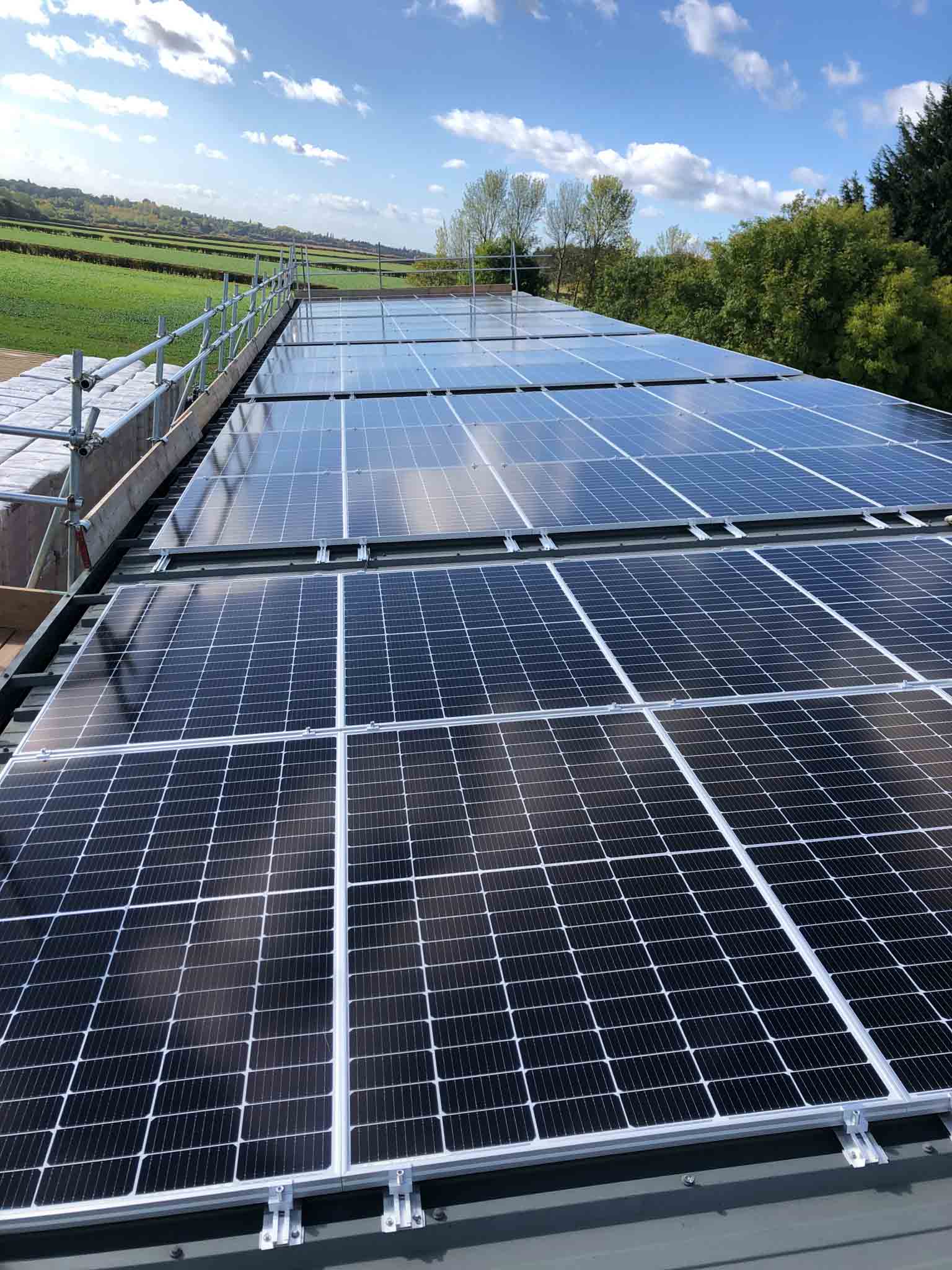
As energy costs soar and the push for sustainability grows stronger, solar panels have become a common sight on rooftops across the nation. But for many, the actual mechanism behind this incredible technology remains a mystery.
If you’ve ever wondered how solar panels work, you’re not alone. This guide breaks down the science and the system into simple, easy-to-understand steps.
The Heart of the System: The Photovoltaic Effect
At its core, the technology behind solar panels is based on a scientific principle known as the photovoltaic (PV) effect. The term ‘photo’ means light, and ‘voltaic’ refers to producing electricity.
The solar panel itself is an array of interconnected smaller units called photovoltaic cells. Most modern cells are made from silicon, a material that acts as a semiconductor. A single PV cell is typically made up of two layers of silicon, which have been specially treated, or ‘doped,’ to create an electric field:
- The N-Type Layer (Negative): This layer has been treated to have extra electrons.
- The P-Type Layer (Positive): This layer has been treated to have space for electrons, known as ‘holes.’
When these two layers are placed together, the junction between them creates a natural electric field. This is the mechanism that generates the power.
Step-by-Step: The Electricity Generation Process
The process of converting sunlight into usable electricity is a precise, four-step journey for a tiny electron:
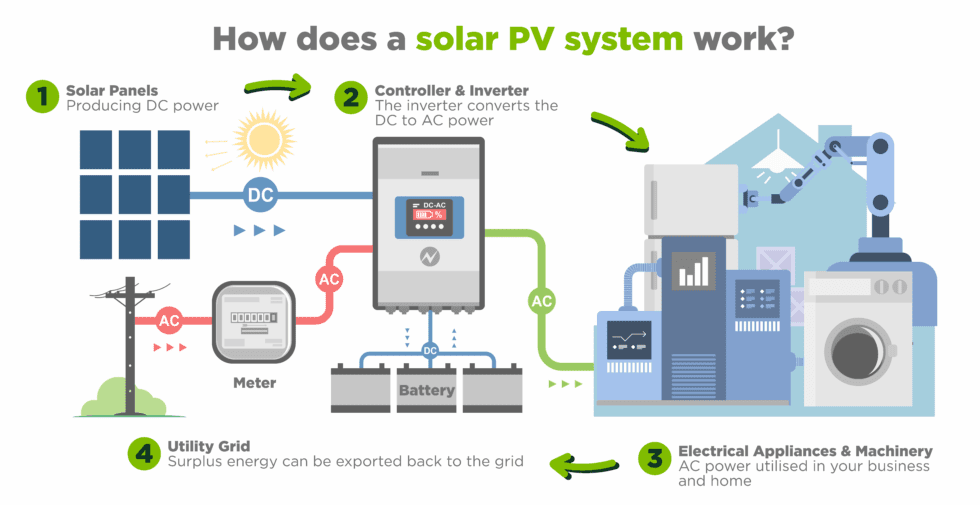
- Sunlight Strikes the Cell: When photons (particles of light) from the sun hit the solar panel, they are absorbed by the silicon material in the PV cells.
- Knocking Electrons Loose: The energy from the absorbed photons is transferred to the electrons in the silicon atoms. If a photon has enough energy, it literally knocks an electron free from its atom.
- The Electric Field Steps In: Without the electric field created by the N-type and P-type layers, the liberated electron would just wander aimlessly and quickly recombine with an atom. However, the electric field acts like a one-way street, pushing the freed electrons from the P-type layer into the N-type layer. This forced movement creates a flow; this flow is an electric current, specifically Direct Current (DC) electricity.
- Collecting the Current: Metal contacts embedded within the PV cell collect these moving electrons and channel them out of the panel and through wires, ready for the next crucial stage.
From DC to AC: The Power Transformation
The DC electricity generated by the panels is not yet suitable for powering standard household appliances. In the UK and most parts of the world, homes and businesses operate on Alternating Current (AC) electricity. This is where the inverter comes in.
The inverter is arguably the most vital component after the panels themselves. It takes the DC electricity flowing from the panels and electronically converts it into usable AC electricity. Once converted, the power can be used immediately to run everything in your property, from your kettle and lights to your industrial machinery.
The Complete Solar System Checklist
A fully functioning solar system is more than just panels on a roof. It requires several key components working in harmony:
- Solar Panels (Modules): The core unit that converts sunlight into DC electricity.
- Mounting/Racking System: The framework that securely attaches the panels to the roof or ground.
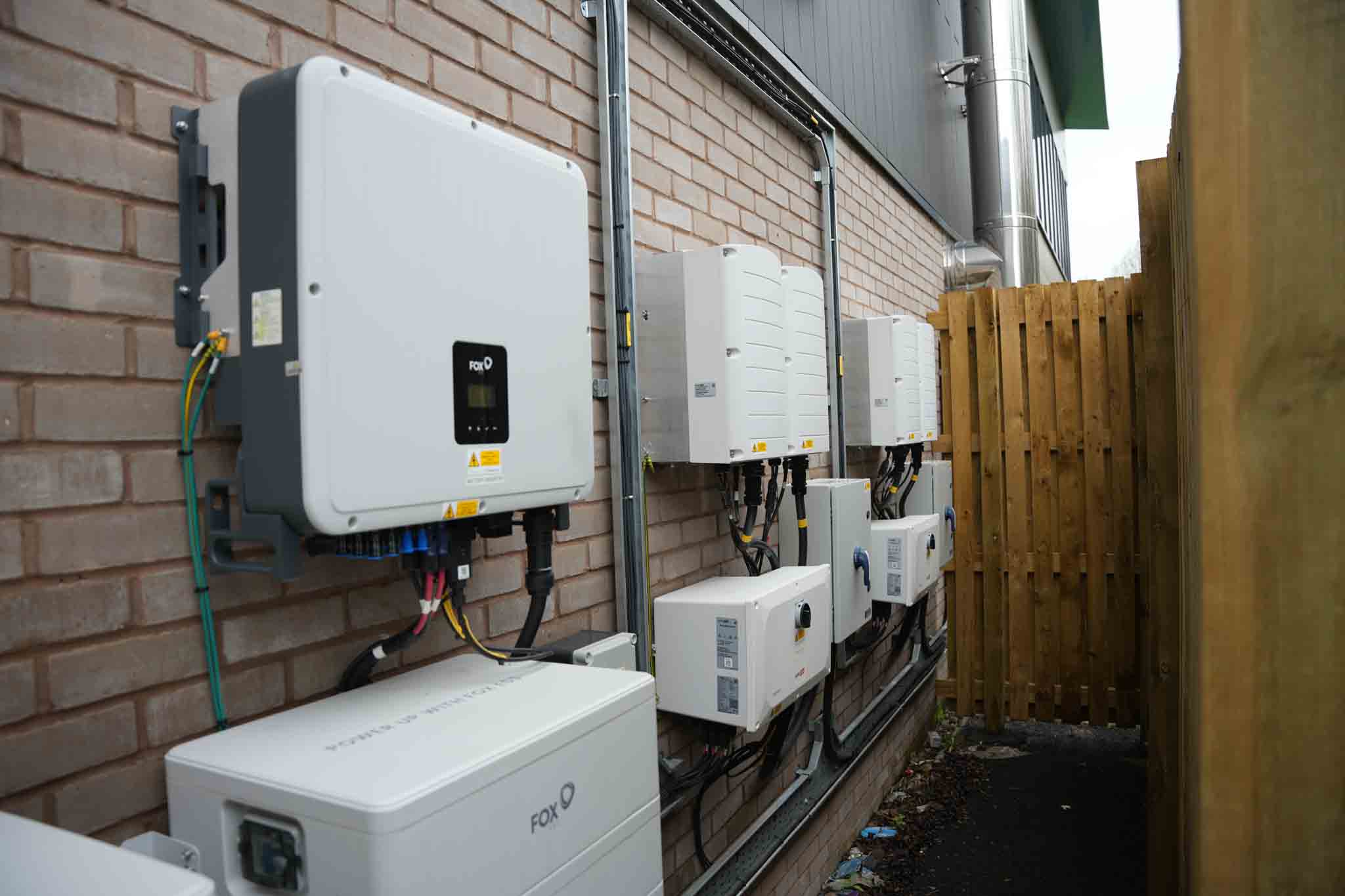
- The Inverter: Converts DC power into usable AC power.
- Solar Battery (Optional but Recommended): Stores excess AC power generated during the day for use at night or on cloudy days, maximising energy independence.
- Metering and Safety Components: Devices like meters and isolators ensure the system operates safely and monitors performance.
The Installation: Beyond the Technology
The human element is key. Before a single panel is mounted, a trusted company, such as Geo Green Power, plays a crucial role. Our job involves a detailed site assessment, considering factors like roof angle, orientation (south-facing is often ideal), shading from trees or nearby buildings, and the client’s specific energy consumption patterns. This expert uses complex software to design a system that is perfectly sized and optimised to deliver the best possible returns on investment (ROI). They are your guide, ensuring you understand the technology, the predicted output, and the available financial incentives.
Once the design is finalised, the baton passes to the solar installers. This team of certified professionals ensures the physical installation is not only structurally sound but also electrically safe and compliant with all regulatory standards. You should always insist on certified, experienced solar installers; look for companies with Microgeneration Certification Scheme (MCS) accreditation. A poor installation can compromise both performance and roof integrity, so choosing the right team is as important as choosing the right equipment. They handle the mounting, the complex wiring, the connection to the inverter, and the final commissioning of the system.
The Benefits: Why Go Solar?
The elegant simplicity of the photovoltaic effect leads to some profound real-world benefits:
- Financial Savings: By generating your own electricity, you reduce your reliance on expensive grid power, significantly cutting monthly energy bills.
- Energy Independence: With a battery storage system, you can store surplus power, reducing your vulnerability to power outages and fluctuating energy prices.
- Environmental Impact: Solar power is a clean, renewable energy source. It dramatically reduces your property’s carbon footprint, helping the UK move closer to its net-zero goals.
- Increased Property Value: Homes with owned solar panel systems are increasingly attractive to buyers, often fetching a higher resale price.
A Brighter Future with Geo Green Power
The concept of harnessing the sun’s energy might sound like rocket science, but the mechanism of how solar panels work is based on the simple, elegant movement of electrons. It is a proven, reliable, and powerful way to generate clean electricity. If you are ready to take control of your energy future, you need more than just good equipment; you need expertise.
Don’t just watch the sunshine; put it to work for you.
Contact us today to schedule your free site survey and discover the potential of solar power for your home or business.