Cold Snap: The True Cost of Cheap Solar
Key stats

Solar System Size:
2,100kWp

Unbudgeted Remedial Costs:
£200,000+
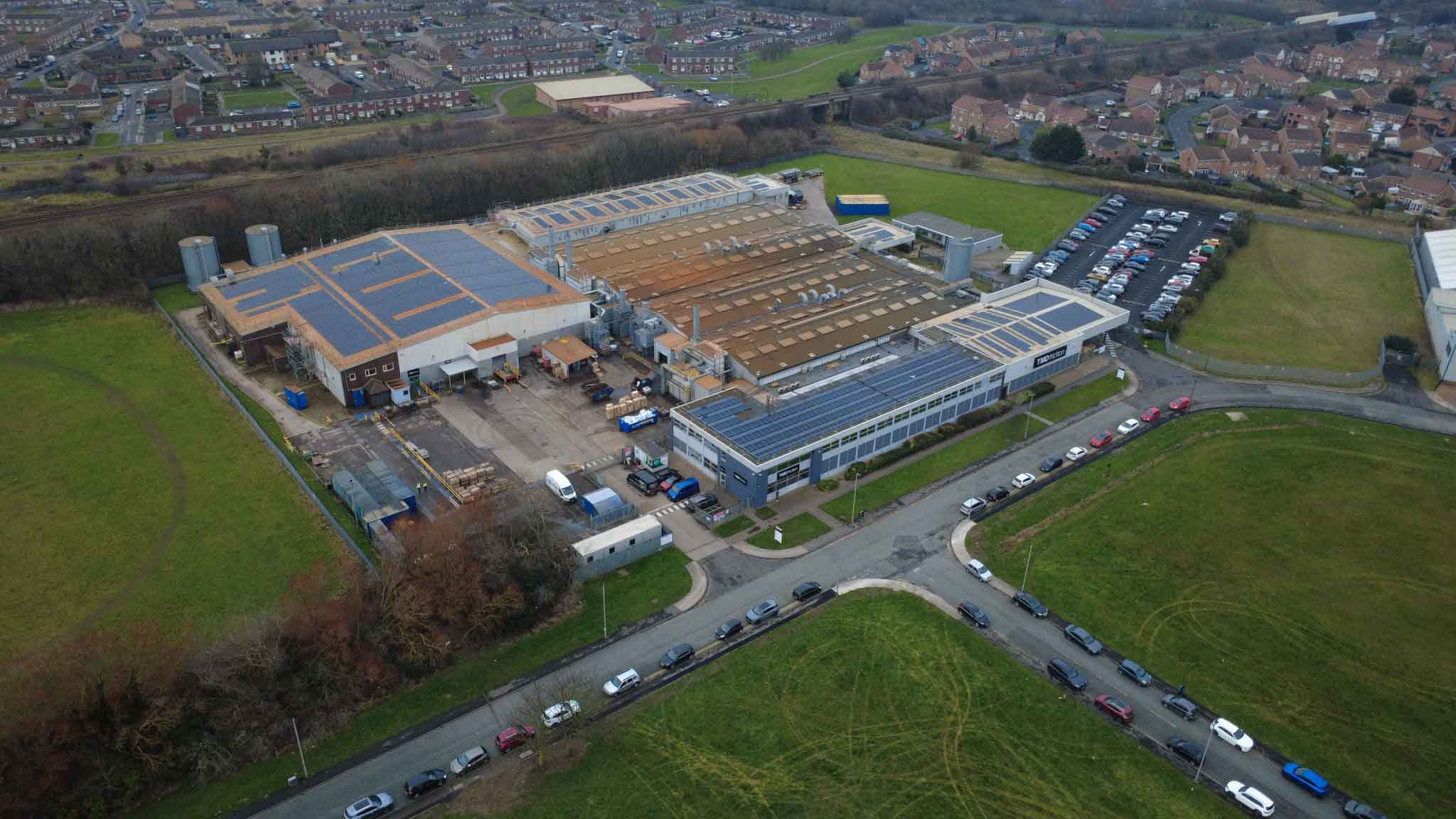
A different kind of case study: This industrial cold storage facility turned to Geo Green Power to fix their solar (installed by another company) when it went wrong.
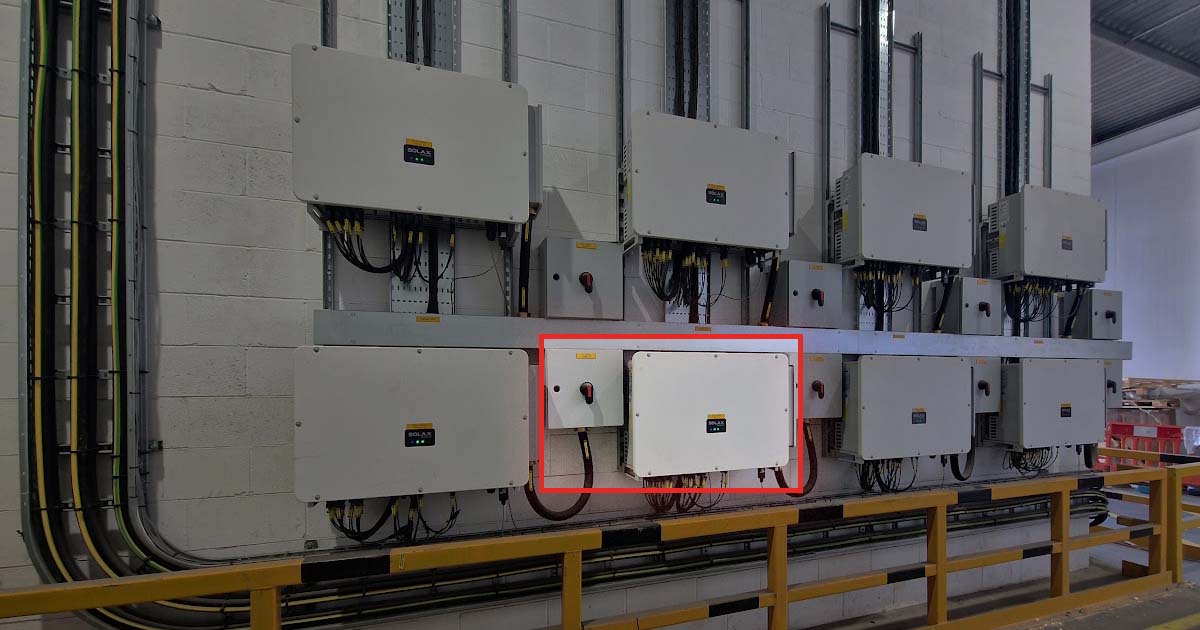
Cold Storage Facility
When procuring commercial energy infrastructure, awarding tenders based on low upfront cost rather than proven engineering capability creates a false economy. This case study details a 2.1MW commercial solar installation in a cold storage facility in Lincolnshire. The installation project was originally procured through an independent broker rather than a vetted installation partner. The result was an unregulated, non-compliant installation that triggered an emergency system isolation. This in turn led to complete operational downtime, fire risks, electric shock risks, and ultimately a £200,000+ remedial bill.
The Origin: How the Fault Was Uncovered
The site’s issues culminated during a routine electrical service. Our engineering team uncovered mismatched DC string polarities. The reversed polarity caused a severe electrical arc that melted the DC connections on the solar inverter.
Due to the severity of the fire and shock risks, Geo Green Power immediately isolated the entire 2.1 MW plant, taking the site completely offline until full remedial engineering could be completed.
Pauric Foody, Lead Site Surveyor:
“What originally initiated the remedial work was an electrical service where we found reverse polarity on certain strings resulting in an arc which melted the connections on an inverter. This resulted in Geo Green isolating the system to fully rectify the issues. The system was mis-sold and suffered from a number of issues including tripping MCCBs (Moulded Case Circuit Breakers).”
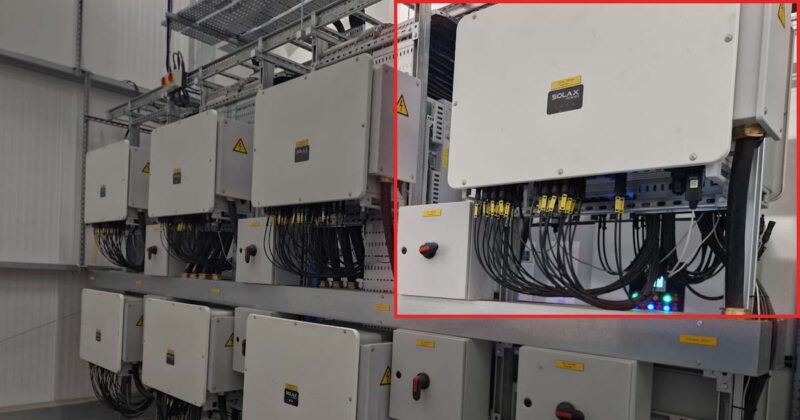
For this and the image above, the original installers placed the inverters too close to the AC isolators. This resulted in overheating and no space to manage standard servicing.
Technical Audit: Phase 1 & Phase 2 Defect Matrix
The 2.1 MW array utilises 21 x 100kW SolaX inverters. The engineering audit revealed failures across design, thermal management, protection, and basic electrical safety regulations:
CRITICAL TECHNICAL DEFECTS
1. FIRE & ARC FLASH HAZARDS
* Reversed DC string polarity causing arcs & melted inverter terminal blocks (electrocution risk)
* Mismatched MC4 connector brands across DC connections (fire risk)
2. THERMAL THROTTLING & COMPONENT STRESS
* AC isolators mounted directly against inverters (1-2″ gap), blocking cooling
* AC isolators sized strictly without headroom or tolerance
3. ELECTRICAL PROTECTION & DNO COMPLIANCE
* Unrestricted 100kW inverter output driving MCCBs to trip continuously
* Main G59 protection mismatch (1,280A total breakers vs 1,250A main switch)
* Inverters not earthed: High risk of electric shock and failure to trip during electrical faults
4. CABLE MANAGEMENT & EDDY CURRENTS
* Undersized cabling enclosed in trunking (inadequate current carrying capacity)
* Single cables entering trunking via separate entry holes (creating Eddy Currents and potential for electric shock)
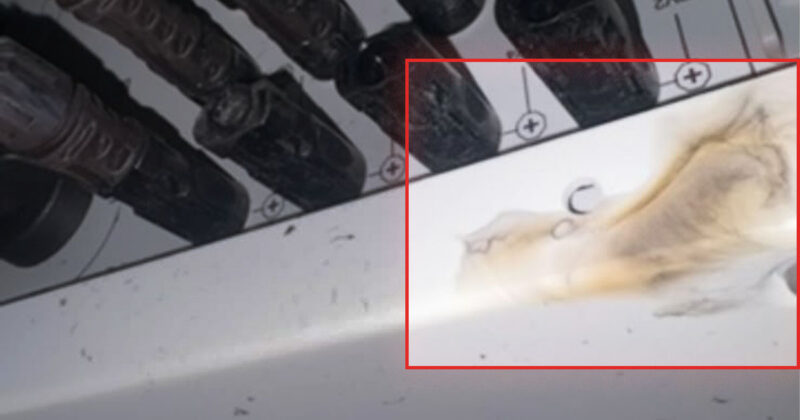
Reverse DC string polarity resulted in an arc flash, with the unit showing clear signs of burning
Technical Scope of Remedial Works
Phase 1 (Plant Room & AC Remedials):
- Repositioning AC isolators to restore OEM-mandated airflow clearances and maintainability.
- Upgrading AC isolator ratings to provide necessary thermal headroom during sustained 100% load.
- Re-engineering protection parameters and restricting inverter outputs to prevent nuisance tripping of MCCBs.
- Restructuring cable entries into single containment points to eliminate dangerous induced Eddy Currents.
- Installing protective earthing arrays across all 21 SolaX inverters to ensure rapid fault clearing.
Phase 2 (Roof & Plantroom DC Remedials):
- Complete string-by-string polarity testing and correction.
- Systematic replacement of all mismatched MC4 connectors with single-source OEM connectors.
- Cable replacement for undersized trunking runs to meet thermal current capacity standards.
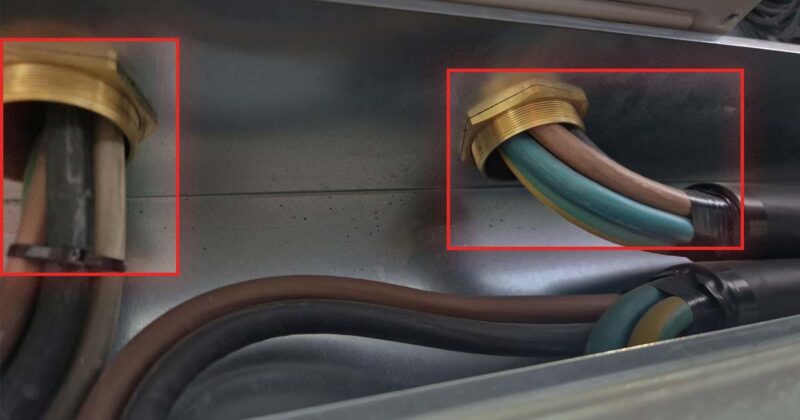
Undersized cabling in the trunking
Strategic & Financial Takeaways
James Cunningham, Geo Green Power Managing Director:
“The reason this all came about is because the client engaged with an individual rather than an installation partner. That individual offered a lower and “cheaper” cost because they simply passed the work through to a sub-contractor. No process management, no quality control and, most importantly, no warranty – so the customer is fully exposed. Sure enough, when they started having issues, the individual and the sub-contractor were nowhere to be found, and now they’re left with significant remedial costs.”
For solar-powered cold storage solutions, visit our page.
And for industrial solar panels in Lincolnshire, view our dedicated page.
If you’re anxious about your system, visit our commercial solar system repairs page for urgent advice.