Ensuring a Greener Business: The Strategic Path to Net Zero
The shift to a greener, more sustainable business model is no longer a corporate social responsibility talking point; it is a foundational strategy for financial resilience, regulatory compliance, and market competitiveness. Businesses operating today face dual pressures: the rising costs of traditional energy and the urgent, non-negotiable need to reduce their carbon footprint.
At Geo Green Power, we have guided countless commercial clients through this transition. Our key advice is simple: adopt a phased approach that moves beyond temporary fixes to integrate permanent, high-impact renewable energy infrastructure. The goal is not just to save energy, but to gain energy independence.
Here is our key advice on how any business can strategically move toward net zero, focusing on the powerful combination of on-site energy generation and smart storage.
1. The Starting Line: Audit, Measure, and Electrify
Before any major investment, a business must first understand its current energy profile. You cannot manage what you do not measure.
a. Conduct a Deep Energy Audit
The first step is a comprehensive energy audit performed by specialists. This audit identifies every leak and inefficiency, from poorly insulated windows to inefficient machinery. It establishes a baseline for your carbon footprint and, critically, maps your energy load profile, when and how you use the most power. This data is the foundation for sizing any future renewable system correctly.
b. Prioritise Electrification
The global push is toward electrification, moving away from fossil fuels like natural gas and oil. This involves replacing legacy systems like gas boilers with highly efficient alternatives, such as Commercial Heat Pumps. A heat pump system, which uses electricity to move heat rather than create it, is an essential precursor to a truly net–zero operation. Once your site is predominantly electric, your pathway to zero-carbon energy becomes much clearer.
c. Implement Low-Cost Efficiency Measures
While planning large infrastructure projects, don’t overlook immediate, low-cost gains. Upgrade to LED lighting with occupancy sensors, optimise HVAC set-points, and implement a “switch-off” policy for non-essential equipment. These quick wins reduce the total energy load, meaning any future renewable system needs to be smaller, saving capital investment.
2. The Strategic Core: Commercial Solar Installations
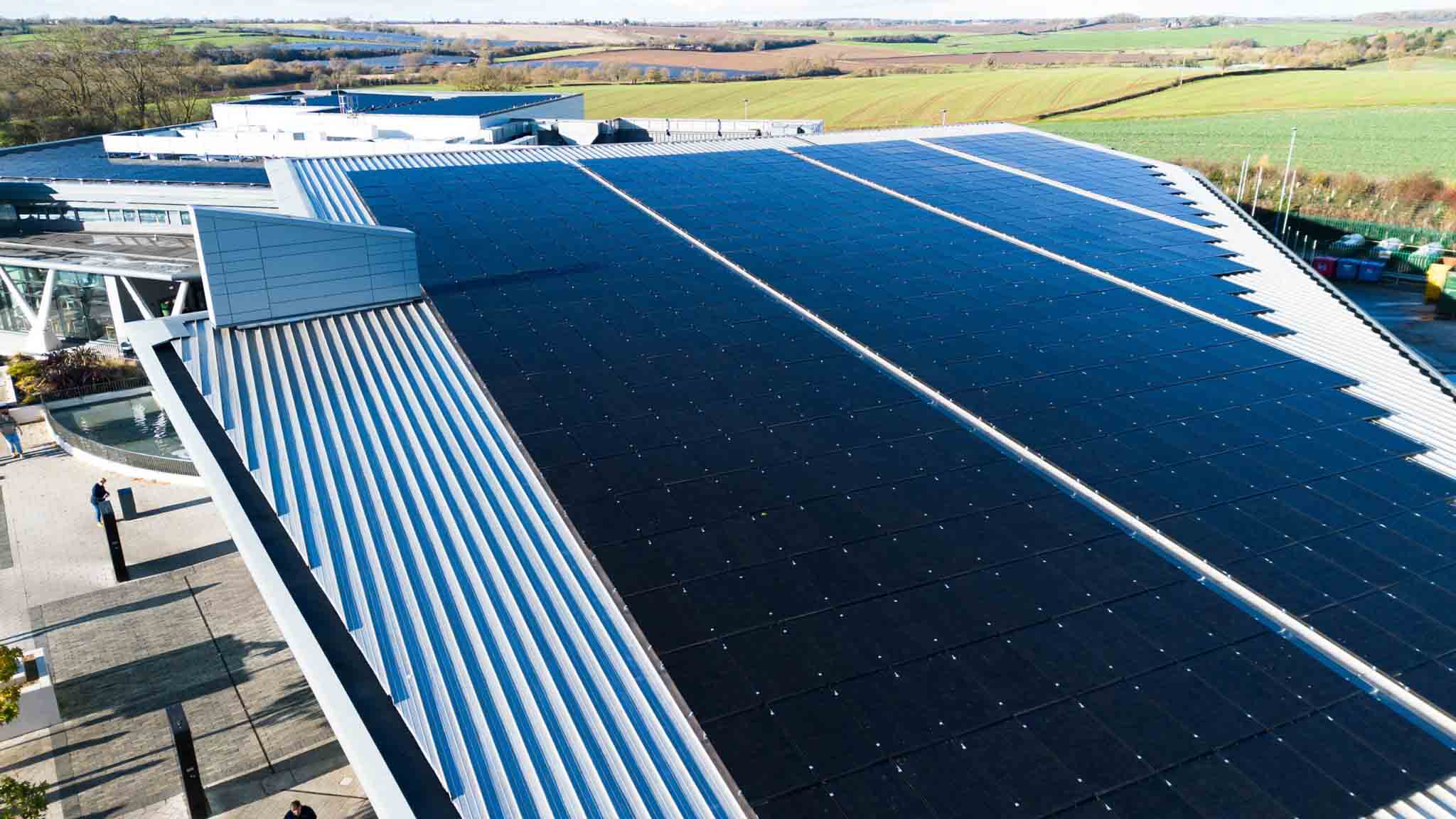
The single most effective way a business can ensure a greener future and gain genuine energy independence is through the installation of Commercial Solar Photovoltaic (PV) systems.
a. Turn Waste Space into a Profit Centre
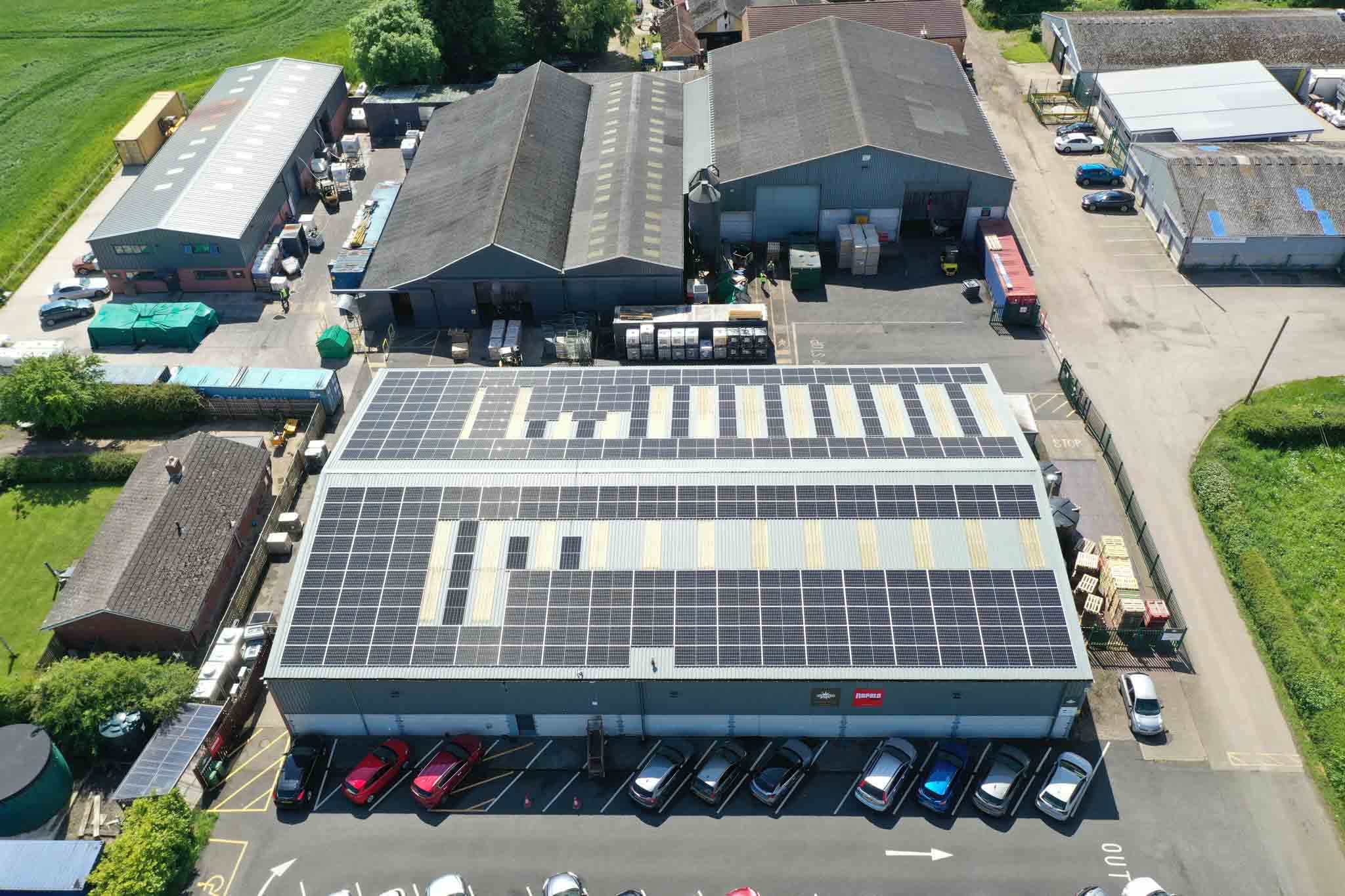
Most commercial buildings, warehouses, manufacturing plants, offices, and logistics hubs have vast expanses of unused roof space. A commercial solar installation converts this otherwise wasted asset into a long-term, high-yield power station. Solar generates clean, green electricity precisely where it is consumed, eliminating the costs and environmental impact associated with long-distance energy transmission.
b. Lock in Your Energy Price for Decades
The primary financial benefit of a commercial solar installation is providing a fixed-cost power source. Once installed, the cost of generating a unit of electricity is dramatically lower than purchasing it from the grid, insulating your business from the volatility of global energy markets for the 25+ year lifespan of the system. This stability is invaluable for long-term financial planning.
c. Achieve Tangible Carbon Reduction
Every kilowatt-hour (kWh) generated by your solar system is a kWh not drawn from a grid still heavily reliant on fossil fuels. This directly and demonstrably reduces your Scope 2 carbon emissions. A visible solar installation also provides an immediate boost to your Environment, Social, Governance (ESG) profile, appealing to increasingly eco-conscious customers, investors, and employees.
3. The Resilience Advantage: Commercial Battery Storage Systems
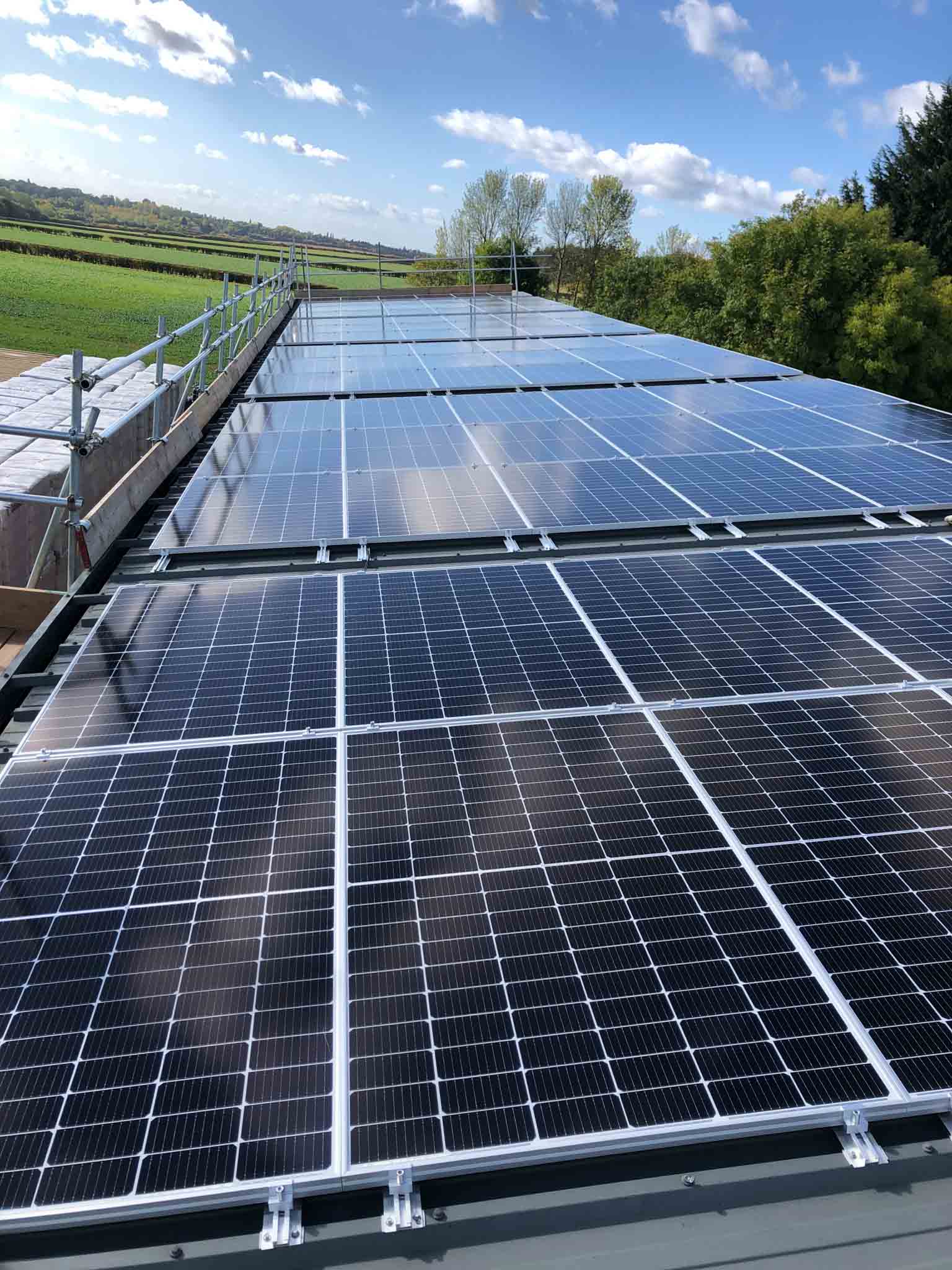
While a commercial solar installation is the engine of your clean energy future, Commercial Battery Storage Systems are the strategic brain that unlocks its full potential. A solar PV system on its own is extremely powerful; however, it is limited to generating power during daylight hours. Commercial battery storage is like a solar cheat code, providing three critical advantages:
a. Maximising Self-Consumption
Without a battery, excess solar power generated during a sunny lunchtime is exported back to the grid, often for a lower price (via schemes like the Smart Export Guarantee) than you pay to buy power later.
The battery allows you to store this surplus energy and use it when the sun is not shining or when your demand spikes, such as during the peak tariff evening period. This practice of maximising self-consumption significantly shortens the payback period of the entire solar investment.
Solar batteries are essential for restaurants and cinemas because they allow these high-energy-demand businesses to manage their evening peak loads efficiently and cost-effectively. During the day, the solar panels generate excess electricity that is stored in the batteries.
As the sun sets and the business enters its busiest period, with full restaurant service, kitchen equipment running, or cinema screens, sound systems, and foyer lighting at maximum use, the solar battery discharges the stored power.
This process, known as peak shaving, enables the business to avoid drawing expensive electricity from the grid during high-demand evening hours and ensures a reliable, self-sufficient, and cheaper energy supply when it’s needed most.
Our case study at the Savoy Cinema in Worksop is a great example of how we helped one of the oldest cinema chains in the UK with this exact conundrum.
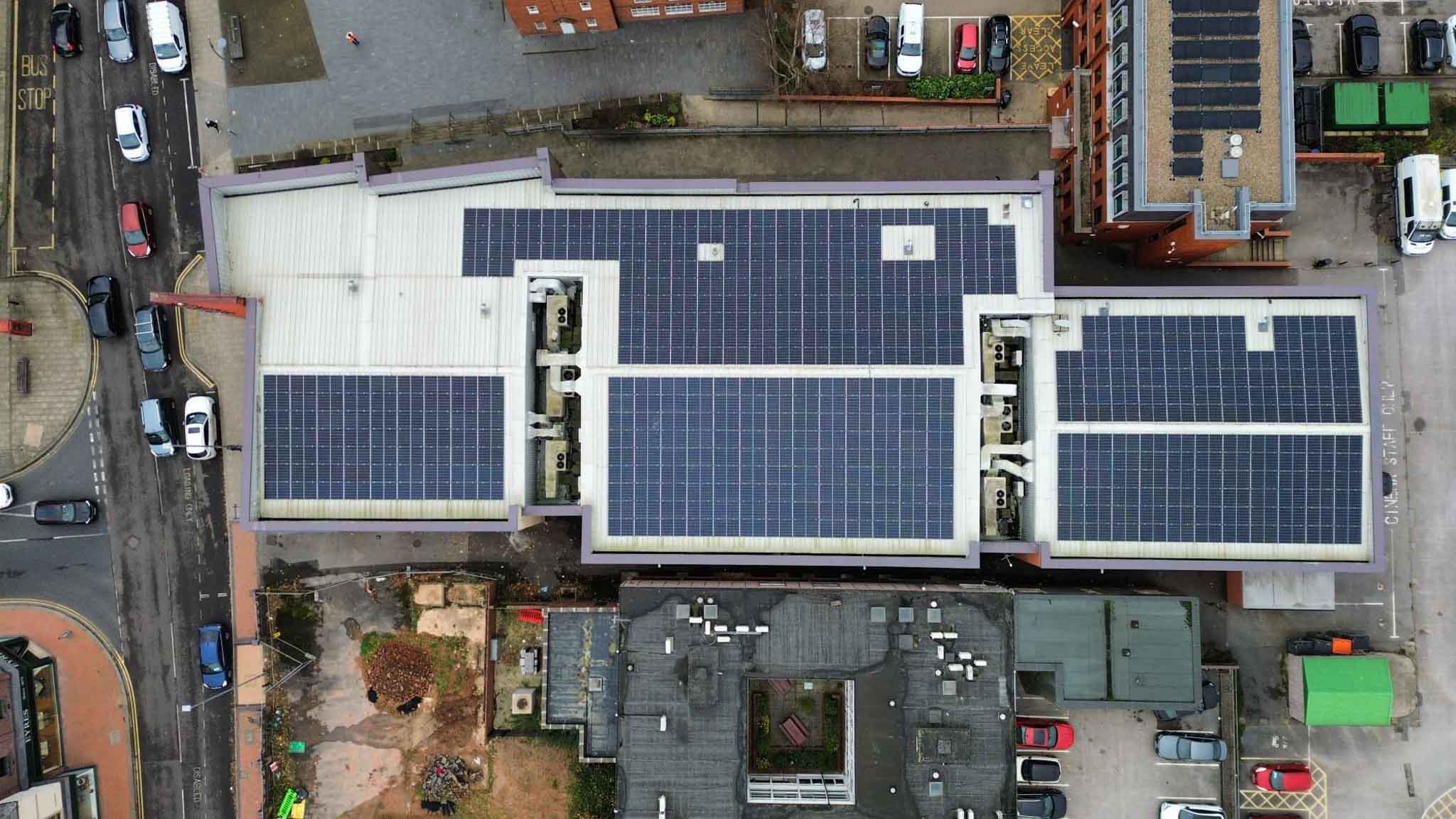
b. Peak Shaving and Cost Avoidance
Many businesses face punishing peak demand charges, fees based on the highest amount of power drawn from the grid at any single moment during a billing cycle. Commercial battery storage systems are programmed to perform “peak shaving.” When sensors detect that demand is about to spike, the battery instantly discharges stored power to meet the load, avoiding the costly peak charge from the utility company.
4. Final Key Advice: Making the Commitment
The final piece of advice is to view a greener business strategy not as a cost, but as a long-term capital investment.
a. Utilise Financing and Incentives
While the initial outlay for commercial solar and battery systems can be significant, the immediate and projected savings make the ROI compelling. Crucially, you should do your due diligence to explore the various green financing options, government grants, and tax incentives available for businesses investing in renewable energy infrastructure. These measures often make the project’s cash flow positive much sooner than anticipated.
b. Partner with Experts
The complexity of designing a system that accurately matches your load profile, integrates seamlessly with your existing infrastructure, and adheres to all grid regulations requires specialist knowledge. Partnering with experienced providers like Geo Green Power ensures your solution is professionally managed from the initial audit to installation and ongoing maintenance, guaranteeing maximum performance and safety.
The greener business model is one of resilience, efficiency, and independence. By embracing Commercial Solar Installations and Commercial Battery Storage Systems, your business can transition from reacting to fluctuating energy prices to proactively controlling its energy future, achieving net zero goals, and securing a genuine competitive edge in the market.
Ready to take the strategic leap toward energy independence?
Contact the experts at Geo Green Power today to discuss a tailored solar and battery storage solution for your commercial operation.