Is a Heat Pump Right For Your Property? A Complete Guide for UK Homes
As solar panel installations for homes continue to rise, heat pumps remain a lesser-known renewable energy practice.
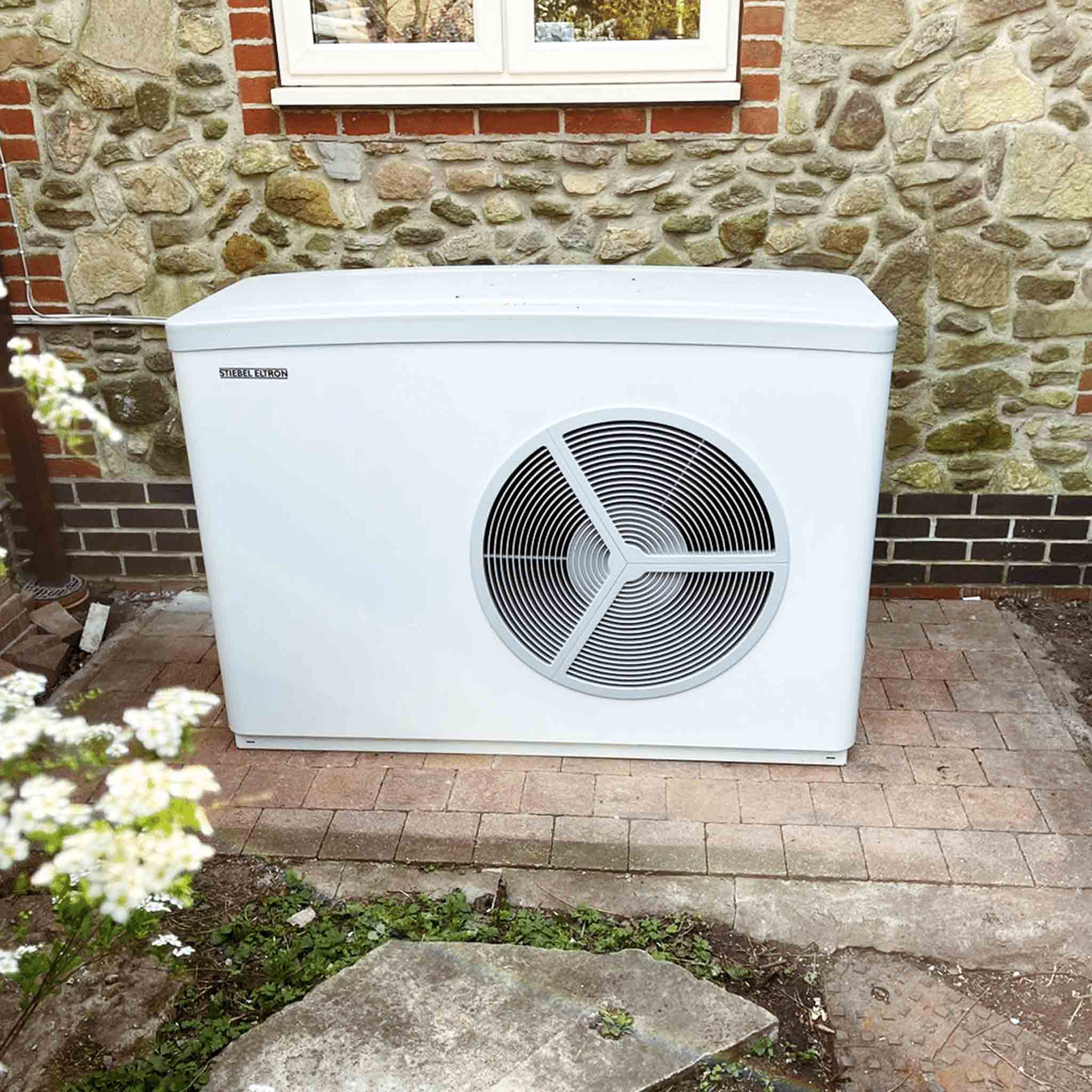
Updated: 08/07/2026
So, if few people are aware of the technology, we pose the question: Are heat pumps worth it in the UK?
A study conducted by OnePoll surveyed 2,000 UK households and found that although 38% of respondents stated they would opt for a non-fossil heating system, only 14% of households had one installed during the last three years. Lack of knowledge and awareness was cited as a huge barrier for homeowners’ inactivity to proceed, suggesting there is a need for better education and outreach.
So, what are heat pumps and how do they work?
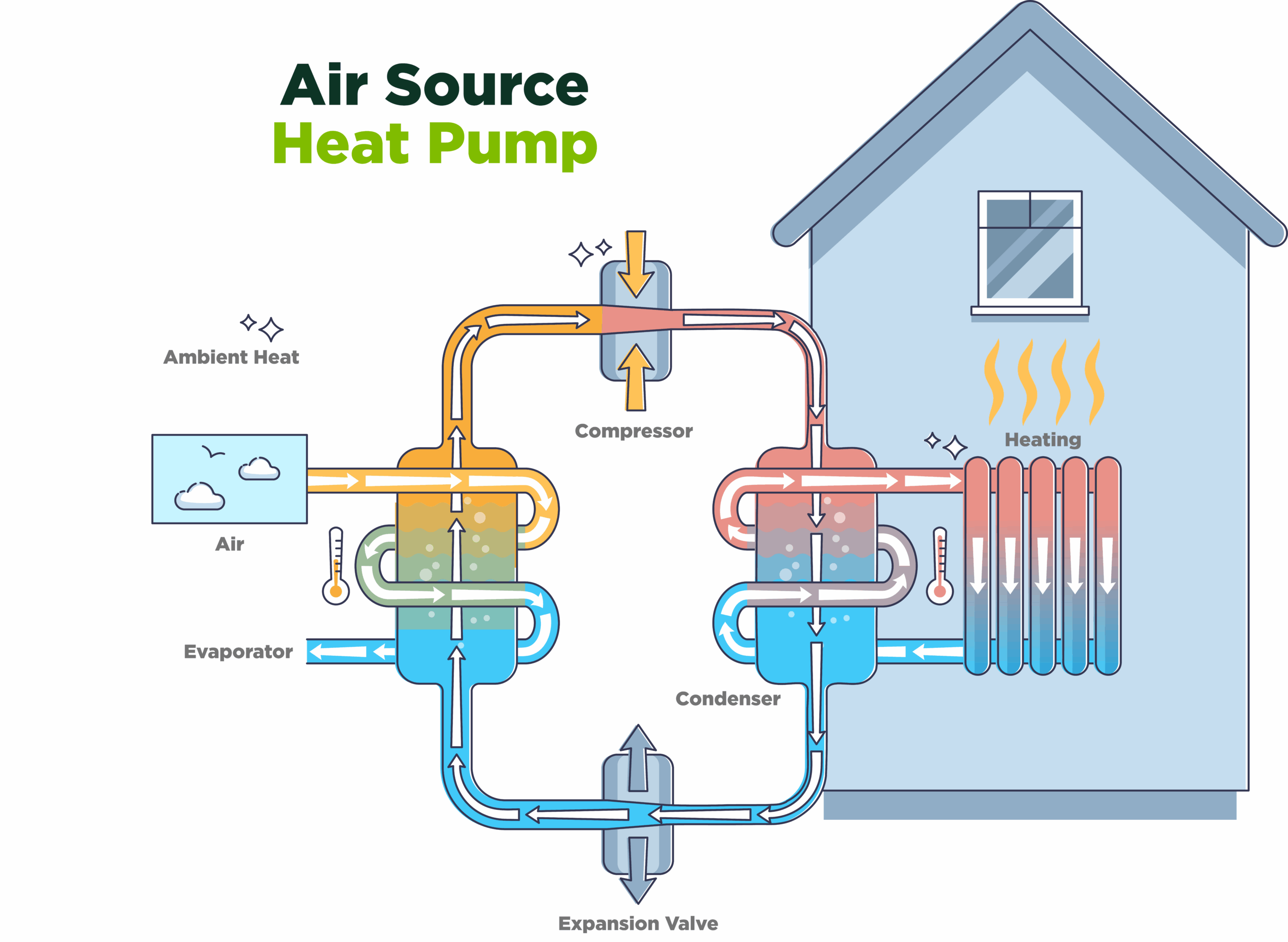
There are two different types of heat pumps: air-source heat pumps and ground-source heat pumps. Both are environmentally friendly alternatives to traditional heating systems, but they differ in how they extract and deliver heat.
Air-source heat pumps (ASHPs) are highly efficient systems that heat buildings by transferring thermal energy between the indoor environment and the outside air. They work by extracting energy from the air outside and transferring it to a refrigerant fluid via a heat exchanger. The fluid is then compressed, raising its temperature even further. The heated refrigerant passes through another heat exchanger, where it releases its energy into your home’s heating and hot water systems. After transferring the heat, the refrigerant cools down in an expansion valve, and the cycle begins again.
There are two main types of air-source heat pumps: air-to-air and air-to-water. Air-to-air heat pumps deliver air directly into indoor spaces and are usually used for space heating and cooling. On the other hand, air-to-water heat pumps transfer heat into a water-based central heating system, such as radiators.
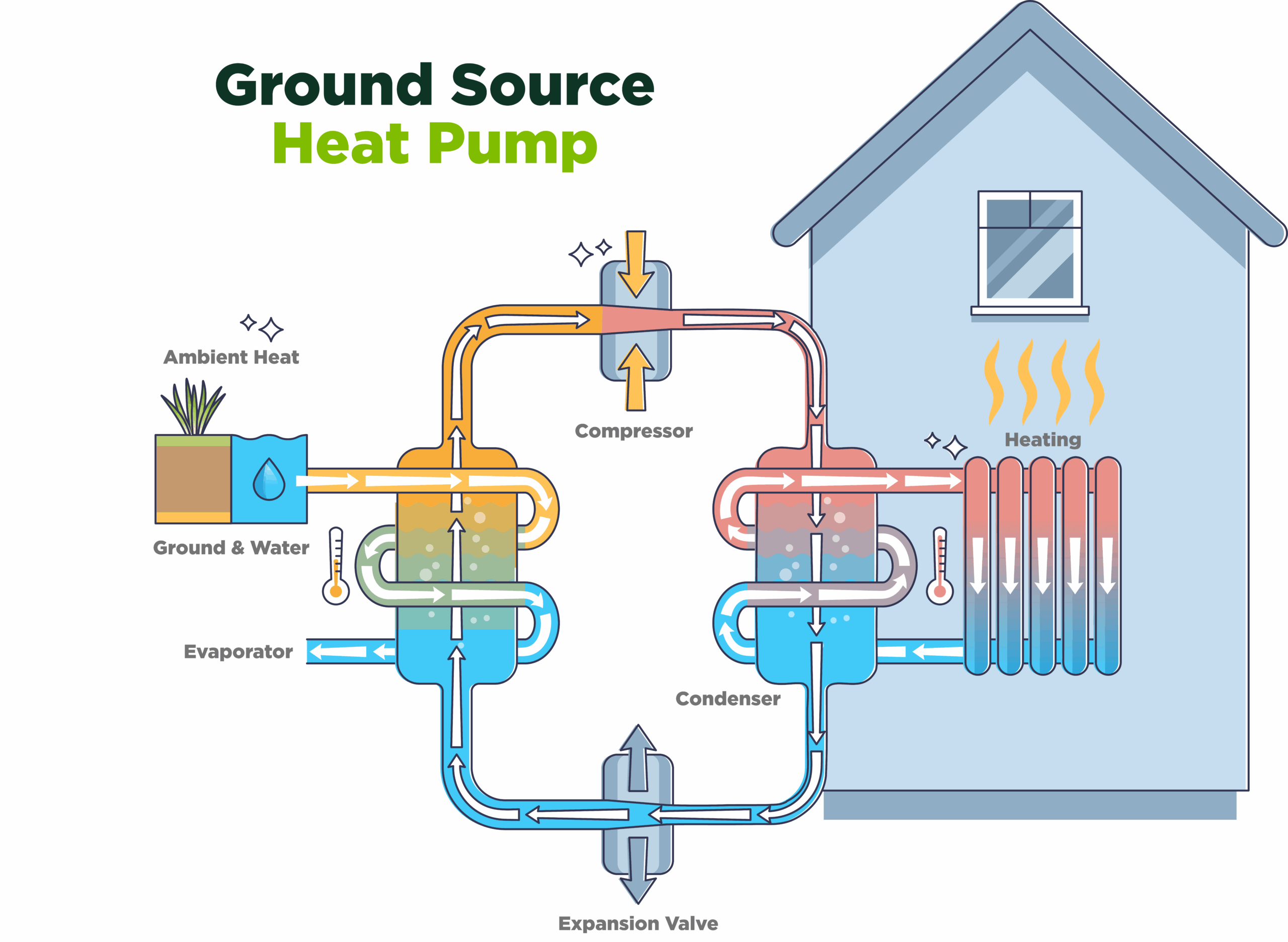
Ground-source heat pumps (GSHPs), also known as geothermal heat pumps, are another effective way to keep homes heated and cooled. Whereas ASHPs extract heat from the air, GSHPs draw energy from the temperatures underground, making them efficient all year round. A large loop of pipe, known as a ground loop, is placed in the ground or through a body of water. The pump then circulates a mixture of water and antifreeze around this loop. Heat from the ground or water is absorbed into the fluid and then passes through a heat exchanger into the heat pump. The ground stays at a fairly constant temperature under the surface throughout the process.
Is my property suitable for a heat pump?
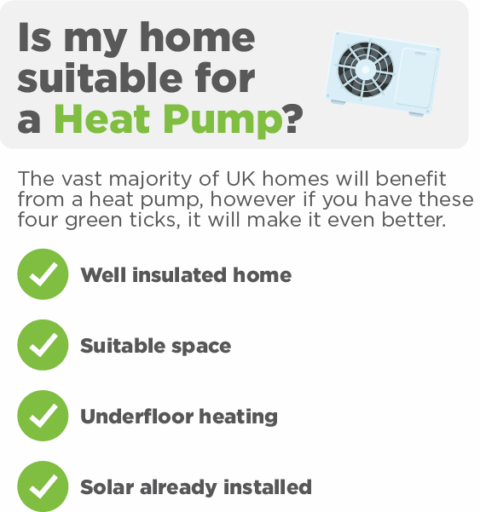
The majority of homes are well-suited for heat pumps, but others may require small upgrades in order to accommodate the low-carbon heating option. Heat pump suitability is increased if homes have the following:
Well-insulated homes: ASHPs work most effectively in homes that are well-insulated. Poor insulation can increase running costs and reduce system efficiency. In such cases, you may need to upgrade the loft, wall or glazing before installation, particularly in older houses.
Space available: It’s important that your home has sufficient outdoor space to ensure substantial ventilation and airflow. A good amount of indoor space is also needed to accommodate the hot water cylinder.
Radiators or underfloor heating: Underfloor heating systems are the ideal partner to an air-source heat pump, increasing the efficiency of the entire system. The lower the temperature you run the system at, the more affordable your heat pump becomes, and underfloor heating can run at very low temperatures when installed properly.
If you’re looking to have a ground-source heat pump installed, there are a few considerations homeowners need to make:
Sufficient ground space: the ground space doesn’t necessarily have to be big, but needs to be suitable for digging a trench or a borehole and accessible to digging machinery.
Types of fuel being replaced: ground source heat pumps will pay for themselves very quickly if they’re replacing an electricity, oil, coal or bottled gas heating system.
Underfloor heating: performance can be increased with underfloor heating systems compared to radiator-based systems because of the lower water temperatures required.
Existing solar: If your home already has a solar panel system, an ASHP can be even more efficient when the two are combined. Pairing heat pumps with solar-generated electricity means that a lot of the energy they consume can be produced on site, from the sun.
Air-source heat pumps vs ground-source heat pumps
Property suitability requirements aren’t the only differences between ASHPs and GSHPs. Air-source heat pumps typically start at £10,000 to install and require less space, as they only need an outdoor unit. They produce a low hum during operation and have an average lifespan of 15-20 years. In contrast, ground-source heat pumps are more expensive, with installation costs starting from over £14,000. They require outdoor space for digging and tend to last longer, with an average lifespan of 20 to 25 years. Prices for heat pumps can be eased through the Boiler Upgrade Scheme, a Government-backed grant offering up to £9,000 to assist homes in replacing their old gas or oil boiler with a low-carbon heat pump (as of July 2026).
– Note that Geo Green Power will contribute an extra £500 credit to support homeowners in transitioning away from oil or gas boilers.
Are heat pumps worth it for homes in the UK?
So, as the colder months set in and our heating systems work harder, it’s the perfect time to ask: Are heat pumps worth it?
If your home is well-insulated and you’re in it for the long term, then yes, heat pumps are definitely worth investing in. Heat pumps offer huge sustainable advantages by producing zero on-site emissions and dramatically decreasing your carbon footprint. According to the Energy Saving Trust, if you switch to an air-source heat pump in a semi-detached home with an old, G-rated gas boiler, you would save approximately 2,900kg of CO2 emissions every year. That’s equivalent to flying from Cardiff to Vancouver and back!
Heat pumps provide a transformative shift in home heating, delivering significant carbon savings and enhanced sustainability. According to the UK Government, switching from a gas boiler to a heat pump can reduce household carbon emissions by up to 65%, depending on how the electricity is generated. Installing a heat pump also supports the UK’s ‘net-zero by 2050’ target.
As gas heating phases out in favour of electric systems, homes equipped with heat pumps will be better prepared for future environmental standards. As the Energy Saving Trust states, “heat pumps are three times more efficient than a gas or oil boiler.”