MEES Regulations: Our Business Development Director Shares His Knowledge
Navigating energy efficiency compliance across commercial real estate portfolios has moved from a straightforward administrative task to a core strategic priority. As legal frameworks tighten, understanding how the Minimum Energy Efficiency Standards (MEES) apply to commercial property is critical for safeguarding asset values, avoiding severe financial penalties, and maintaining uninhibited leasing operations.
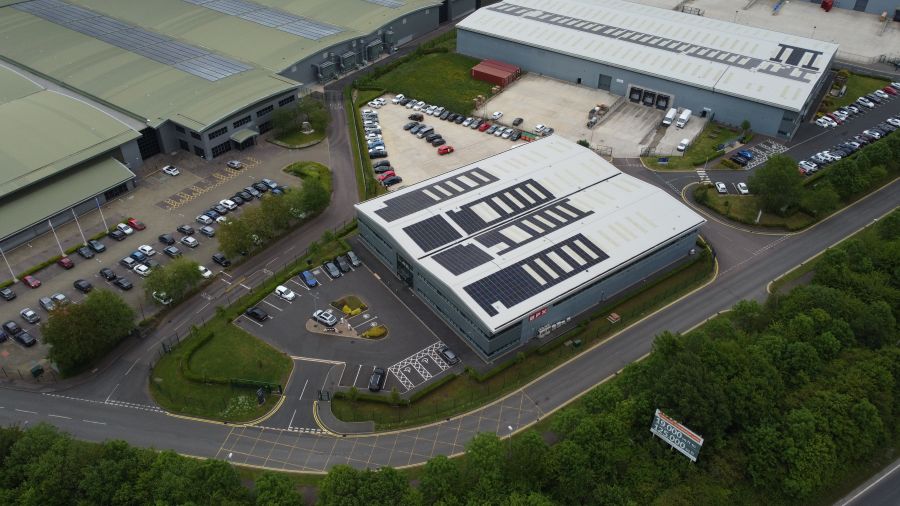
Our Business Development Director, Neil, shares his expert knowledge on MEES Regulations for commercial properties, breaking down current standards, proposed future timelines, key exemptions, and actionable steps for commercial landlords and investors.
Disclaimer: While we are solar specialists rather than accredited energy assessors or legal advisors, we regularly work alongside landlords and asset managers looking for practical ways to improve their EPC ratings, and commercial solar is increasingly one of the most effective tools for doing just that.
What Are Commercial MEES Regulations?
The Minimum Energy Efficiency Standards (MEES) were introduced under the Energy Efficiency (Private Rented Property) (England and Wales) Regulations 2015. They establish a clear legal boundary regarding energy performance for let properties.
For commercial non-domestic properties, the minimum EPC rating currently sits at an EPC rating of E (Gov.UK, 2026).
Since 1 April 2023, it has been unlawful for landlords to grant a new lease, renew an existing tenancy, or continue to let any commercial building that fails to meet this minimum standard unless a valid exemption is formally registered. Allowing an F- or G-rated commercial space to remain occupied without compliance puts property owners at risk of fines scaling up to £150,000 per breach (Easy EPC, 2026).
Where Does Solar Come In?
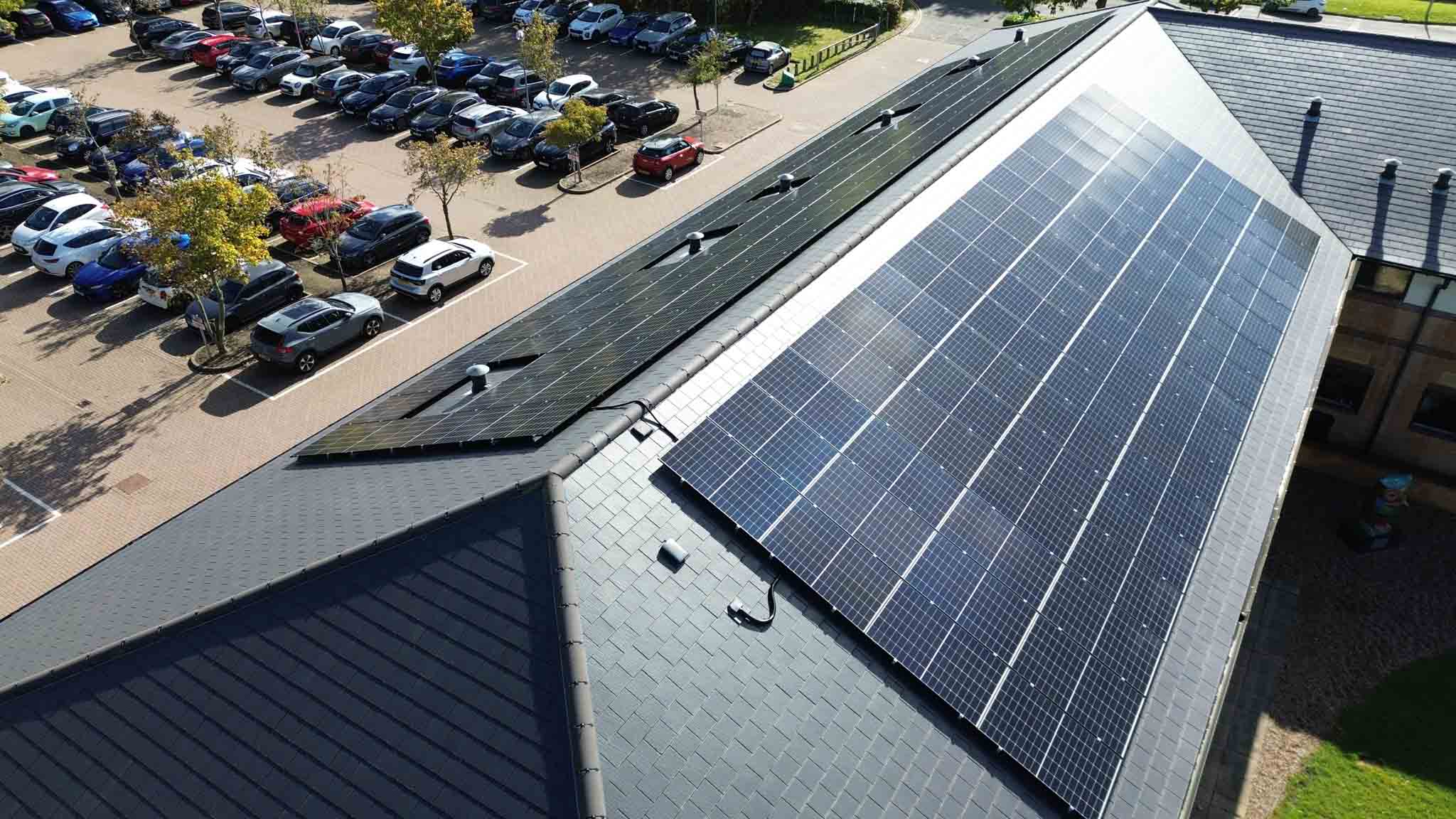
For landlords looking to bridge this gap, installing commercial solar PV is one of the most effective ways to lift a building’s EPC rating.
Because commercial EPC assessments reward on-site carbon reduction, generating renewable electricity directly offsets a property’s calculated emissions, often boosting a rating by one to three bands without disruptive structural retrofits.

Evolving Trajectory: Key Timelines and Regulations
The regulatory roadmap surrounding commercial EPC regulations has seen significant discussions regarding future thresholds.
Property owners must understand both current law and direction of travel to protect their assets from long-term devaluation or becoming unlettable.
The Current Baseline vs Proposed Targets
Under existing MEES Regulations for commercial properties in 2025, the legal minimum remains EPC E.
While historic consultations proposed an intermediate target of an EPC C rating by 2027 and a broader target of EPC B by 2030, policy updates have evolved to provide clearer guidance tailored to building size:
- Current Standard: All commercial lettings must be rated EPC E or higher.
- Proposed Target: Privately rented commercial properties over 1,000 m² are targeted to achieve an EPC B rating by 2031, where improvements prove cost-effective.
- Smaller Units: Properties under 1,000 m² are anticipated to retain the EPC E baseline for longer, allowing landlords tailored transition windows.
Summary of Commercial MEES Timelines
| Milestone Year | Status / Requirement | Commercial Scope |
|---|---|---|
| Current / 2025 | Minimum EPC E required | All privately rented commercial properties |
| Historical Proposals | EPC C (2027) & EPC B (2030) targets | Superseded/reframed in recent policy direction |
| 2031 Proposed Horizon | Target EPC B requirement | Commercial properties over 1,000 m² (subject to payback tests) |
(Easy EPC, 2026).
When Is an EPC Not Required for Commercial Property?
A common question brought to our team is: when is an EPC not required for commercial property?
While most rented commercial premises require a valid Energy Performance Certificate, specific exclusions apply under the building regulations framework. A property may not require an EPC, and therefore fall outside commercial MEES regulations, under the following circumstances:
- Standalone Small Buildings: Detached commercial premises with a total useful floor area of less than 50 square metres.
- Low Energy Demand Sites: Industrial sites, workshops, and non-residential agricultural buildings with low energy use.
- Temporary Buildings: Structures designed for a planned time of use of two years or less.
- Demolition Candidates: Buildings slated for demolition where planning permissions and documentation are fully in place.
- Certain Listed Buildings: Officially listed or designated historic assets where compliance with energy efficiency requirements would unacceptably alter their character or visual appearance.
- Lease Length Exclusions: Short lettings of less than 6 months (without renewal rights) or very long leases exceeding 99 years.
(Thomson & Bancks LLP, 2026).
Valid Exemptions Under Commercial MEES Regulations
If a commercial property requires an EPC and falls below the minimum legal standard, a landlord must carry out energy performance improvements or successfully register an exemption on the central Private Rented Sector (PRS) Exemptions Register. Exemptions last for 5 years and are non-transferable upon sale.
Key exemption categories include:
- 7-Year Payback Rule: The cost of carrying out the recommended energy improvement works does not pay for itself through energy bill savings within a seven-year period.
- Devaluation Exemption: An independent surveyor confirms that making the required energy efficiency upgrades would reduce the commercial market value of the property by more than 5%.
- Third-Party Consent Deficit: Despite reasonable efforts, necessary permissions cannot be obtained from tenants, planning authorities, or superior landlords.

Neil’s Strategic Guidance
Waiting for regulatory deadlines to force your hand is the most expensive way to manage commercial real estate. Proactive asset planning transforms compliance from a cost centre into a value driver.
To protect your commercial portfolio against compliance risks, consider implementing these foundational steps:
1. Conduct a Portfolio Audit
Review all active Energy Performance Certificates across your assets. Identify properties nearing their 10-year expiry or currently sitting at an E rating, as these present the immediate compliance risk.
2. Capitalise on Lease Events
Align physical upgrades, such as updating heating, ventilation, and air conditioning (HVAC) systems, fitting high-efficiency LED lighting, or improving roof insulation, with planned tenant void periods, lease renewals, or broader refurbishments.
3. Evaluate Cost-Effective Upgrade Paths
Start with low-disruption energy efficiency improvements. Simple retrofits like smart metering, modern thermostatic controls, and LED upgrades can often lift an asset out of a risk zone without extensive structural alterations.
Protecting Asset Value Beyond Compliance
Ensuring full compliance with MEES Regulations for commercial buildings is no longer just about avoiding Trading Standards penalties. Energy efficiency performance directly affects tenant demand, lease negotiation leverage, and access to commercial debt financing.
Sub-standard commercial properties increasingly suffer from “brown discounting,” where poor environmental performance leads to lower capital valuations and reduced marketability.
By understanding commercial EPC regulations and acting early, Property Managers and Institutional Investors can future-proof their commercial portfolios, enhance asset resilience, and deliver long-term value.
If you’re a commercial Property Manager, Building Owner, or Business Owner searching for a Commercial Solar Solution to improve your EPC Rating, visit our dedicated page.
Alternatively, if you’re looking to utilise your land, visit our Ground-Mount Solar Panel Installation page for more information.
References
https://www.easyepc.org/commercial-mees-regulations (Easy EPC, 2026)
https://tbsolicitors.co.uk/business-services/commercial-property/minimum-energy-efficiency-standards/ (Thomson & Bancks LLP, 2026)