How Do I Generate a Return From a Solar Panel Investment?
In 2026, the question is no longer just “do solar panels work?” but rather “how much will they earn me?” As the UK moves toward its Clean Power 2030 targets, the financial landscape for renewable energy has shifted.
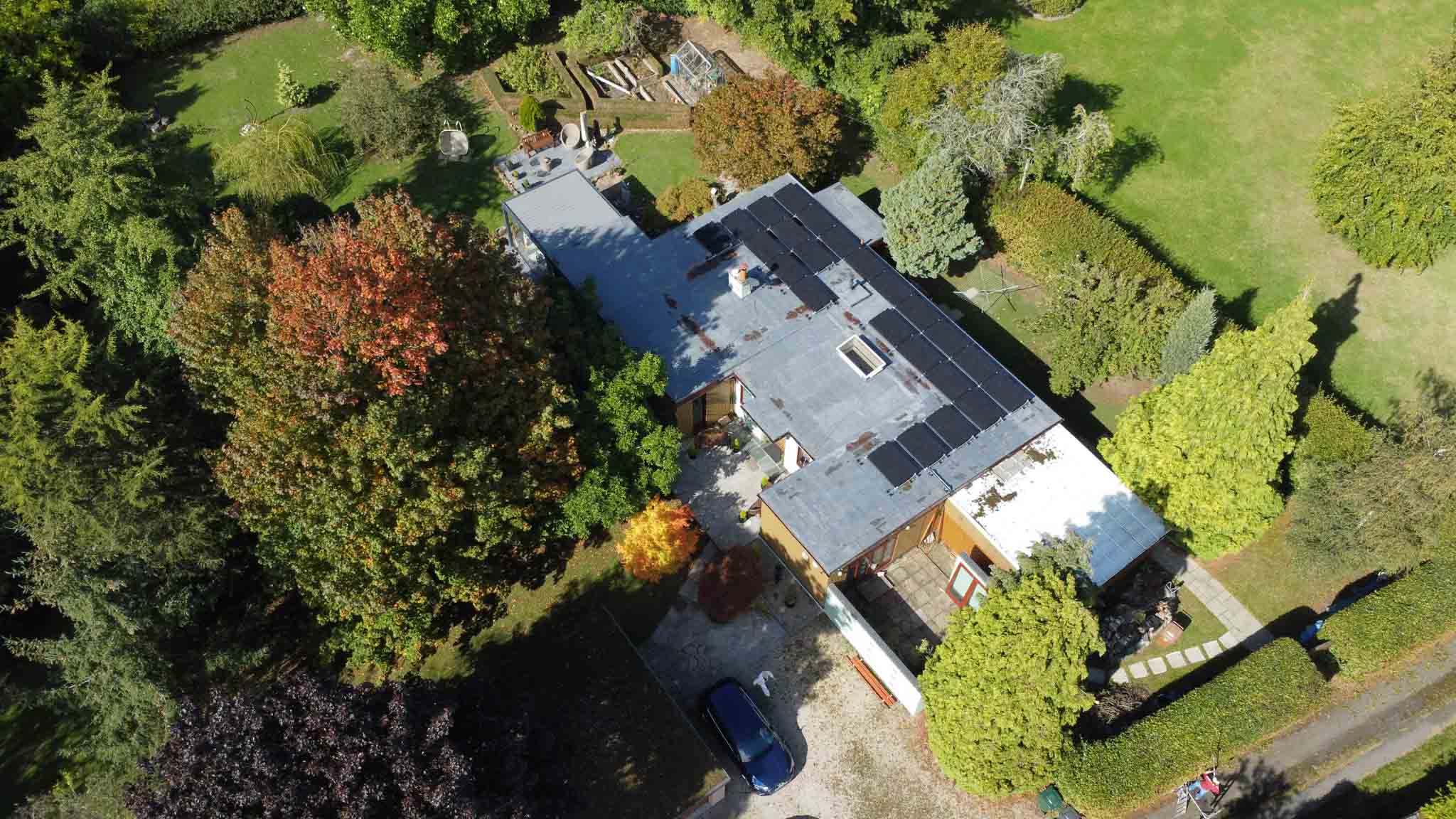
Energy prices have stabilised at higher-than-pre-2022 levels, while the cost of high-efficiency N-type solar cells has fallen.
At Geo Green Power, we have seen firsthand how the solar panel’s return on investment has evolved from a 10-year “green luxury” into a high-yield financial asset. In this updated 2026 guide, we break down why solar panels are a good investment for both the residential and commercial sectors.
Is Solar a Good Investment in 2026?
The “Solar Gold Rush” of 2026 is driven by a simple mathematical convergence: falling hardware costs and rising grid transmission charges. While wholesale energy prices fluctuate, the “delivered” cost of electricity to your door includes aging-grid infrastructure levies, which are projected to rise by 5-8% annually through 2030 (The Guardian, 2025).
By installing solar, you are effectively “buying” your next 25 years of electricity at a fixed price of roughly 5p to 7p per kWh (the amortised cost of the system) (Boxergy, 2024). Compare this to grid rates, which in 2026 hover around 26p–28p per kWh, and the solar panels’ return on investment becomes clear (House of Commons, 2026).
Key Investment Drivers for 2026:
Zero VAT: The 0% VAT rate on residential solar and battery storage has been extended to March 2027, saving homeowners an immediate 20% (House of Commons, 2024).
Smart Export Guarantee (SEG) 2.0: Leading energy suppliers in 2026 now offer “Agile” export rates, sometimes paying as much as 15p–20p per kWh during peak evening periods if you have a battery to discharge.
Property Value: Recent data from 2025/26 shows that homes with solar and an EPC rating of B or higher sell for a premium of +3% compared to non-solar neighbours (SunSave, 2026).
Midlands Homeowners: The Regional Advantage
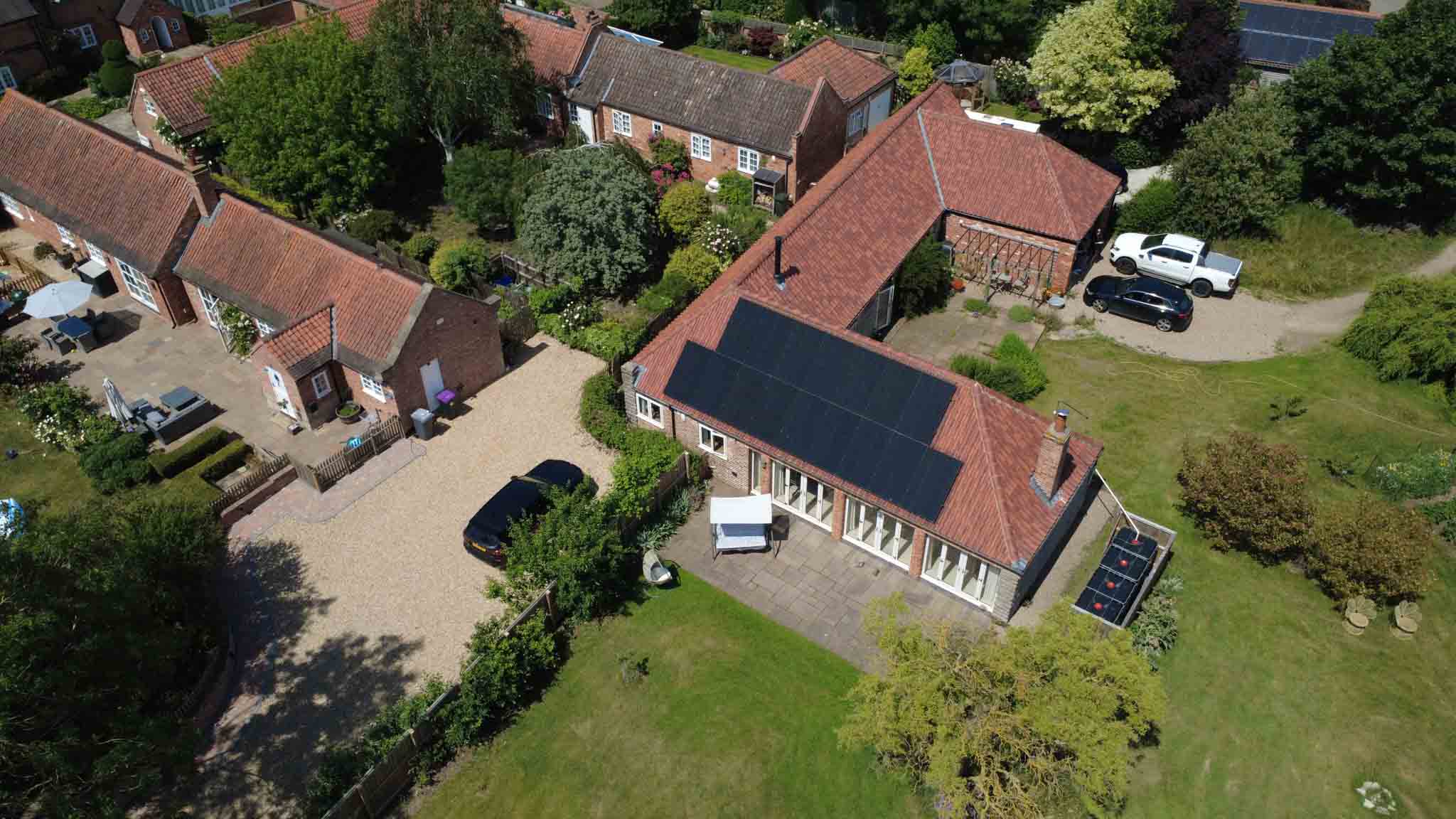
Based in the heart of the country, Geo Green Power has extensive experience with the specific climate and architecture of the Midlands. While the South Coast gets more raw sunshine hours, the Midlands offers a “sweet spot” for solar panel return on investment.
In cities like Nottingham, Birmingham, and Leicester, many properties benefit from large, unobstructed 1930s-1950s roof pitches.
Performance Table: Typical Midlands Semi-Detached (2026 Estimates)
| Feature | 4kW Solar Only | 4kW Solar + 10kWh Battery |
|---|---|---|
| Average Cost (Inc. 0% VAT) | £5,500 | £9,200 |
| Annual Bill Saving | £580 | £1,050 |
| Annual SEG Export Income | £180 | £120 (Less export, more-self use) |
| Total Annual Benefit | £760 | £1,170 |
| Payback Period | 7.2 Years | 7.8 Years |
| 25-Year Profit | £13,500+ | £20,000+ |
Note: Figures assume a 25p/kWh grid price and a 12p/kWh export rate.
(The Renewable Energy Hub, 2026).
UK-Wide Businesses: A Strategic Capital Asset
For UK businesses, solar panels’ return on investment is no longer just about the “green” credentials in the annual report; it is a critical tool for operational stability. In 2026, “Energy Security” is a boardroom priority.
Tax Incentives for Businesses
The UK government continues to support commercial solar through the Annual Investment Allowance (AIA). This allows most UK businesses to deduct 100% of the cost of a solar installation from their taxable profits in the first year. For a company paying the 25% Corporation Tax rate, a £100,000 solar array effectively costs only £75,000 after tax relief.
The 2026 “Self-Consumption” Model
Modern businesses are now integrating Solar + EV Charging + Battery Storage to create a closed-loop energy system. By charging a fleet of electric delivery vans with “free” rooftop energy, the ROI of the solar system is accelerated by the displacement of expensive diesel or public charging costs.
Commercial ROI Comparison by System Size (2026 estimates)
| System Size | Typical Business Type | Est. Cost | Year 1 Savings | Payback Period |
|---|---|---|---|---|
| 30kW | Local Office/Retail | £28,000 | £6,500 | 4.3 Years |
| 100kW | Warehouse/Cold Storage | £78,000 | £19,500 | 4 Years |
| 500kW | Manufacturing Plants | £340,000 | £95,000 | 3.5 Years |
Maximising Your Solar Panel Return on Investment
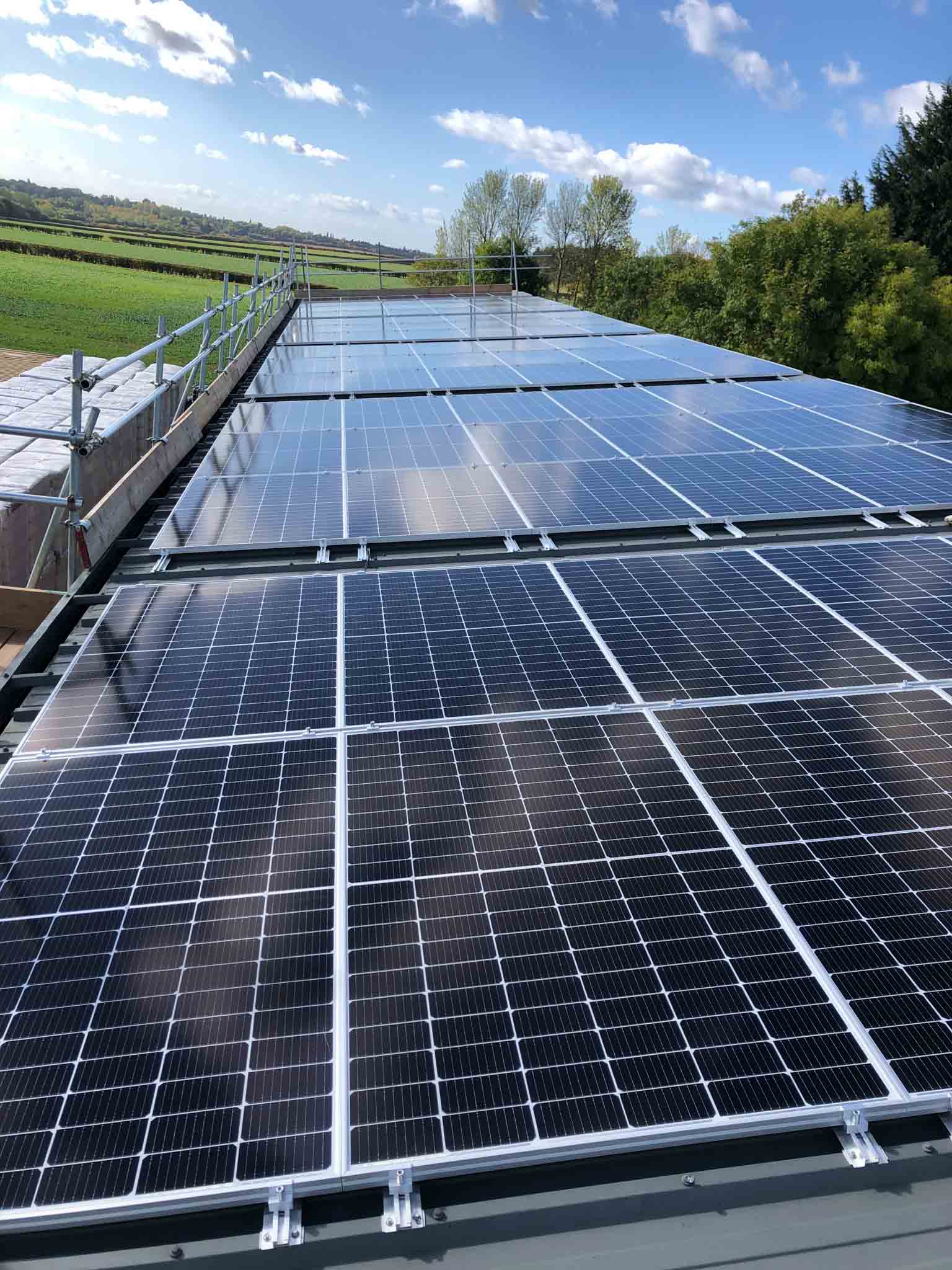
To ensure solar panels are a good investment for your specific property, Geo Green Power recommends focusing on three key “multipliers”:
Sizing for the Future: In 2026, we advise customers to “over-size” their arrays. The cost of adding two extra panels during the initial install is marginal, but the extra energy will be vital as you eventually transition to heat pumps or more electric vehicles.
Battery Optimisation: Without a battery, the average UK home only uses 30-40% of the solar energy it generates. Adding a battery pushes this to 80%+. By shifting your “self-consumption,” you avoid buying 26p/kWh grid power, which is far more valuable than the 12p/kWh you get for exporting it (Kind Energy, 2025).
Smart Monitoring: We now install AI-driven inverters as standard. These systems look at tomorrow’s weather forecast and your historical usage patterns to decide when to store energy, when to use it, and when to sell it back to the grid at the highest possible price.
The Verdict for 2026
Is it still worth it? Yes. In fact, the solar panel’s return on investment in 2026 is more predictable than it was five years ago.
We have moved away from the era of high government subsidies (Feed-in Tariffs) and into an era of “Grid Parity,” where solar is simply the cheapest way to generate electricity.
Whether you are a homeowner in the Midlands looking to shield yourself from the next price cap rise, or a UK-wide business aiming to lock in energy costs for the next two decades, solar remains the most accessible and reliable renewable investment on the market.
Contact Geo Green Power today for a bespoke ROI projection. Our expert team uses advanced LIDAR shading analysis and your actual half-hourly usage data to show you exactly how much your roof can earn you by the end of the decade.
Ref:
https://www.theguardian.com/money/2025/dec/04/fears-of-higher-energy-bills-as-28bn-grid-upgrade-gets-go-ahead (The Guardian, 2025)
https://boxergy.co.uk/energy-price/ (Boxergy, 2024)
https://commonslibrary.parliament.uk/research-briefings/cbp-9714/ (UK Parliament, House of Commons, 2026)
https://researchbriefings.files.parliament.uk/documents/CBP-8602/CBP-8602.pdf (House of Commons, UK Parliament, 2024)
https://www.sunsave.energy/solar-panels-advice/costs/home-value (SunSave, 2026)
https://www.renewableenergyhub.co.uk/main/solar-panels/a-guide-to-4kw-solar-panel-systems-for-the-uk (The Renewable Energy Hub, 2026)
https://kindenergy.co.uk/blog/solar-battery-size-guide-2025-uk/ (Kind Energy, 2025)