6 Most Common Problems for Solar PV Systems (And How to Fix Them)
Solar photovoltaic (PV) systems are among the most reliable renewable energy technologies available. With no moving mechanical parts, a well-installed array can easily generate clean electricity for 25 years or more.
However, with any outdoor electrical infrastructure, whether installed on a domestic residential home or across a large commercial facility, issues can arise over time. Environmental exposure, general wear and tear, or component degradation can occasionally impact your system’s efficiency.
If you already own a solar PV system, noticing a dip in performance or an error code on your equipment can be concerning. The good news is that most solar problems and solutions are straightforward when addressed by qualified engineers.
Here is a guide to the 6 most common solar panel problems, what causes them, and how they can be safely resolved.
1. Inverter Faults and Error Codes
While solar panels themselves rarely fail, the inverter, the brain of your system that converts direct current (DC) into usable alternating current (AC), works hard every single day. As a result, solar inverter problems represent the single most common cause of system downtime.
- Symptoms: A solid red light or flashing amber light on the unit, an active fault code on the digital screen, or a complete loss of generation recorded on your monitoring app.
- Common Causes: Grid voltage spikes, transient electrical surges, internal component overheating, or outdated firmware.
- The Solution: A quick system reboot will clear minor glitches. Turn off the AC isolator, followed by the DC isolator, wait five minutes, and then turn them back on in reverse order. If the error code persists, an engineer will need to conduct a full electrical health check, update firmware, or perform component repairs.
2. The Solar Panel Pigeon Problem (Pest Infestation)
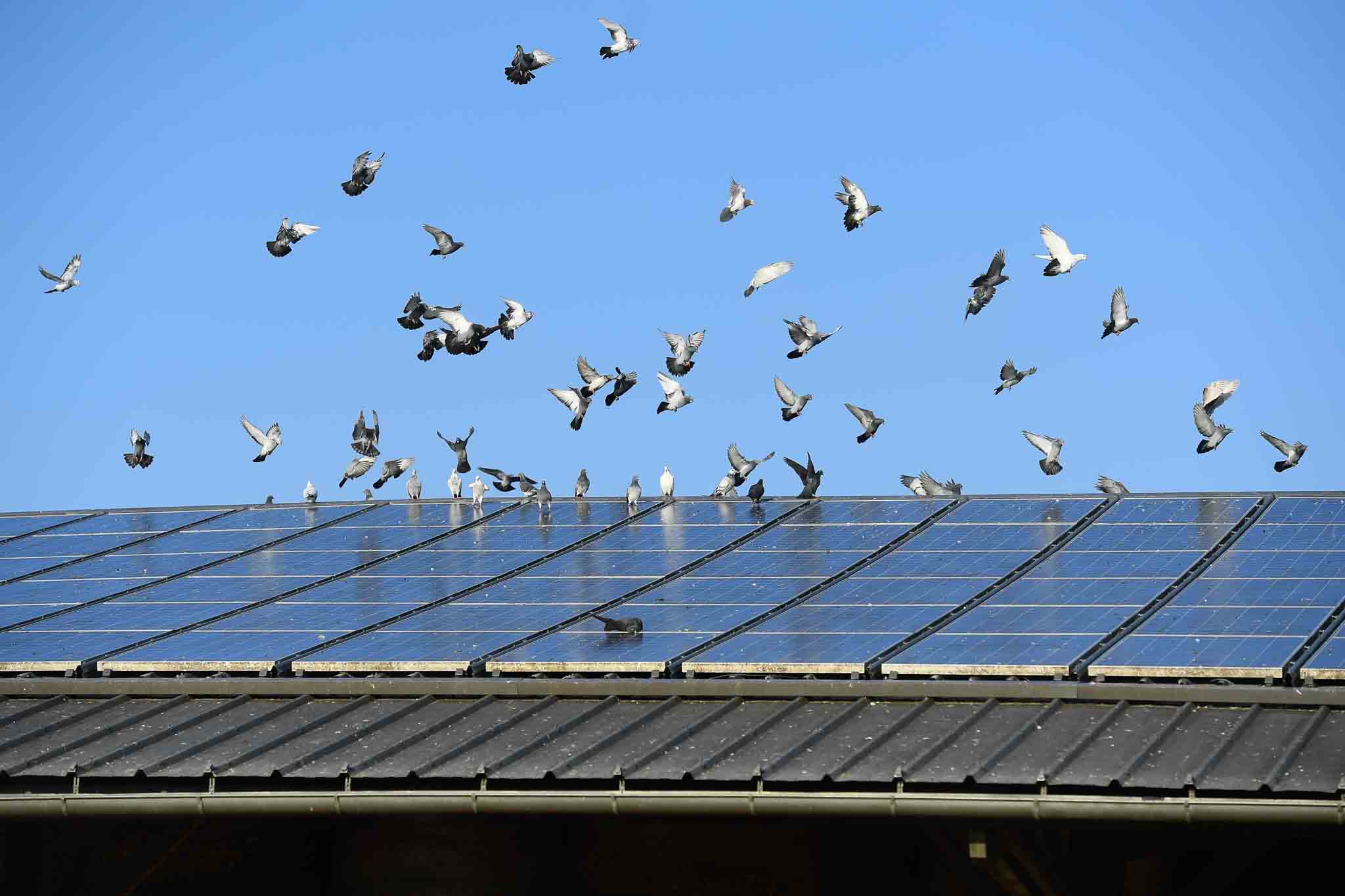
Nesting birds, particularly pigeons, are a frequent headache for solar PV owners. The warm, sheltered space between your roof tiles and the underside of the solar modules provides an ideal environment for nesting.
- Symptoms: Heavy debris under the array, cooing noises, scratch marks on wiring, or unexpected earth fault warnings caused by damaged cabling.
- Common Causes: Unprotected gaps around the perimeter of the array invite birds to nest.
- The Solution: Solving a solar panel pigeon problem requires professional bird proofing. Specialist mesh or solar clips are fitted securely around the perimeter of the array to block entry without voiding panel warranties. Any damaged cabling chewed by pests will also need to be repaired or replaced during the installation.
For more guidance on how to deal with those pesky pigeons, visit our dedicated article here.
3. Solar Panel Low Voltage Problems
If your monitoring dashboard indicates that your system is generating far less power than expected on a clear day, you may be experiencing a solar panel with low voltage problems.
- Symptoms: Reduced power output across an entire string, irregular voltage readings, or string failure alerts on your inverter.
- Common Causes: Corroded connectors, moisture ingress inside junction boxes, damaged DC wiring, or microcracks within individual solar cells.
- The Solution: Experienced technicians use advanced DC insulation resistance testing and thermal imaging to trace the exact location of the voltage drop. Faulty wiring, degraded bypass diodes, or cracked modules can then be isolated and safely replaced to restore full string voltage.
4. Poor Performance Due to Soiling and Shading
Solar modules rely on direct light exposure to generate maximum power. Over time, environmental contaminants build up on the glass surface, blocking sunlight and reducing overall yield.
- Symptoms: A gradual decline in overall energy yield month-over-month, even during sunny periods.
- Common Causes: Heavy dust, pollen, bird droppings, falling leaves, or moss growth.
- The Solution: While rainfall cleans away light dust, stubborn grime requires professional cleaning using purified, de-ionised water and non-abrasive soft brushes. Avoid harsh tap water or pressure washers, as mineral deposits can leave films or damage protective anti-reflective coatings.
5. Flat Roof Drainage and Mounting Issues
Commercial properties and modern homes frequently feature flat roofs. While flat surfaces make array installation flexible, problems with solar panels on flat roofs differ significantly from pitched roof installations.
- Symptoms: Pooling water around mounting frames, ballast shifting, debris accumulation behind tilted panels, or cable trays sitting in standing water.
- Common Causes: Inadequate drainage, degraded waterproofing membranes, or insufficient wind-deflector ballast.
- The Solution: Regular maintenance checks ensure cable routing stays above standing water and ballast mounts remain secure. Keeping drainage paths on flat roofs clear prevents long-term moisture damage to lower wiring runs.
6. Isolation and Cabling Faults
DC cables carry high voltages from the roof down to your inverter. Exposure to UV light, moisture, and temperature fluctuations can degrade insulation over time.
- Symptoms: Inverter displays “Isolation Fault” or “Earth Fault” messages, often during damp morning weather.
- Common Causes: UV degradation of cable conduits, water penetration into unsealed isolation switches, or loose MC4 connector joints.
- The Solution: An electrical health check involves end-to-end testing of DC isolators, AC breakers, and string cables. Damaged conduit or degraded switches are replaced to eliminate fire risks and keep generation safe and compliant.
Keeping Your Solar Investment Performing
Identifying problems with your solar system early prevents minor mechanical or electrical faults from growing into costly repairs.
Whether you’ve had a domestic solar PV installation or a home rooftop system, practical solar energy problems and solutions come down to structured, professional maintenance.
Keeping your system clean, monitored, and routinely checked ensures you maximise your household energy generation and financial returns for decades to come.
It is important to note that many common domestic solar faults are significantly reduced or eliminated when proper, experienced engineers provide a full-scale design, quality installation, and ongoing servicing tailored to your home.
If you’re a homeowner facing any solar energy concerns or have a question needing an answer, visit our dedicated page for Solar Panel Maintenance Services for Homes.