5 Key Reasons UK Care Homes Are Turning to Solar Energy
The UK care sector operates under a unique set of operational demands. Unlike standard commercial businesses that power down at the end of the working day, care homes run non-stop.
Between specialised medical equipment, commercial laundry facilities, commercial catering, constant heating, and round-the-clock lighting, energy consumption in residential care facilities is exceptionally high.
With energy tariffs remaining unpredictable and operational budgets constantly under pressure, care providers across the country are seeking long-term solutions to stabilise running costs without compromising resident care.
Switching to commercial solar energy is rapidly becoming one of the most effective strategic moves for healthcare facilities. Below, we explore five compelling benefits of adopting solar energy in the care sector and how it can secure the financial and environmental future of your facility.
1. Meeting 24/7 High Energy Usage (And the Role of Battery Storage)
Care homes are among the most energy-intensive properties in the healthcare landscape. From electric profile beds and oxygen concentrators to heavy-duty laundry washing machines running continuously, electricity demand remains steady throughout the day and into the night.
Because solar photovoltaic (PV) systems generate maximum electricity during daylight hours, solar panels for care homes and residential facilities allow care operators to directly consume clean energy as it is produced, cutting baseline grid dependence.
However, because a care facility’s energy requirements do not stop when the sun sets, maximising self-consumption requires a complete solution. This is where the integration of high-capacity solar battery storage becomes essential.
By adding battery storage to a solar PV array, any surplus electricity generated during peak daylight hours is captured and stored rather than exported back to the grid for minimal returns. This stored energy can then be dispatched during evening meal times, night shifts, and early morning routines.
Implementing battery storage ensures that care homes maximise every kilowatt-hour generated, maintaining lower energy overheads around the clock and shielding the facility from expensive peak-rate grid electricity.
2. Substantial Cost Savings and Protection Against Tariff Volatility
For care home managers and financial directors, energy costs represent one of the largest non-staffing overheads. Recent years have demonstrated how sudden spikes in wholesale gas and electricity prices can destabilise operational budgets.
Solar PV provides a reliable buffer against this market volatility by allowing providers to generate a significant portion of their own electricity at a fixed, virtually zero marginal cost.
By generating free, clean energy on-site, care providers can lock in predictable energy rates for 25 years or more, the typical operational lifespan of modern solar panels.
The savings realised from reduced utility bills directly support frontline operations, enabling providers to reinvest capital into nursing staff, facility upgrades, resident care amenities, and specialised medical equipment.
Real-world applications across the UK demonstrate the tangible financial impact of these installations.
For example, when Eastgate Care partnered with us to deploy custom arrays across five residential properties, the project generated tens of thousands of clean kWh each year. Explore our full range of commercial solar installation services for care facilities to see similar case studies and design options.
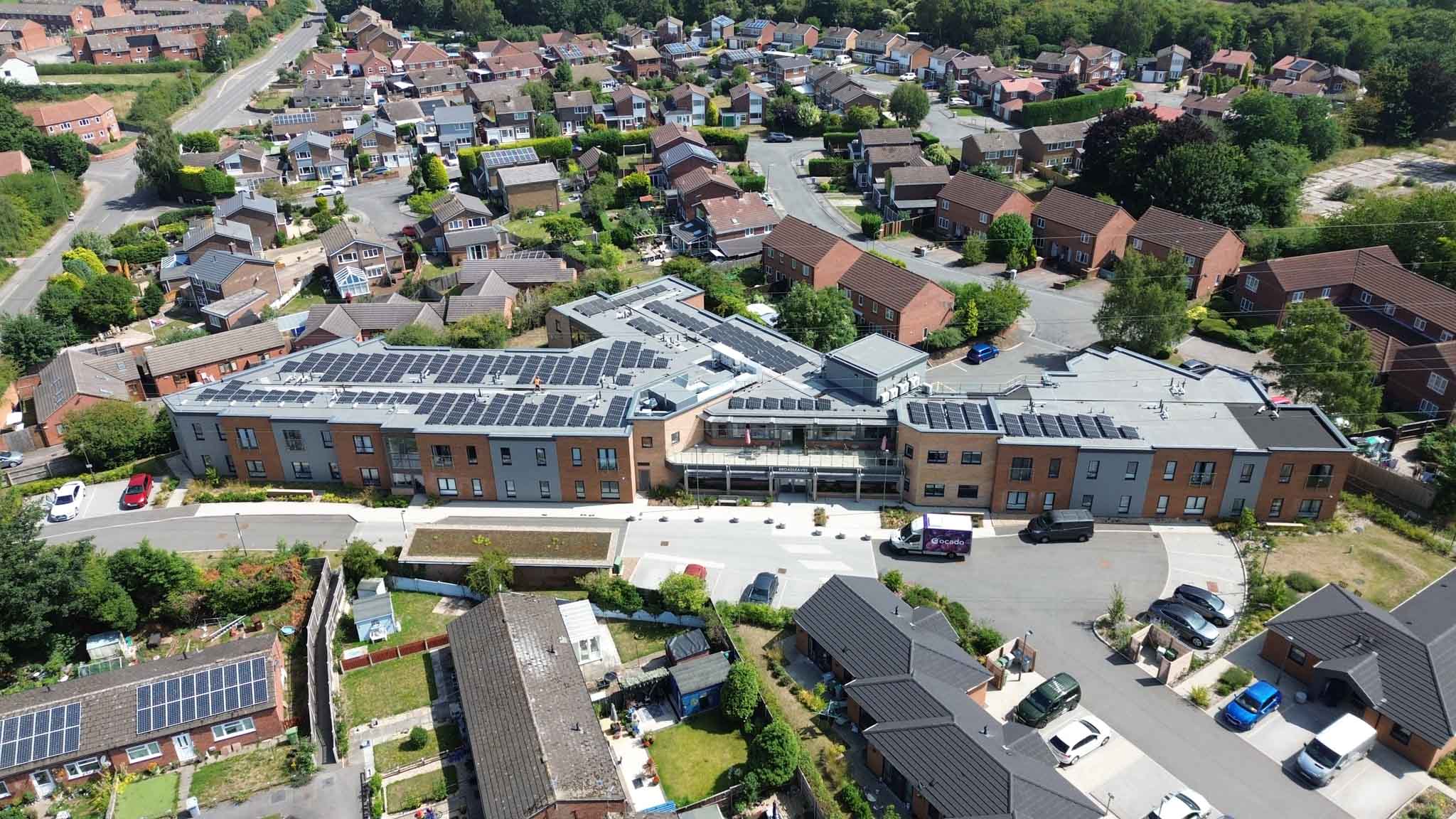
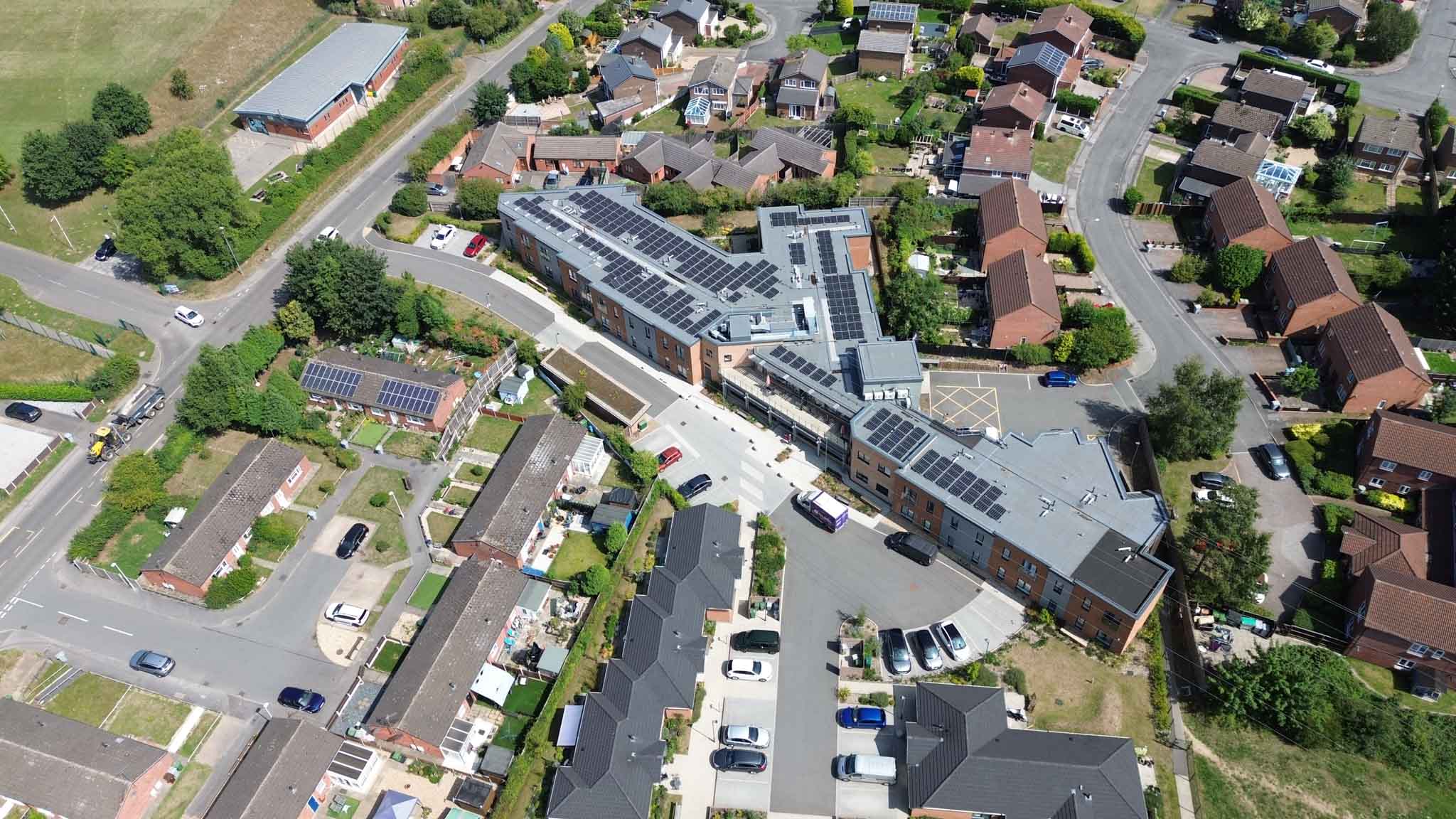
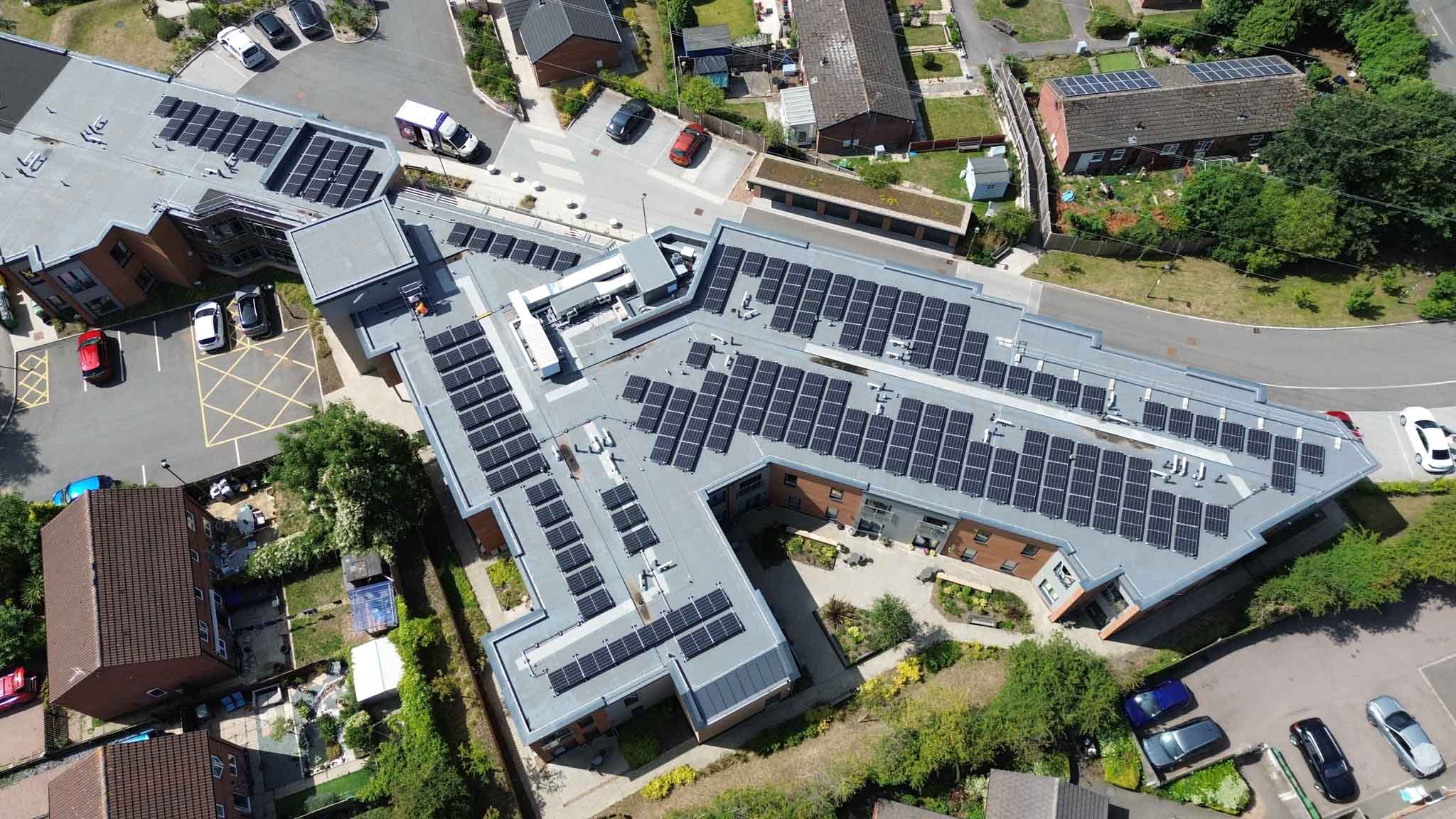
Similarly, Newark and Sherwood District Council collaborated with Geo Green Power to install a major 100kWp solar PV scheme at Broadleaves Care Home, drastically reducing rising energy expenses for the facility.
3. Access to Funding, Grants, and Flexible Financial Models
One common misconception among care operators is that transitioning to renewable energy requires a prohibitive upfront capital outlay. There is a wide range of funding avenues, government-backed schemes, and green finance options tailored specifically to UK healthcare providers and local authority housing initiatives.
Depending on the region and the ownership structure of the care home, facilities may qualify for local business decarbonisation grants, energy efficiency loans, or capital allowance tax reliefs such as Full Expensing. These financial incentives significantly reduce the initial capital expenditure and accelerate the return on investment (ROI), which for many commercial solar installations is achieved in as little as 3 to 5 years.
Furthermore, for organisations looking to preserve capital, alternative funding models like Power Purchase Agreements (PPAs) allow care facilities to benefit from a fully funded solar panel installation with zero upfront capital cost. Under a PPA, a specialist installer designs, fits, and maintains the solar PV system, while the care home simply purchases the generated electricity at a heavily discounted, fixed rate lower than standard grid prices.
4. Progress Toward Net-Zero and Strengthening ESG Credentials
Environmental, Social, and Governance (ESG) standards are no longer optional for UK care providers. Local authorities, integrated care boards (ICBs), and private funding bodies increasingly evaluate care operators on their sustainability commitments.
In addition, families looking for residential care options for their loved ones are paying closer attention to a provider’s environmental values.
Installing solar PV offers a transparent, highly visible demonstration of a care home’s commitment to sustainability. Replacing grid-supplied fossil fuels with clean, self-generated solar power directly cuts a facility’s Scope 1 and Scope 2 carbon emissions.
Over its operating lifecycle, a single commercial solar array can offset hundreds of tonnes of carbon dioxide, the equivalent of removing dozens of conventional cars from the road every year.
These green credentials enhance CQC quality assessments regarding management and governance, strengthen funding bids, and build trust within the local community.
5. Long-Term Energy Independence and Operational Resilience
Care homes care for vulnerable residents who depend on uninterrupted heat, light, and medical devices. While standard grid-connected solar PV systems shut down during a power outage for safety reasons, modern advanced solar-plus-storage solutions can be engineered with emergency backup capabilities.
Whilst Uninterruptible Power Supply (UPS) systems are designed to instantly provide power to critical systems, pairing solar panels with smart battery management systems within a care home can help systems remain operational for brief periods of time during grid outages.
Additionally, as the UK transitions toward cleaner transportation and heating, care homes will increasingly rely on electric vehicles (EVs) for resident transport and heat pumps for room heating. Integrating a custom solar array now ensures your site’s electrical infrastructure is future-proofed to handle these growing electrical loads cleanly and cost-effectively.
Future-Proofing UK Residential Care with Geo Green Power
By lowering operational overheads, providing protection against fluctuating energy prices, and delivering measurable carbon reductions, solar care homes stand out as sustainable, resilient, and financially secure institutions.
Transitioning care facilities to solar energy helps operators maintain predictable operational costs while protecting vulnerable residents with reliable on-site generation and battery backup.
Looking to evaluate solar, battery storage, or EV charging for your residential facility? Learn more about our technical surveys, case studies, and engineering capabilities on our Care Home Solar Panels Page.
From initial site feasibility studies and grid connection applications to expert installation with minimal disruption to your residents, our team manages every step of the process.
Contact the expert team at Geo Green Power today to request a free, zero-obligation solar feasibility assessment for your facility.