Power Purchase Agreement (PPA) for Solar
Learn how a solar PPA works in 2026. Secure zero-CAPEX renewable energy for your UK business with Geo Green Power’s advice
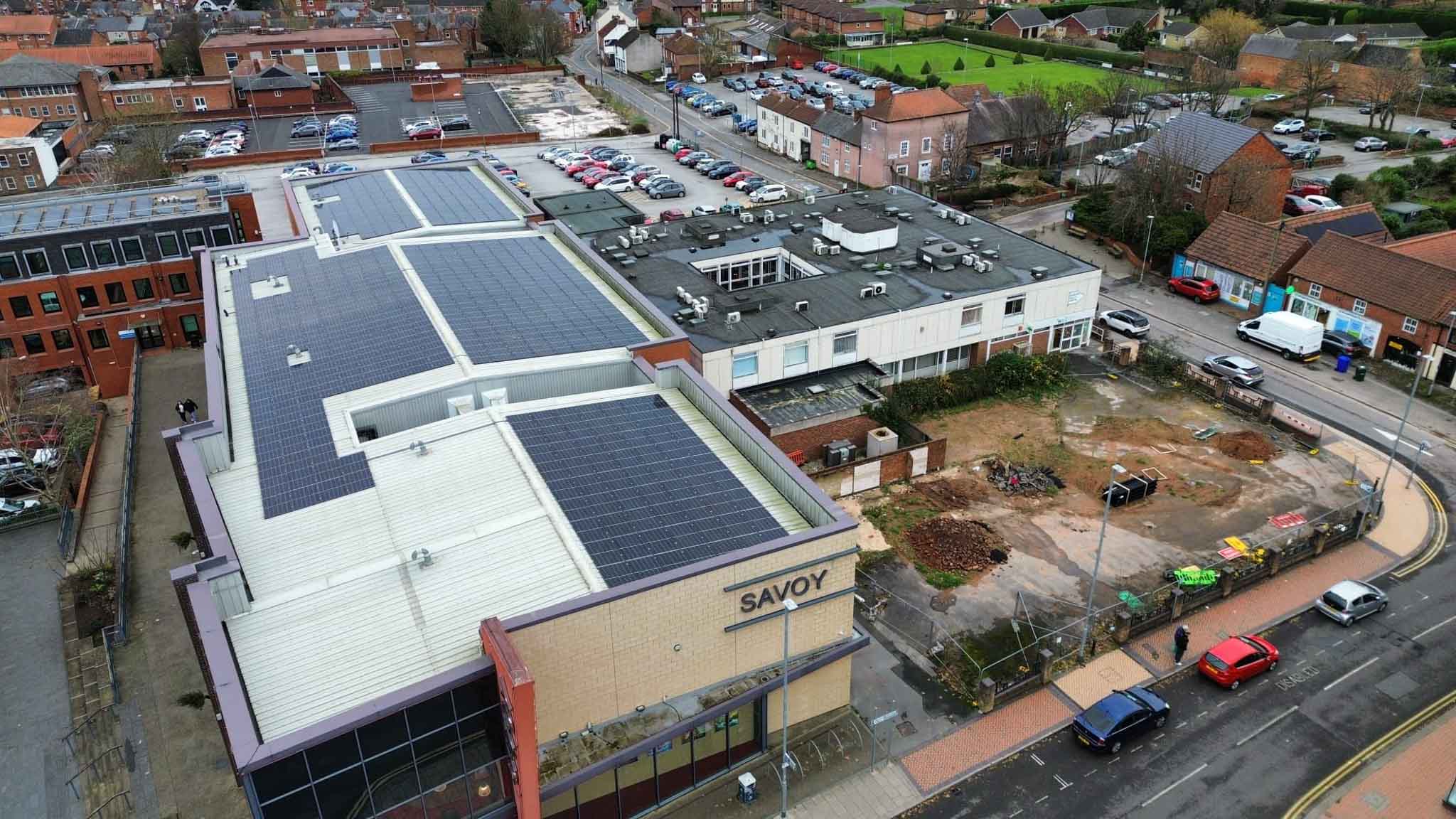
As we move into 2026, the landscape of the UK energy market has shifted from the volatility of the early 2020s into a new era of strategic decarbonisation. For businesses, the challenge is no longer just surviving price spikes but actively securing long-term operational stability. Central to this strategy is the power purchase agreement (PPA).
While Geo Green Power is a leading installer of high-efficiency solar technology, it is important to clarify that Geo Green Power does not offer PPAs directly. Instead, we act as a specialist technical partner, helping businesses design their installations and providing expert advice on how to navigate the complex world of power purchase agreements for solar.
In this updated guide for 2026, we expand on how a UK power purchase agreement works and why it has become the gold standard for commercial renewable adoption.
What is a PPA Agreement for Solar?
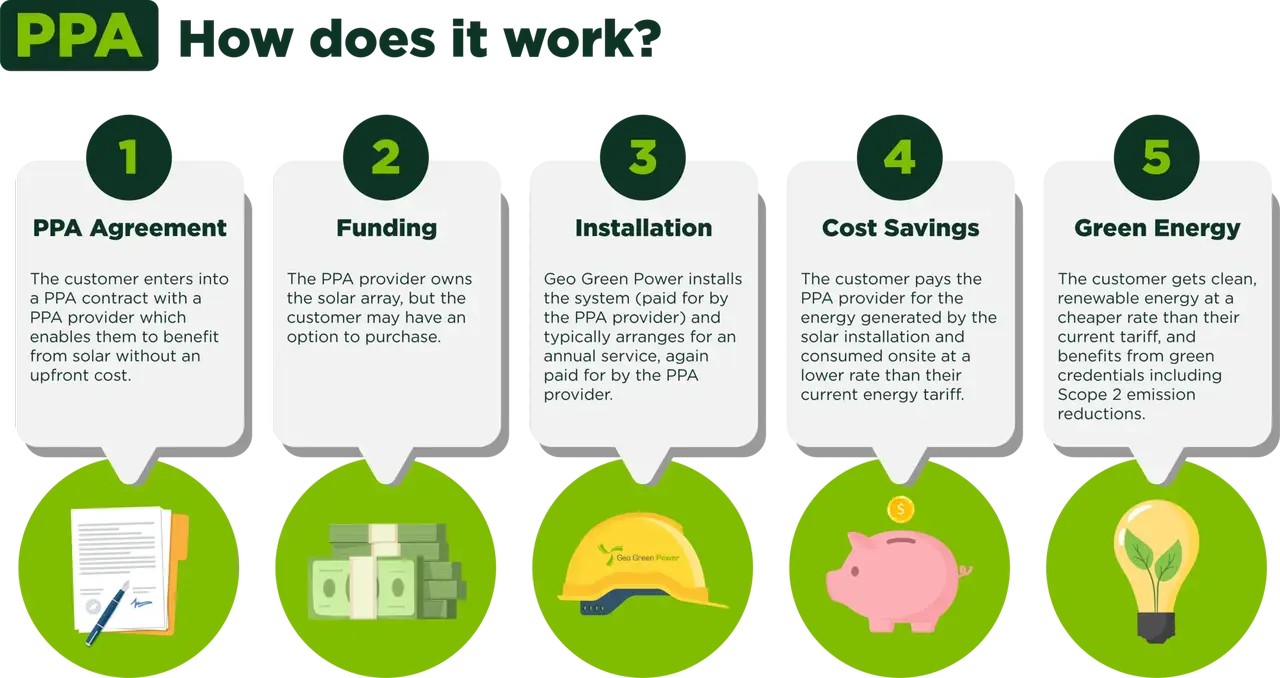
At its core, a PPA agreement for solar is a long-term contract between a business (the offtaker) and a solar developer or funder. Under this arrangement, the funder pays for the entire cost of the solar PV system, including design, equipment, and installation. In return, the business agrees to purchase the electricity generated by those panels at a predetermined rate (the “strike price”) for a fixed term, typically between 10 and 25 years.
In 2026, the “benchmark” rate for a commercial PPA in the UK is approximately 12p/kWh. When compared to grid averages that remain stubbornly high at 24p–26p/kWh, the financial logic is undeniable (Utility Bidder, 2025).
The 2026 Landscape: Why PPAs are Surging
The UK solar market is forecast to grow by over 5GW in 2026 alone (Solar Power Portal, 2026). This surge is driven by three main factors that make a power purchase agreement more attractive than ever:
Grid Connection Scarcity: As the UK pushes toward “Clean Power 2030,” the queue for grid connections has become a significant bottleneck. A PPA allows businesses to bypass some of these hurdles by focusing on “behind-the-meter” generation, effectively securing their own energy future before their neighbors do.
Corporate ESG Mandates: By 2026, supply chain transparency is no longer optional. Large Tier-1 companies now require their suppliers to prove carbon reductions. A PPA provides a “sleeved” or direct renewable source that satisfies even the most stringent ESG reporting requirements.
Capital Preservation: High interest rates in recent years have made businesses protective of their cash flow. A PPA offers a “zero-CAPEX” route to solar, allowing companies to preserve their capital for core business operations while still benefiting from reduced energy overheads.
Types of PPA Structures in 2026
When considering a UK power purchase agreement, it is essential to understand which structure fits your operational footprint:
On-Site / Private Wire PPA: The most common for manufacturing and warehousing. The panels are on your roof or adjacent land, and a direct cable delivers power to your distribution board. This avoids grid distribution charges and levies.
Sleeved PPA: If your business has multiple sites but only one suitable roof, a “sleeved” PPA allows you to “transport” the green energy across the National Grid via a licensed supplier who “sleeves” the power into your standard bill.
Virtual or Synthetic PPA: A purely financial arrangement used by very large corporations to hedge against market volatility without the physical delivery of electrons to a specific site.
Which Sectors Benefit Most?
While almost any high-energy user can benefit, certain sectors in 2026 are seeing transformative results from a power purchase agreement for solar:
Manufacturing and Heavy Industry
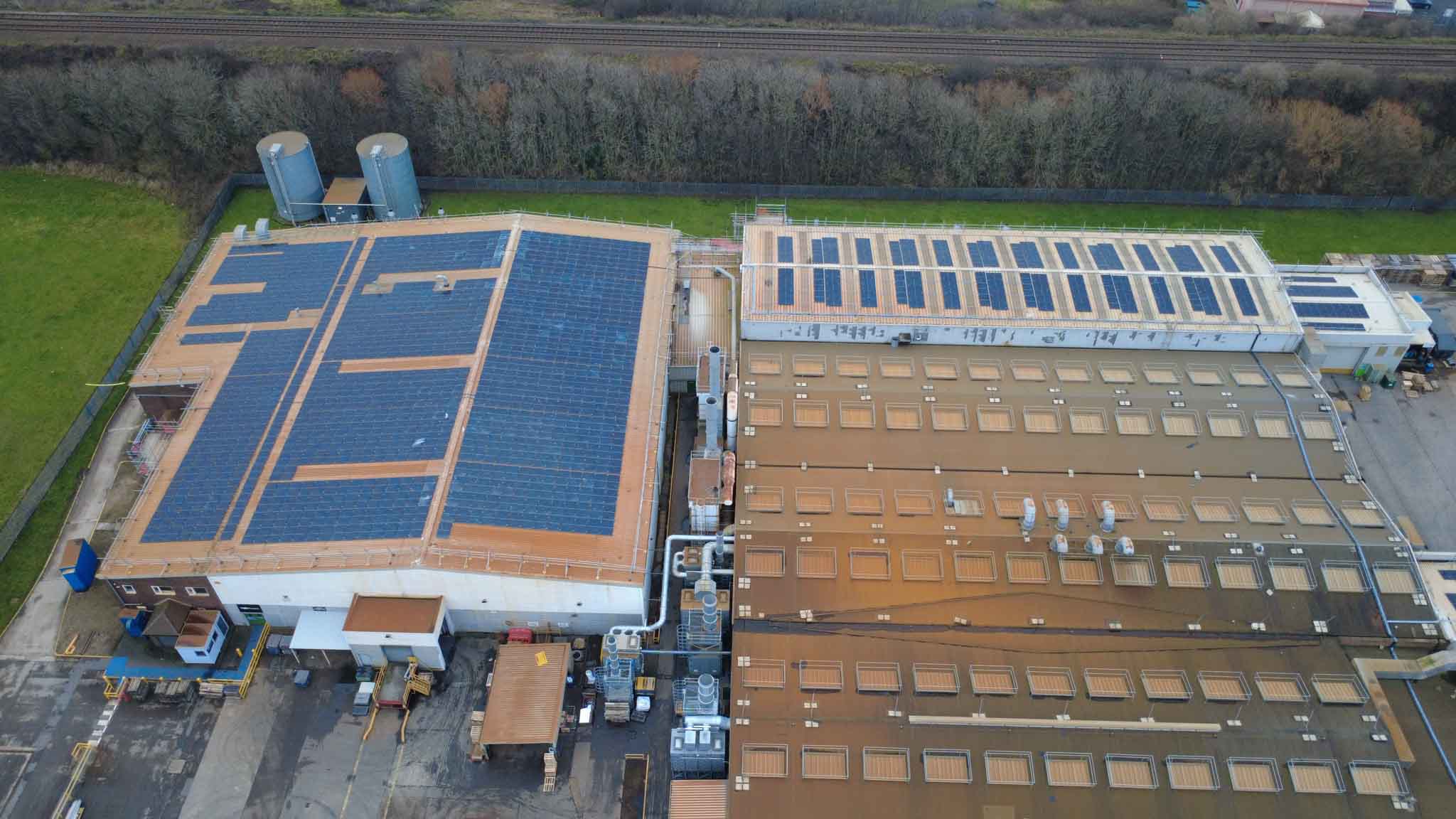
With 24/7 production cycles, manufacturers are the primary beneficiaries of the PPA model. Because their “base load” is so high, they can often consume 100% of the solar energy generated on-site, maximising the “Day 1” savings.
Education and Public Sector
A significant update for 2026 is the lifting of the Department for Education (DfE) “pause” on school PPAs. Multi-academy trusts and universities are now rapidly adopting PPAs to decarbonise aging estates without needing to dip into restricted capital budgets.
Cold Storage and Logistics
Warehouses have vast, “dead” roof spaces that are perfect for solar. In 2026, the integration of battery storage into PPA agreements for solar has allowed logistics firms to power their refrigeration units overnight using solar energy captured during the day.
Agriculture and Horticulture
Farms with high-demand equipment, such as grain dryers or automated milking parlours, use PPAs to stabilise their most volatile overhead. By fixing their energy price for 20 years, they gain a competitive edge in a sector where margins are notoriously tight.
The Role of Geo Green Power
As we have emphasised, Geo Green Power does not offer PPA financing. However, our role in the 2026 market is arguably more critical than ever.
Navigating a power purchase agreement requires a deep understanding of the technical feasibility and the long-term yield of a system. A “bad” PPA is one where the system is undersized or uses poor-quality components that degrade before the contract ends.
How we help:
Feasibility Studies: We analyse your half-hourly (HH) data to ensure the PPA proposal matches your actual consumption.
Technical Design: We design systems using 2026-standard N-Type bifacial panels to ensure maximum generation for the PPA funder, which in turn drives down the price per kWh for you.
Expert Advice: We guide you through the “heads of terms” in a UK power purchase agreement, ensuring you understand your rights regarding roof maintenance, system buy-outs, and performance guarantees.
Key Considerations for 2026
If you are considering a power purchase agreement for solar, keep these three factors in mind:
Contract Length: While 25 years was the standard, 2026 sees more “flex-PPAs” that allow for shorter 10-to-15-year terms, though these usually come with a slightly higher kWh rate.
Termination & Buy-out: Ensure your agreement has clear “fair market value” buy-out clauses. As your business grows, you may eventually want to own the asset outright.
Maintenance Responsibilities: One of the biggest perks of a PPA is that the provider is responsible for the O&M (Operation and Maintenance). Since they only get paid when the system generates power, their interests are perfectly aligned with yours.
Your Purchase Power Agreement
The power purchase agreement has matured into a sophisticated financial tool that is driving the UK’s energy transition. For businesses in 2026, it represents the fastest, lowest-risk path to energy independence and price certainty.
At Geo Green Power, we remain committed to being the UK’s premier technical installer. While we leave the financing to the specialist PPA funds, we ensure that the physical infrastructure – the panels, inverters, and mounting systems – is built to last the full duration of your agreement.
Contact Geo Green Power today for an initial consultation on how a PPA could work for your facility.
Although we aren’t the lender, our advice and industry-leading installation services will ensure your journey toward a UK power purchase agreement is seamless and technically sound.
Ref:
https://www.utilitybidder.co.uk/energy-and-utility-guides/uk-business-energy-costs-2026/ (Mark Gamble, Utility Bidder, 2025)
https://www.solarpowerportal.co.uk/solar-projects/uk-solar-forecast-to-grow-50-yoy-again-in-2026 (Josh Cornes, Senior Market Analyst, Solar Power Portal, 2026)