SEG Payments Guide for Businesses: Maximising ROI on Commercial Solar
Investing in commercial solar PV systems is one of the most effective strategies for UK businesses to lower operational costs, reduce carbon footprints, and achieve energy independence. However, the financial return on a solar investment goes beyond self-consuming the generated electricity.
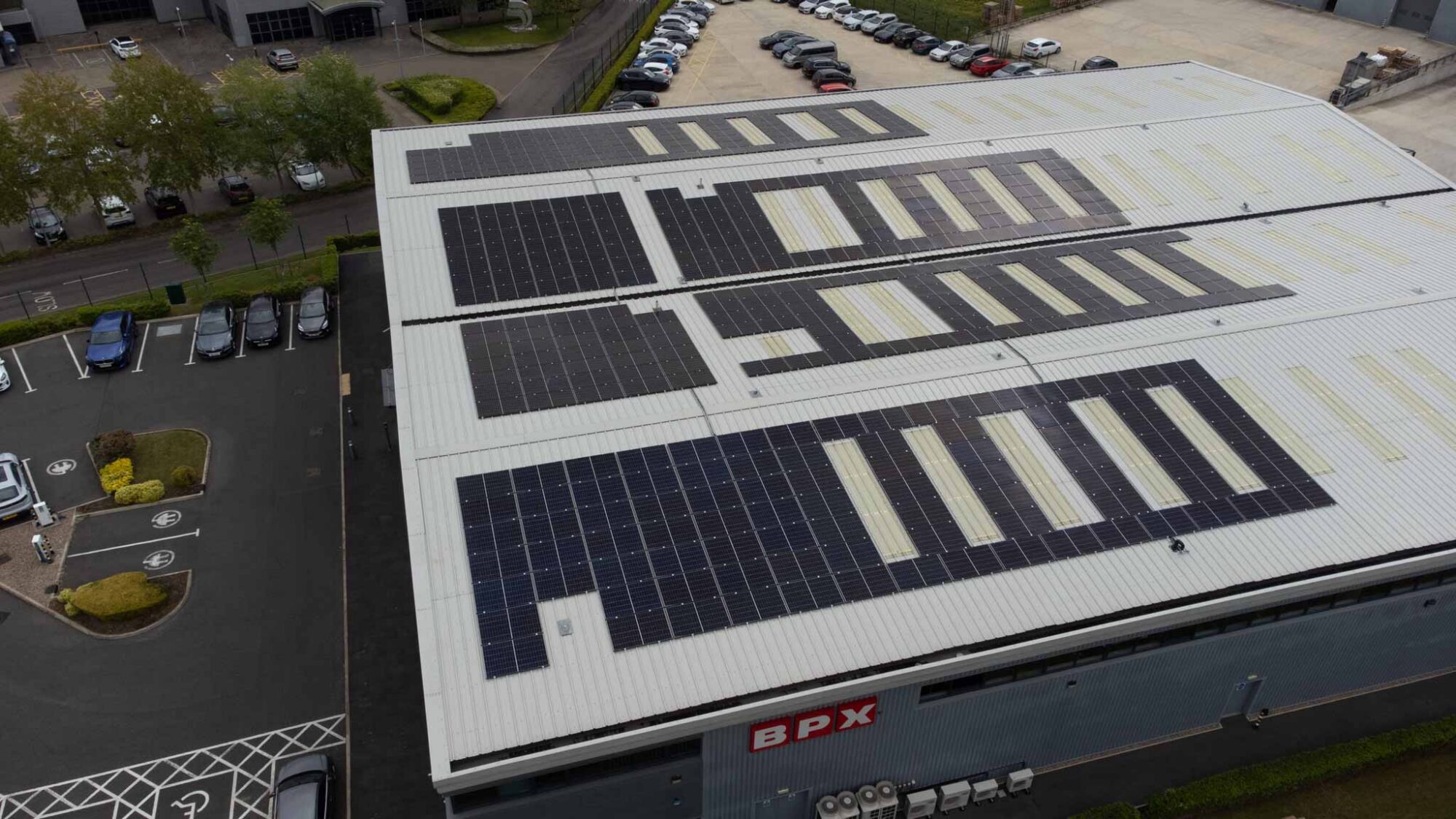
Through the UK government-backed Smart Export Guarantee (SEG) mechanism, businesses can earn revenue by selling unused clean power back to the National Grid.
This guide explains how SEG payments work, how much your business can earn, and how to optimise your commercial solar setup for maximum financial benefit.
What Are SEG Payments?
To understand the core model, we must first address: what are SEG payments?
Launched on 1 January 2020 as the official successor to the Feed-in Tariff (FiT) scheme, the Smart Export Guarantee (SEG) is a regulatory framework in Great Britain that obligates licensed electricity suppliers to pay small-scale renewable generators for the electricity they export to the grid.
Under this system, energy suppliers with more than 150,000 domestic customers must offer at least one SEG tariff.
Unlike legacy subsidies that paid businesses for both total energy generated and exported, SEG strictly compensates for actual unused energy sent back into the network.
For commercial organisations operating large rooftop arrays, this turns surplus generation into a secondary revenue line.
What Is SEG Payment Structure and How Does It Work?
If you are evaluating your financial projections, you might ask: what is the SEG payment structure in practice, and how are payouts calculated?
A SEG payment is a direct financial credit or payout calculated per kilowatt-hour (kWh) of electricity exported. The total payout is derived using a simple calculation:
Total SEG Payment (£) = Exported Electricity (kWh) x Tariff Rate (£/kWh)
To qualify for SEG payments, commercial sites must meet specific criteria:
- Eligible Renewable Technology: Solar PV, micro-CHP, wind, hydro, or anaerobic digestion.
- System Capacity Limits: Installed capacity up to 5 MW (or up to 50 kW for micro-CHP).
- Metre Requirements: A half-hourly smart metre (or advanced metering infrastructure capable of measuring export data).
- Certification: A Microgeneration Certification Scheme (MCS) certificate or equivalent recognised accreditation for larger installations.
Common SEG Tariff Types
Energy suppliers set their own commercial SEG rates. Rates are competitive rather than fixed by the government, leading to several distinct tariff structures:
| Tariff Type | Mechanism | Best For |
|---|---|---|
| Flat-Rate Export | Pays a constant price per kWh regardless of the time of day or season. | Businesses with predictable export patterns and no battery storage. |
| Variable/Dynamic Export | Rates fluctuate based on wholesale market prices (often updated half-hourly). | Operations with energy storage that can strategically export during peak hours. |
| Bundled Export | Higher rates offered exclusively to businesses that can buy their import power from the same supplier. | Companies looking to consolidate import and export contracts under one vendor. |
The Role of Commercial Solar Panels in Business Energy Strategy
Integrating commercial solar panels allows businesses to protect themselves against volatile commercial electricity import rates.
While maximising self-consumption, using solar energy directly on-site yields the highest savings (avoiding retail import rates of 20p–30p/kWh); exporting excess generation via SEG captures value that would otherwise be wasted.
Example ROI Scenario
Consider a manufacturing facility with a 200 kWp solar array:
Annual Generation: 190,000 kWh
Self-Consumption Rate (70%): 133,000 kWh used on-site (saving = £33,250 at 25p/kWh import rate).
Exported Power (30%): 57,000 kWh sent back to the grid.
SEG Revenue (at 8p/kWh): £4,560 annual income.
Total Annual Benefit: £37,810 (£33,250 savings + £4,560 export revenue).
Combining direct savings with SEG earnings significantly shortens payback periods and improves overall Internal Rate of Return (IRR).
Will SEG Payments Increase Over Time?
A critical question for financial directors when building multi-year capital expenditure models is: will SEG payments increase over the coming years?
While SEG tariffs are not indexed to inflation by law (unlike the old FiT scheme), export payment trends are heavily influenced by broader market forces:
- Wholesale Market Alignment: Because suppliers set SEG rates independently, payments tend to track wholesale electricity market trends. Higher wholesale costs generally drive suppliers to offer more competitive export rates to secure local clean energy.
- Grid Demand and Time-of-Use Flexibility: As national electrification accelerates, demand during peak hours 4pm–7pm) is increasing. Suppliers are introducing dynamic export tariffs that offer higher payouts during these high-demand intervals.
- Clean Power 2030 Goals: With national targets aiming for near-total decarbonisation of the power grid, localised renewable generation is increasingly valuable to suppliers meeting green energy compliance quotas.
While standard flat-rate tariffs may fluctuate, businesses that incorporate smart energy management and battery storage can actively increase their SEG payments by shifting export times to peak rate windows.
Comparing Leading Commercial Export Tariffs
Export rates vary significantly between suppliers. Below is a rough overview of representative SEG export rates available across the UK market:
| Energy Supplier | Rate Range (p/kWh) | Typical Category | Key Requirements/Conditions |
|---|---|---|---|
| Good Energy | 15.0p - 25.0p | Installer Exclusive / Bundled | 25.0p requires Good Energy solar & battery installation + import contract. Drops to 15.0p for existing systems with a Good Energy import contract. |
| E.ON Next | 6.0p – 17.5p | Multi-Tiered | 17.5p for E.ON-installed systems. 13.0p for standard E.ON import customers. 6.0p for standalone export-only (no import contract). |
| British Gas | 8.0p – 15.1p | System-Size Tiered | 15.1p on Export & Earn Plus for import customers with systems <15kW. 8.0p for commercial systems >15kW. |
| Octopus Energy | 4.1p – 16.0p+ | Dynamic / Fixed | 12.0p flat rate (Outgoing Fixed). Dynamic options (Agile / Flux) fluctuate up to 16.0p–29.0p during peak evening hours. 4.1p for standalone export-only. |
| Standard Baseline SEG | 3.0p – 6.0p | Unbundled Export | Minimum variable/fixed tariffs paid when you do not hold an import electricity contract with the provider (e.g., EDF at 3.0p, British Gas Flex at 3.02p, E.ON Flex at 6.0p). |
(Solar Energy UK, 2026)
Note: Rates vary based on contract length, capacity size, and whether export is bundled with import contracts. Always verify live rates prior to signing.
How Businesses Can Maximise SEG Revenue
To extract maximum commercial value from your renewable energy asset, consider the following best practices:
Shop Around Regularly: You do not have to purchase import electricity from the same supplier that pays your SEG tariff. Benchmark export rates every 12 months.
Pair Commercial Solar Panels with Battery Storage (BESS): Battery storage enables you to hold surplus midday generation and export it during early evening peak windows when variable SEG tariffs pay maximum rates.
If you’re considering commercial solar battery storage for your business, visit our dedicated page.
Ensure Metering Accuracy: Verify that your half-hourly smart meters or export meters are correctly registered with your supplier to prevent delayed or estimated payments.
Optimise System Sizing: Work with accredited installer partners to design an array that balances high self-consumption with predictable export volumes.
Conclusion
The Smart Export Guarantee turns excess clean generation into a reliable revenue stream for UK businesses.
By understanding what SEG payments are, selecting the right energy partner, and leveraging commercial solar panels alongside smart storage, companies can significantly boost their sustainability credentials while driving down the overall payback period of their renewable investments.
If you’re considering commercial solar for your business, contact our team today.
For more information about alternative financing options, visit our page.
Disclaimer: Please note that Geo Green Power is an independent installer of commercial solar PV systems and does not provide grant administration or financial management services related to the Smart Export Guarantee (SEG).
Ref:
https://energysavingtrust.org.uk/advice/smart-export-guarantee (Energy Savings Trust)
https://solarenergyuk.org/resource/smart-export-guarantee/ (Solar Energy UK, 2026)