A Guide to Solar Panel Mounting: Choosing the Right Foundation for Your PV System
When you decide to install solar panels, the immediate focus is often on the panels’ power output and efficiency. Why is solar panel mounting important?
However, a factor just as crucial to the system’s longevity, performance, and overall aesthetics is the solar panel mounting system, the structural foundation that holds your array in place.
The mounting system must be engineered to withstand UK weather conditions, including high winds and heavy rain, while positioning the panels for optimal sunlight capture. Choosing the right mounting method depends entirely on your property type, available space, and specific energy goals.
At Geo Green Power, we understand that a robust, professionally designed mounting solution is key to maximising your investment. Here is a comprehensive guide to the main types of solar panel mounting available in the UK.
Solar Panel Roof Mounts: The UK Standard
For most residential and commercial properties, solar panel roof mounts are the standard, most cost-effective option. They utilise the existing structure of the building, saving valuable ground space.
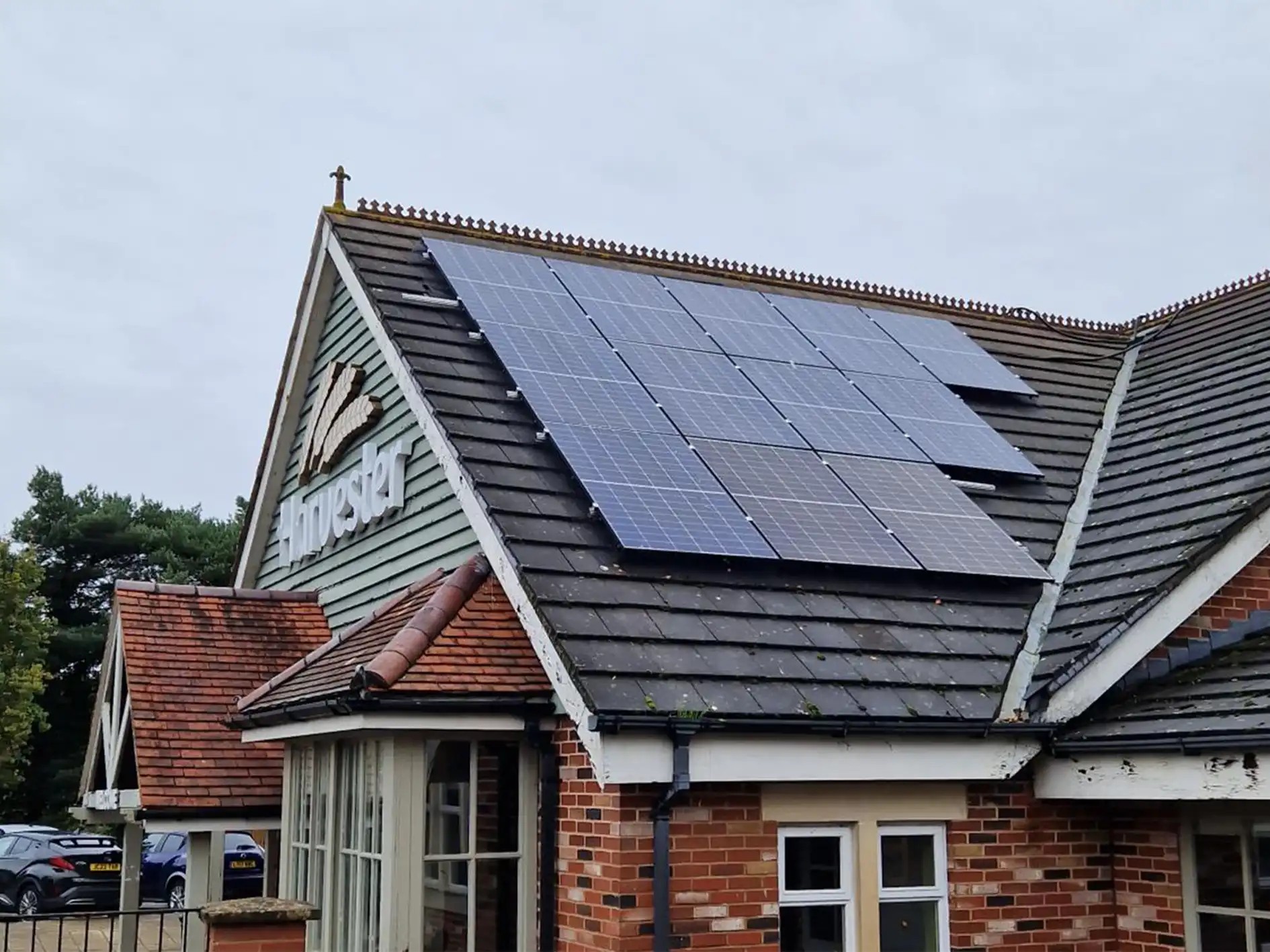
Pitched Roof Systems (On-Roof)
This is the most common residential method. The panels are fixed slightly above the existing roof surface (tiles or slate) using mounting hooks or brackets anchored securely into the roof rafters.
Key Benefits:
Cost-Effective: Leverages the existing roof structure, minimising material and labour costs compared to ground arrays.
Optimal Angle: The natural pitch of the roof (ideally 30° to 45° in the UK) is often close to the optimal angle for year-round solar energy capture.
Airflow: The slight gap created by the solar panel roof mounts allows for vital airflow, helping to keep the panels cool, which enhances performance.
Suitability: Best for properties with unshaded, south-facing (or East/West-facing) roofs in good structural condition.
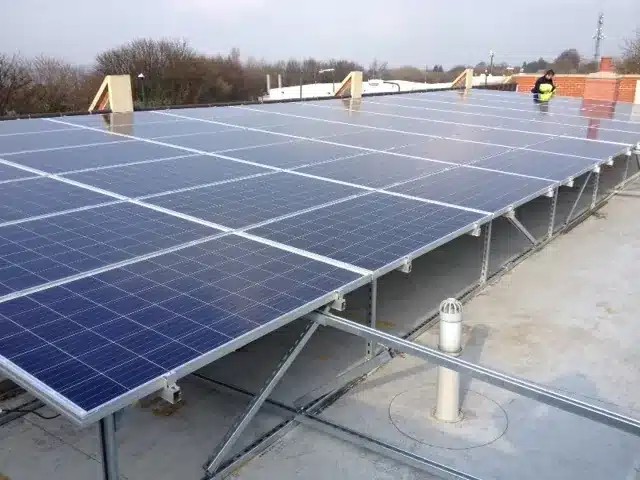
Flat Roof Systems
Common on commercial buildings, garages, and some modern homes, flat roofs require specialised solar panel mounting using frames.
Mechanism: Frames are used to tilt the panels to the optimal angle (typically 10° to 15° in this orientation).
Fixing: These systems often use ballast (weights like concrete blocks) to secure the array without penetrating the roof membrane. In high-wind areas, mechanical fixings may be required, which necessitate careful waterproofing.
Regulation Note: Recent UK building regulation changes have relaxed restrictions on the height of solar panels on flat roofs, making them more viable.
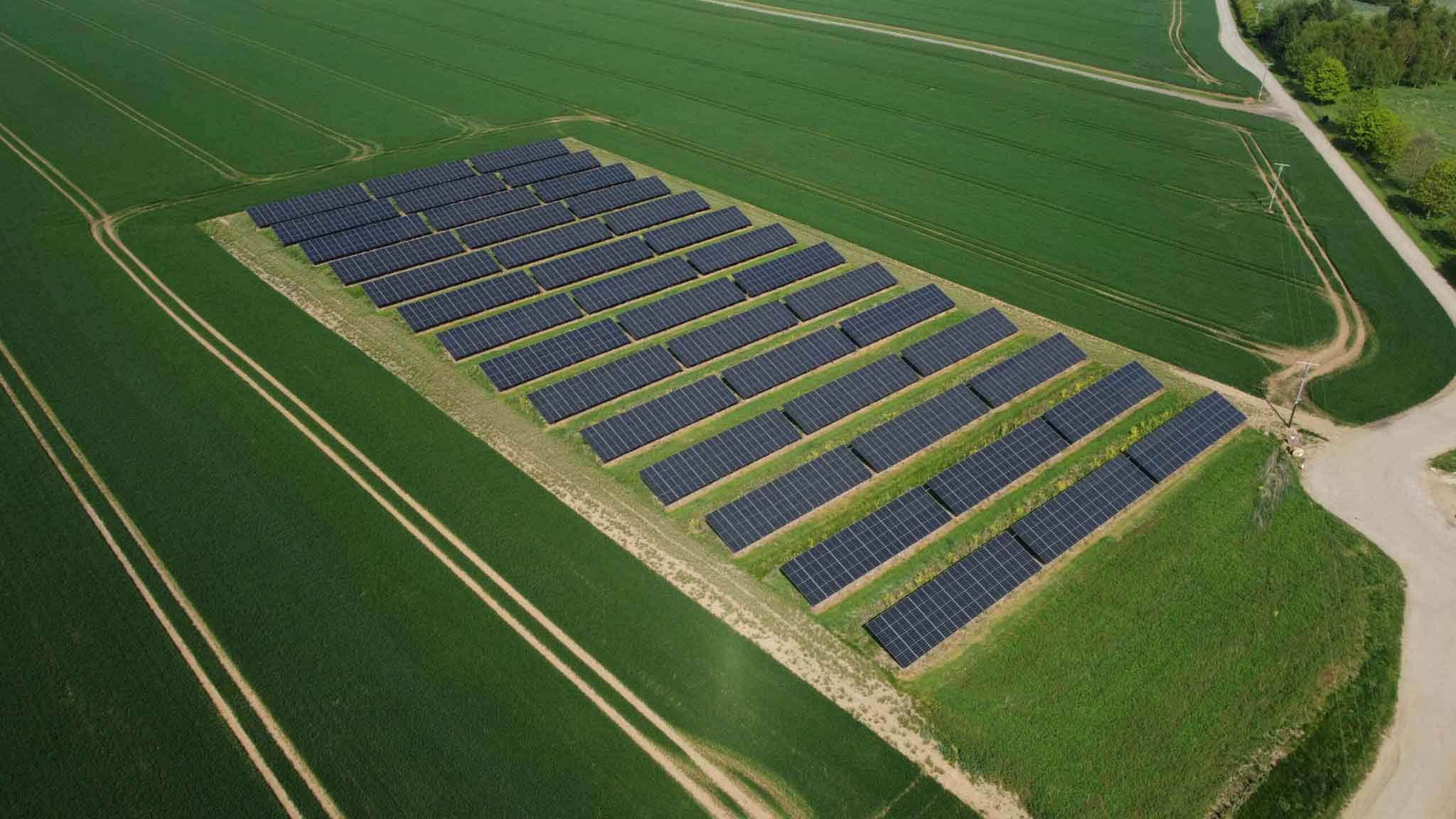
Ground-Mounted Solar Panels: Performance and Flexibility
If your roof is unsuitable due to size, orientation, heavy shading, or structural issues, ground-mounted solar panels offer a powerful alternative, provided you have sufficient open land.
Key Benefits
Optimal Performance: The biggest advantage is complete flexibility. The solar panel mounting structure can be fixed at the perfect tilt angle and facing (true South in the UK) regardless of the house orientation. They also benefit from better airflow, which keeps the panels cooler and can lead to a slightly higher energy yield.
Accessibility and Maintenance: Being installed at ground level makes cleaning, maintenance, and troubleshooting significantly easier and safer, potentially reducing long-term service costs.
Scalability: It is simpler to expand a ground-mounted system later if your energy needs increase.
Installation and Considerations
Foundation: Ground-mounted solar panels require a robust foundation, typically using driven metal posts or concrete footings, making the initial installation more labour-intensive and expensive than roof mounts.
Space Usage: They take up garden or land space, which is often a key deciding factor for homeowners or landowners.
Planning: While smaller domestic arrays (under 9 square metres and under 4 metres tall) often fall under Permitted Development rights, larger or more visible installations may require formal planning permission.
Expert Design is Non-Negotiable
Regardless of the type of solar panel mounting you choose, the design and installation must be handled by an MCS-certified professional. Your installer will conduct a structural assessment, a detailed shade analysis, and a wind load calculation to ensure the system is not only efficient but also safe and compliant with all UK Building Regulations.
Whether you opt for traditional solar panel roof mounts, flexible ground-mounted solar panels, or space-saving wall-mounted solar panels, the mounting is the silent hero of your solar system, protecting your investment for decades to come.
At Geo Green Power, all of our system designs, including mounting systems, are managed in-house by our team.
Ready to determine the best mounting solution for your property’s unique structure?
Contact Geo Green Power today to schedule your expert solar feasibility assessment.