Are Solar Panels Worth It For Small Scale Farmers?
Small scale farms still consumer considerable energy. Would solar on your barns and sheds help? Find out now.
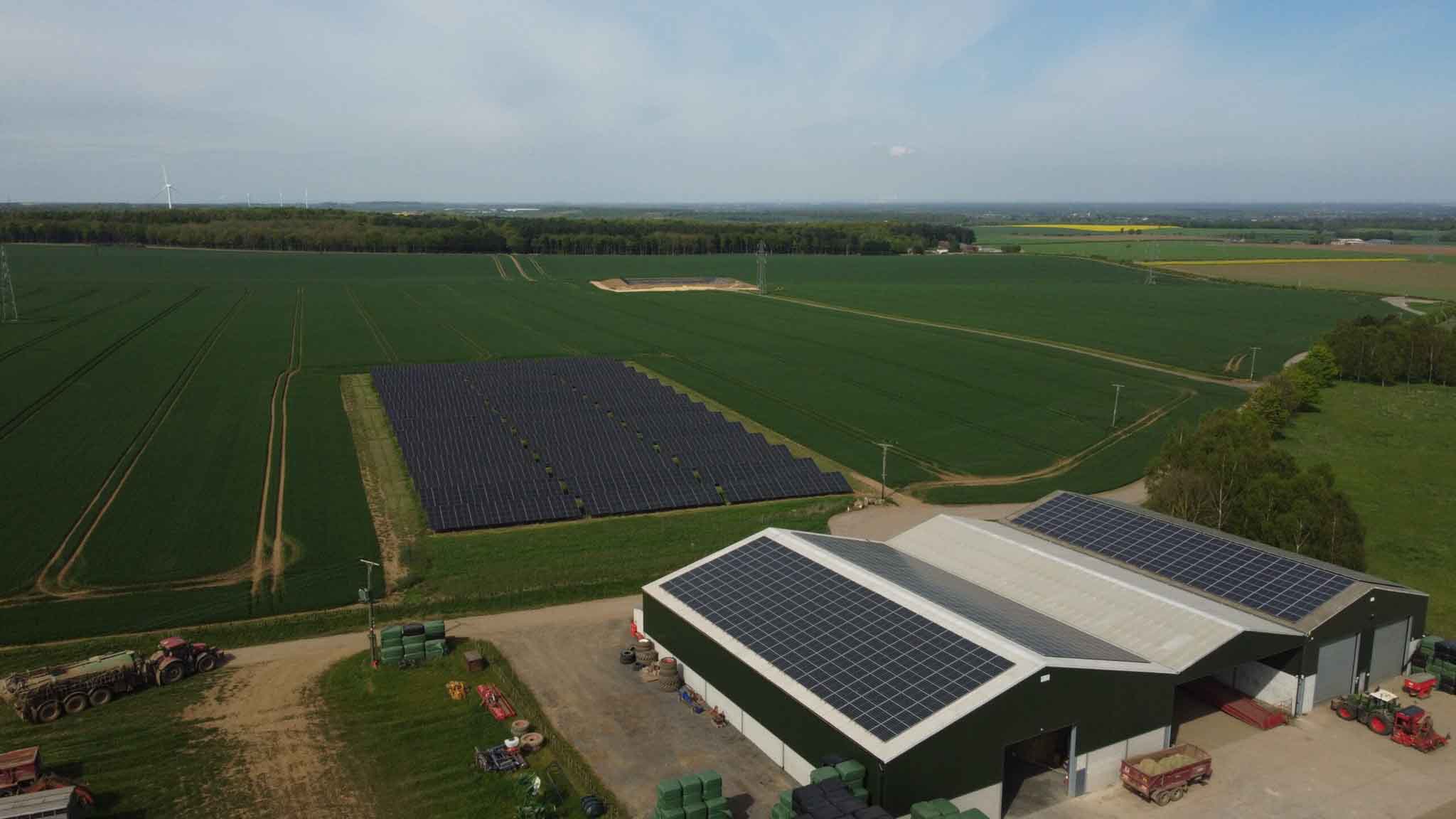
As we navigate through 2026, the UK agricultural sector is undergoing a profound transformation. Small-scale farmers, once the most vulnerable to energy price volatility and shifting subsidy landscapes, are now at the forefront of the renewable energy revolution. The integration of solar panels on farms has moved from a “niche interest” to a core pillar of modern farm management.
For smallholder or family-run enterprises, energy is often one of the largest uncontrollable overheads. However, with the advancements in N-Type solar cell efficiency and the maturity of the smart export market, solar panels for farms now offer a level of financial predictability that traditional crops or livestock simply cannot match.
In this updated guide for 2026, we explore how agricultural solar is empowering small-scale farmers to secure their energy independence and diversify their income streams.
The Economic Shift: Why 2026 is the Year for Agricultural Solar
In the early 2020s, the conversation around solar was often dominated by large-scale solar farms. Today, the focus has shifted toward “behind-the-meter” generation for smaller operations. With grid electricity prices for commercial and agricultural users remaining stubbornly high, the “avoided cost” – the money you don’t have to pay the National Grid – is the primary driver for investment.
Agricultural solar panels in 2026 are more than just a way to save money; they are a capital asset. Under the current tax regime, most farmers can utilise the Annual Investment Allowance (AIA) to deduct 100% of the cost of a solar installation from their taxable profits in the year of purchase. This effectively reduces the “net cost” of the system by up to 25%, significantly accelerating the return on investment.
Diversification and Consistent Revenue
One of the greatest challenges for small-scale farmers is the “boom or bust” nature of agricultural yields. Weather patterns, global supply chains, and fluctuating commodity prices can make financial planning a headache.
Agricultural solar provides a “harvest” that is guaranteed every year. By utilising lower-grade land or redundant roof space on barns and sheds, farmers can generate a consistent flow of electricity. Any power not used on-site for milking parlours, cooling systems, or grain drying can be sold back to the grid via the Smart Export Guarantee (SEG).
In 2026, “Agile” export tariffs allow farmers to earn premium rates by discharging stored battery power during peak evening demand, turning the farm into a micro-power station.
Case Study: Bluebell Dairy Farm
A perfect example of how solar panels for farms can revolutionise a business is our work with Bluebell Dairy Farm.
Based in Derbyshire, Bluebell Dairy is a high-energy user due to its popular artisan ice cream production and visitor-friendly farm park. To maintain their wholesale contracts with prestigious partners like the National Trust and National Heritage, they needed to demonstrate a commitment to sustainability and carbon reduction.
The Solution: Geo Green Power designed and installed a 210kWp ground-mounted solar PV system. This substantial array was strategically placed on 300 acres of farmland, designed to work alongside their existing operations without disrupting the visitor experience.
The Results:
Energy Generation: The system generates over 188,000 kWh of clean electricity annually.
Financial Impact: Bluebell Dairy has seen a reduction in their energy bills by approximately two-thirds.
Environmental Gains: The installation saves roughly 47 tonnes of CO2 per year, the equivalent of taking seven petrol cars off the road.
For Bluebell Dairy, the investment wasn’t just about the immediate savings; it was about the “economic survival” of the business. By locking in their energy costs, they have been able to protect 50 local jobs and ensure the long-term viability of their ice cream production facility.
Maximising Yield: Rooftop vs. Ground Mount
For small-scale farmers, space is a premium. At Geo Green Power, we help you decide which configuration of agricultural solar best suits your land:
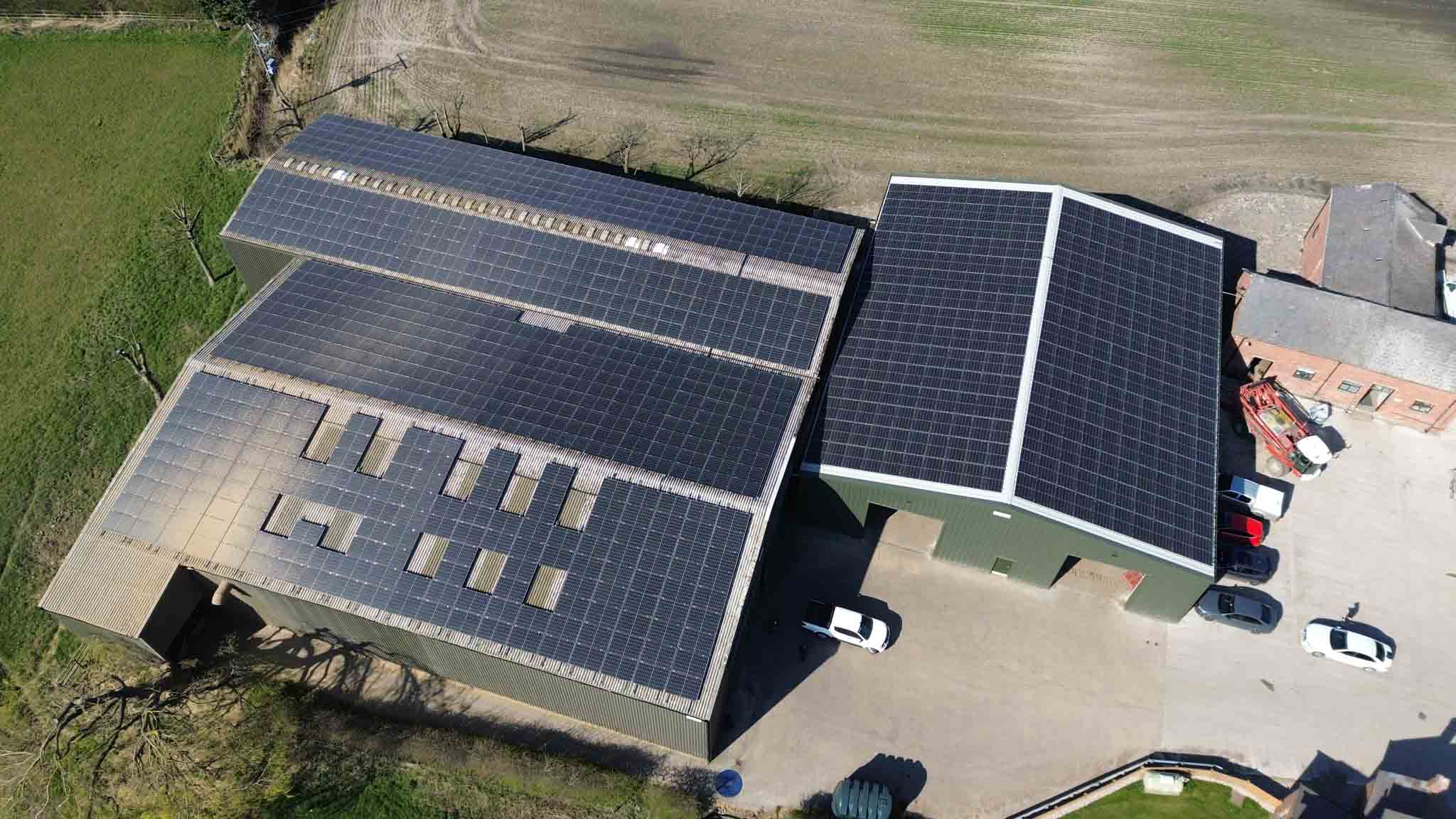
Solar Panels on Barns and Outbuildings
Most small farms have expansive roof spaces on sheds, stables, or grain stores. These are ideal for solar because:
- They often don’t require planning permission (falling under Permitted Development).
- They utilise “dead space” that isn’t suitable for grazing or crops.
- Modern racking systems are lightweight and can be fitted to most agricultural building materials.
Ground-Mounted Arrays
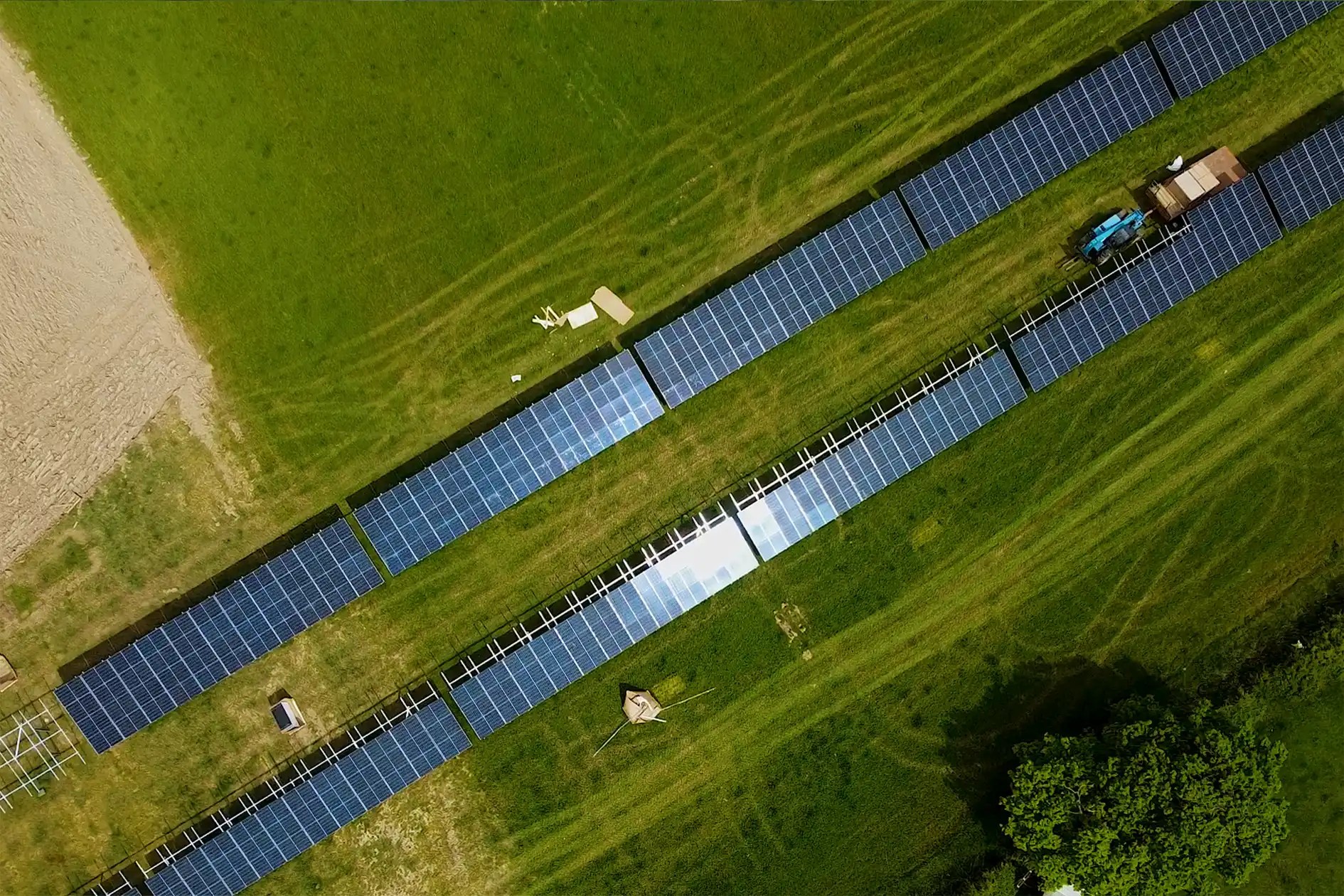
If roof space is limited or oriented poorly, ground-mounted solar panels on farms offer maximum flexibility. These arrays can be positioned at the perfect angle (typically south-facing at 30 degrees) to maximise capture. In 2026, many of our clients use “Agrivoltaics”, where sheep are allowed to graze between the rows of panels, ensuring the land remains agriculturally productive while generating power.
Future-Proofing with Battery Storage
A significant update for 2026 is the standard integration of battery storage with agricultural solar. For small farms, demand often peaks at times when the sun isn’t at its strongest, such as early morning milking or late-night irrigation.
By adding a battery, you can capture the “spill” energy generated during the midday sun and use it when you need it most.
Furthermore, battery storage provides vital backup during grid outages, ensuring that critical systems like ventilation for livestock or refrigeration for dairy products remain operational.
A Legacy for the Next Generation
Investing in solar panels for farms is a decision that impacts the legacy of your land. With a typical system lifespan of 25–30 years, an installation today will continue to provide free, green electricity for the next generation of farmers.
At Geo Green Power, we pride ourselves on being more than just installers. We are partners in your farm’s energy strategy. From initial feasibility studies and CAD layouts to navigating the complexities of grid connections, we handle every stage of the process in-house.
Are you ready to turn your farm into a sustainable energy leader?
Contact the expert team at Geo Green Power today.
Let us help you follow in the footsteps of success stories like Bluebell Dairy, securing your financial future and contributing to a greener, more resilient UK agricultural landscape.