How to Use Renewable Energy in Agriculture
The agricultural sector, a cornerstone of our global economy and food supply, is now, in 2026, increasingly facing the dual challenges of rising energy costs and the urgent need to reduce its environmental footprint. How can we use renewable energy in agriculture?
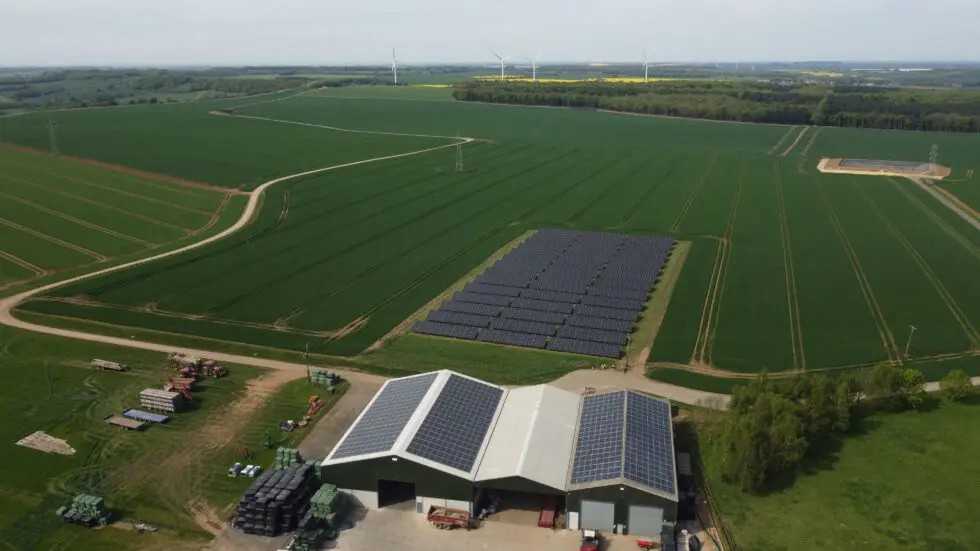
Traditional farming practices often rely heavily on fossil fuels for power, heating, and machinery, contributing to greenhouse gas emissions and exposing farms to volatile energy markets. However, a growing number of forward-thinking farms are turning to renewable energy solutions to mitigate these challenges, enhance sustainability, and even improve profitability.
Geo Green Power, a leader in renewable energy installations, has been at the forefront of this transition, helping numerous agricultural businesses harness the power of nature.
The Benefits of Renewable Energy in Farming
Integrating renewable energy into agricultural operations offers a multitude of benefits.
Energy costs: Firstly, it provides a stable and often lower-cost energy supply, insulating farms from fluctuating fuel prices. This financial predictability is invaluable for long-term planning.
Reduced carbon emissions: Secondly, it significantly reduces carbon emissions, helping farms contribute to national and international climate goals and improving their public image.
Low maintenance requirements: Thirdly, many renewable energy systems, such as solar panels for agricultural installations, require minimal maintenance once operational, offering a reliable energy source for decades.
Agricultural incentives: Lastly, government incentives and grants for renewable energy adoption can further reduce the initial investment cost, making it an even more attractive option.
Solar Power: A Bright Solution for Farms
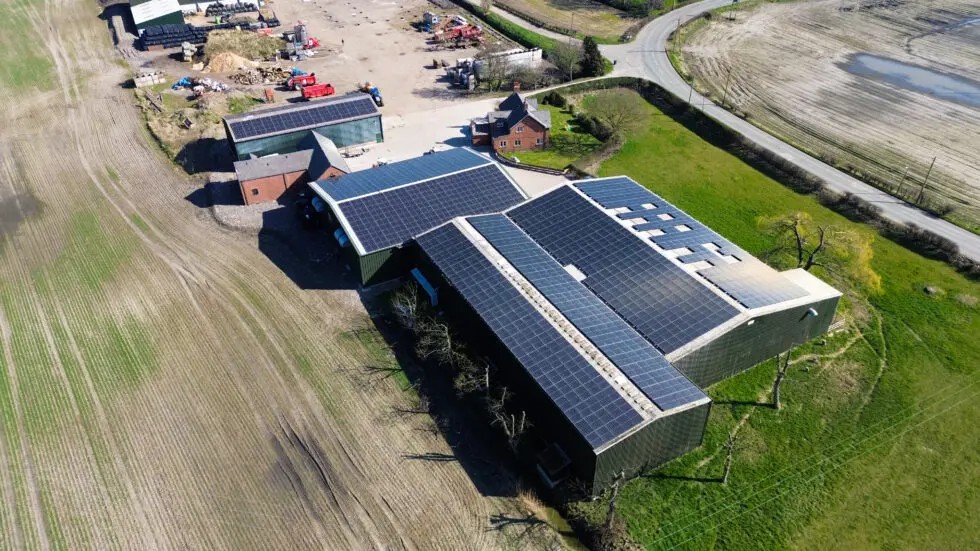
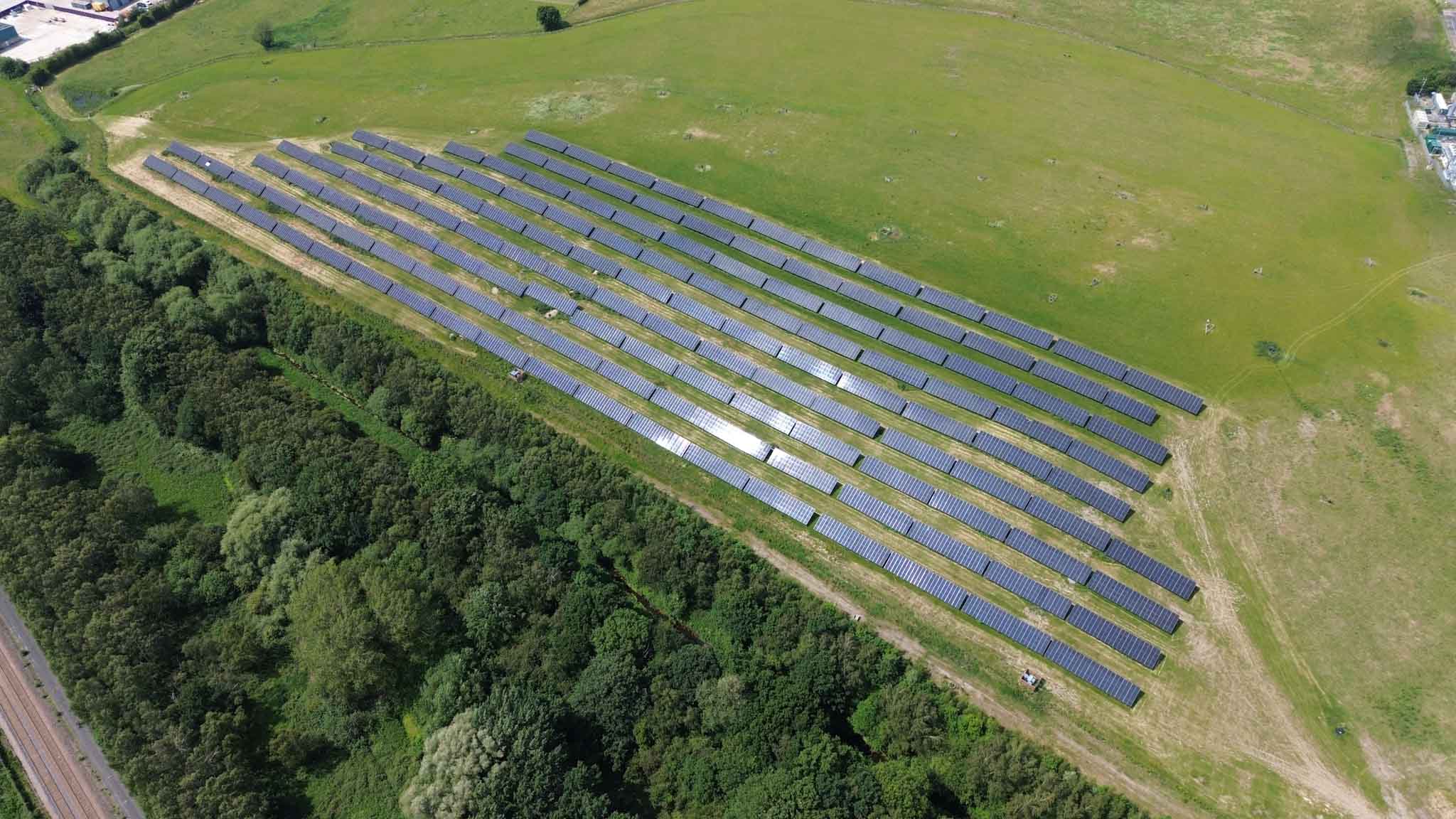
Among the various renewable energy technologies, solar power stands out as particularly well-suited for agricultural applications. Farms often have vast open spaces ideal for ground-mounted solar arrays, and more commonly, large agricultural buildings with expansive rooftops perfect for solar panels on agricultural buildings. These installations can power everything
- irrigation systems
- lighting
- ventilation
- milking parlours
- processing facilities
The modular nature of solar panels also means systems can be scaled to meet the specific energy demands of any farm, large or small.
Case Study: Bluebell Dairy Farm
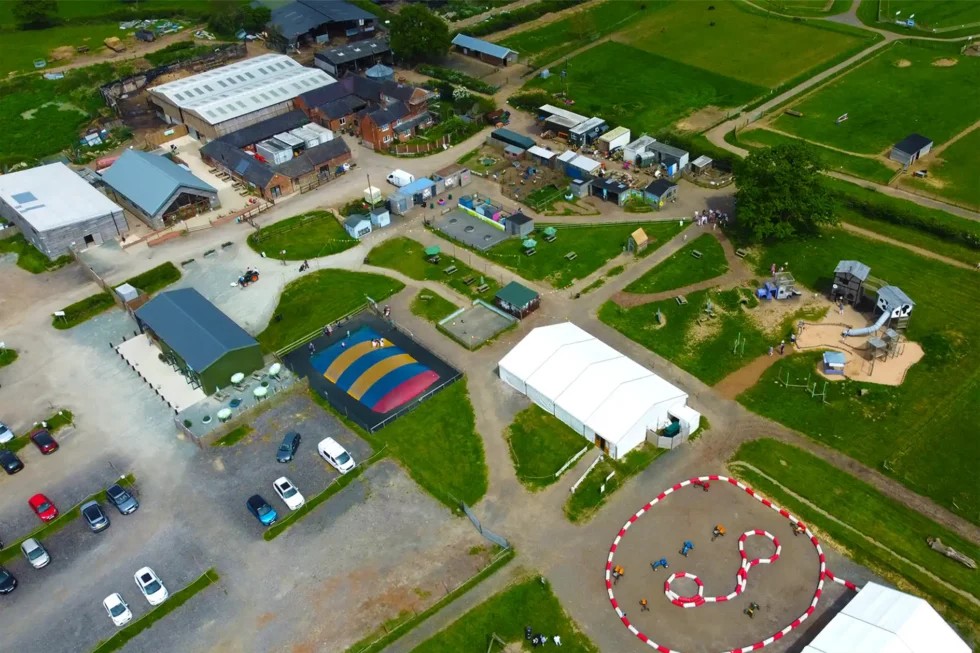
Bluebell Dairy Farm, a popular visitor attraction and working dairy farm, faced the challenge of high electricity consumption associated with its milking parlour, ice cream production, and visitor facilities. Geo Green Power stepped in to design and install a substantial solar panel system on their agricultural buildings. The installation dramatically reduced their reliance on grid electricity, leading to significant cost savings and a tangible reduction in their carbon footprint. The visible commitment to sustainability also resonated positively with their environmentally conscious visitors.
| Solar System Size | Annual Output | Annual CO2 Savings |
|---|---|---|
| 210.5 kWp | 188,128 kWh | 47 Tonnes |
Case Study: Croft Farm
Croft Farm, a mixed arable and livestock farm, sought to modernise its operations while simultaneously reducing its environmental impact. Working with Geo Green Power, they opted for a comprehensive solar installation. Solar panels on agricultural buildings now power various farm operations, including grain drying and workshop facilities. This strategic investment has not only lowered their energy bills but also enhanced the farm’s resilience, providing a consistent power supply for critical processes. The project exemplified how renewable energy can be seamlessly integrated into diverse farming practices.
| Solar System Size | Annual Output | Annual CO2 Savings |
|---|---|---|
| 2,500 kWp | 2,000,000 kWh | 500 Tonnes |
Case Study: Sutton Farm
Sutton Farm, a family-run enterprise specialising in crop production, identified energy costs as a significant operational expense. Geo Green Power collaborated with them to implement a bespoke solar agriculture solution. Large arrays of solar panels were strategically placed on their barns and storage sheds, turning previously unused roof space into a productive energy source. The electricity generated now supports their irrigation pumps, storage refrigeration, and general farm machinery, demonstrating how solar panels on agricultural buildings can contribute directly to the profitability of crop farming.
| Solar System Size | Annual Output | Annual CO2 Savings |
|---|---|---|
| 450 kWp | 297,000 kWh | 74 Tonnes |
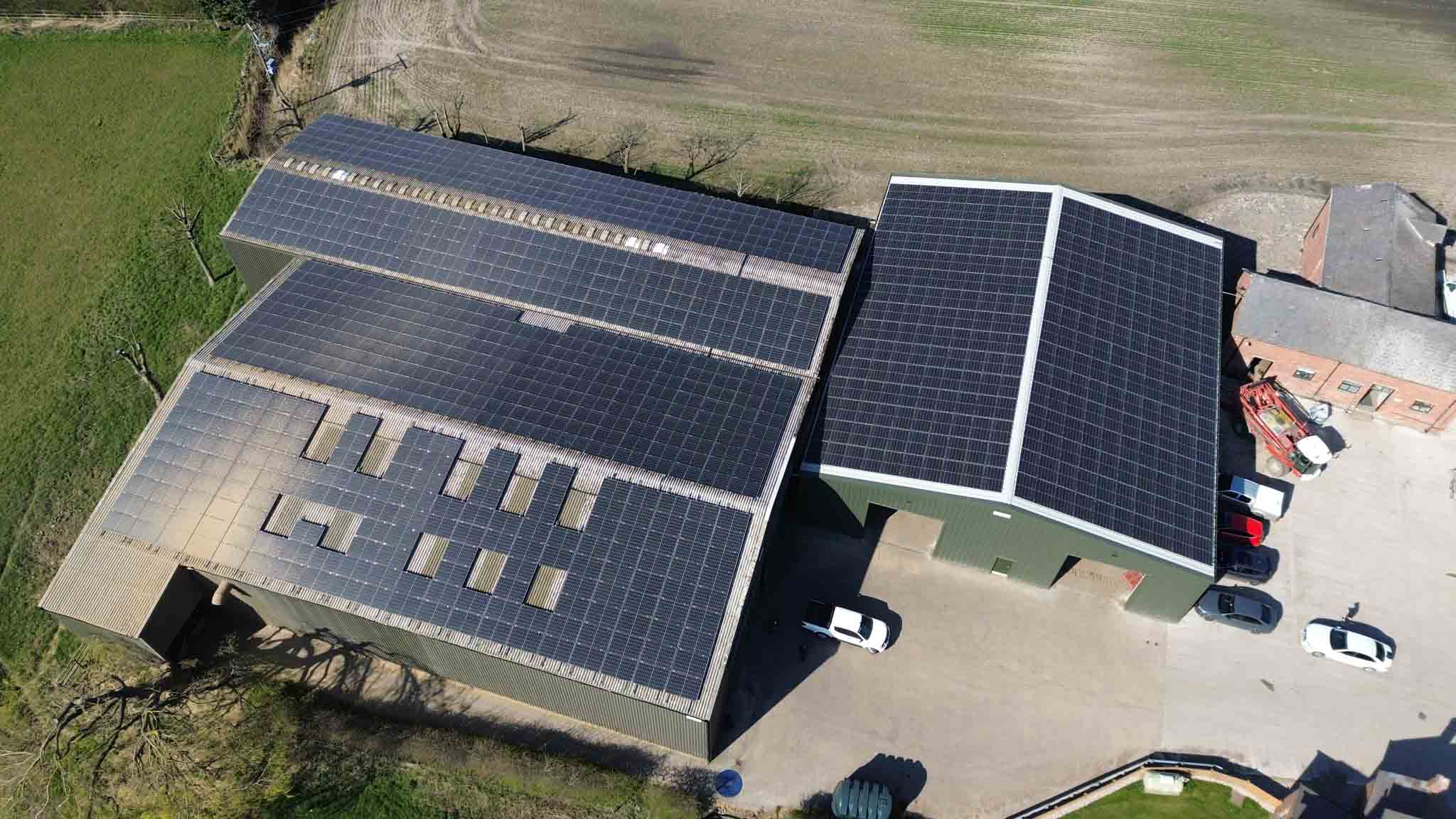
Case Study: Red House Farm
Red House Farm, with its diverse operations including holiday accommodation and equestrian facilities, presented a unique set of energy demands. Geo Green Power engineered a tailored renewable energy system that incorporated extensive solar panel installations. These solar panels on agricultural buildings now contribute significantly to powering the entire estate, from the holiday cottages to the stables and farm office. The move not only reduced their substantial energy overheads but also enhanced their appeal to visitors looking for eco-friendly holiday options.
| Solar System Size | Annual Output | Annual CO2 Savings |
|---|---|---|
| 1,088 kWp | 1,000,000 kWh | 250 Tonnes |
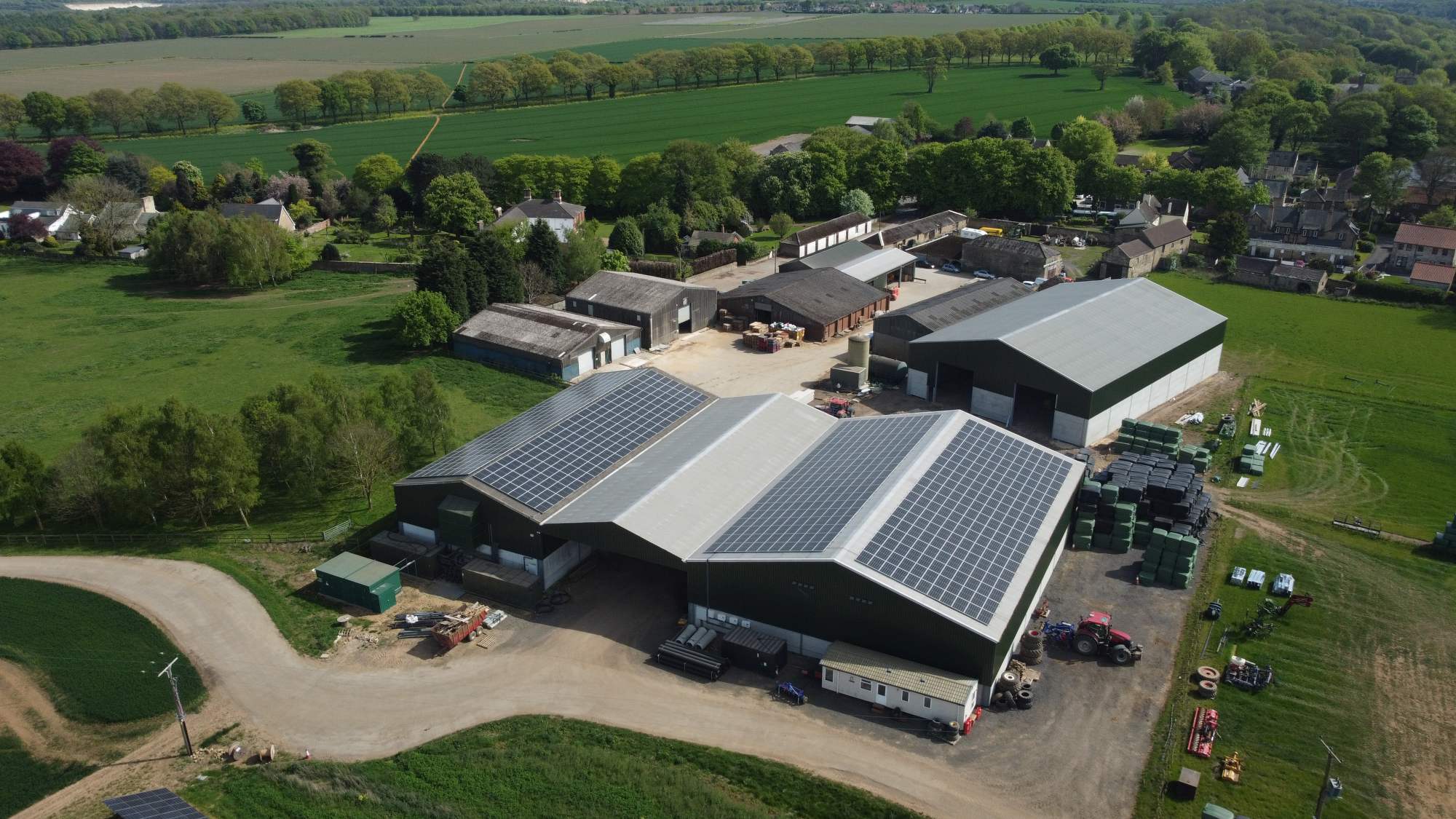
Case Study: Shallow Grange Farm
Shallow Grange Farm is a prime example of how solar technology enables successful farm diversification. Beyond supporting their sustainable livestock farming, the farm has expanded into eco-tourism with an onsite campsite, now powered by the sun. Geo Green Power’s solar installation ensures that campers enjoy a truly low-carbon experience, with the system providing renewable electricity for guest facilities alongside general farm lighting.
By integrating solar across its diverse operations, Shallow Grange has significantly lowered their carbon footprint while setting a new standard for environmentally responsible food production and rural hospitality.
| Solar System Size | Annual CO2 Savings |
|---|---|
| 50 kWp | 19 Tonnes |
Implementing Renewable Energy on Your Farm
For any farm considering the transition to renewable energy, the first step is a thorough energy audit to understand current consumption patterns and identify areas for efficiency improvements. Following this, an expert like Geo Green Power can design a bespoke system, recommending the most suitable technologies and optimal placement for solar agriculture systems or other renewables.
Considerations will include the available roof space for solar panels on agricultural buildings, ground space for larger arrays, and specific energy requirements for different farm operations.
The move towards renewable energy in agriculture is not just an environmental imperative; it’s a smart business decision. As demonstrated by the successful case studies of Bluebell Dairy Farm, Croft Farm, Sutton Farm, Red House Farm, and Shallow Grange Farm, Geo Green Power has consistently delivered effective, tailor-made renewable energy solutions.
By embracing technologies like solar and strategically placing the panels on agricultural buildings, farms can secure their energy future, reduce costs, and cultivate a more sustainable and resilient agricultural landscape for generations to come. The future of farming is undoubtedly green, powered by the abundant resources of nature itself.
If you own a farm and are looking to reduce rising energy costs and take that extra step towards sustainability, contact our solar experts today.
Visit our dedicated page for agricultural solar installations for further details.
For ongoing commercial maintenance for your farm’s system, visit our dedicated O&M page.